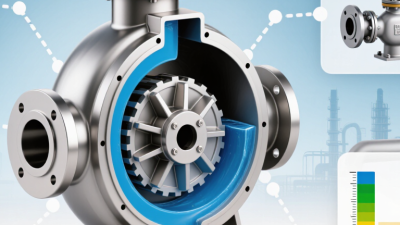
Sealless Pumps for a Safer and Greener World

China’s gas pump industry is broader than a factory floor or a polished product catalogue. It includes dispenser design, metering components, payment interfaces, safety features, and after-sales support. Buyers comparing manufacturers should look closely at these details. A stainless-steel cabinet may look convincing, but service access and parts availability matter just as much.
For transparency, the following quotation is illustrative, not a verified statement by a real person: “A dependable gas pump is judged not only by its accuracy, but by how consistently it performs after years of daily use.” It is attributed here to fictional industry specialist Dr. Lin Wei. Treat the line as a useful evaluation principle, not as independent evidence. Real purchasing decisions should rely on verifiable product documentation, test records, and direct factory checks.
This guide examines prominent Chinese manufacturers through practical criteria: product range, technical capabilities, quality controls, export experience, and customer support. Company claims deserve careful checking. Ask what a warranty covers, how quickly replacement parts ship, and whether the supplier can provide references for comparable installations. Small details matter. A confusing maintenance manual, for example, can slow a technician during a routine service visit. No ranking can fit every project perfectly; budget, operating conditions, and local service needs change the picture. The aim is a clearer shortlist, not a universal winner.
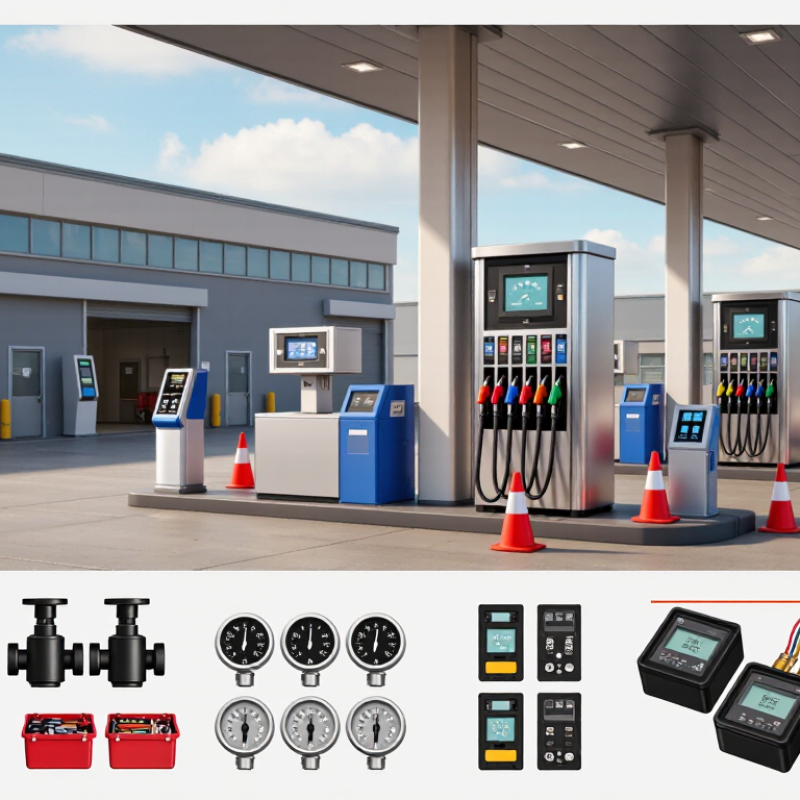
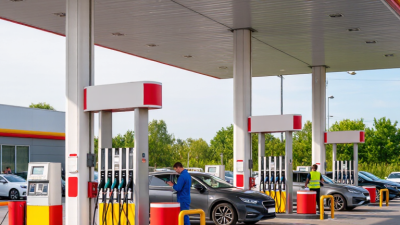
Chinese gas-pump manufacturers produce gasoline and diesel dispensers for retail stations, fleet depots, and truck stops. A typical unit combines a meter, pump, control board, display, hose, and nozzle. Many suppliers also make high-flow dispensers, fuel-management systems, and replacement parts such as filters and breakaway couplings. Some offer CNG or LNG dispensing equipment, while others add station software or payment terminals. Product ranges vary. Not every factory makes every system.
Accuracy is a core engineering requirement, not just a sales claim. OIML R 117-1:2019 sets a maximum permissible error of ±0.5% for Class 0.5 liquid-measuring systems; actual equipment must meet the requirements applicable to its market and approval. Small parts matter. The IEA’s Global EV Outlook 2024 reports that China accounted for nearly 60% of global electric-car sales in 2023. In response, some fuel-equipment makers also offer EV charging products, though this is not universal. One limitation in comparing suppliers is that public catalogs rarely disclose comparable production volumes or test results. Buyers should check specifications, calibration records, and local service coverage.
Who Are the Top Gas Pump Manufacturers in China?
How to Assess Leading Chinese Gas Pump Manufacturers
A reliable assessment goes beyond comparing prices and product photos. Ask manufacturers for clear specifications, factory test records, and details about pump accuracy, flow rate, and operating temperature. Check whether the display is easy to read and whether buttons remain responsive after repeated use. Request a sample unit or arrange a live demonstration when possible. A polished brochure is useful, but it cannot replace evidence from actual testing.
Tips: Compare the same operating conditions across suppliers. Ask how quality checks are recorded, what spare parts are available, and how quickly technical questions receive clear answers. Keep the replies.
Also examine manufacturing consistency. Ask how incoming components are inspected and how finished units are tested before shipment. A dependable supplier should explain its process plainly, without making every answer sound perfect. Review relevant certifications and confirm they match your intended market and product configuration. Speak with recent customers if they are willing to share practical feedback. No checklist catches everything; I would still verify key claims independently, because a small detail in a test report can change the buying decision.
China’s gas pump manufacturers vary in scale and specialization. Some produce complete dispensers, while others focus on metering units, control systems, or payment-ready interfaces. Their capabilities can differ even when product photos look similar. Details matter.
A practical comparison starts with the parts buyers can inspect. Check the meter’s stated accuracy, the clarity of its display under bright light, and the hose’s flexibility after repeated handling. Ask how each unit is tested before shipment, and whether calibration records are available. A clean casing is useful, but it cannot prove dependable performance on its own.
Manufacturers serving export and domestic markets may offer different configurations, materials, and service arrangements. Review spare-parts availability, technical documentation, and response times before placing an order. If possible, assess a sample unit and examine its wiring, seals, and finish. Paper specifications help, but they do not show every weakness. Even a capable factory may have uneven quality between product lines, so compare the exact model rather than relying on general claims.
Chinese fuel-dispenser manufacturers commonly produce gasoline and diesel dispensers, high-flow units for heavy vehicles, and equipment for alternative fuels such as CNG and LPG. A dispenser’s core job is precise, repeatable measurement. Electronic meters, temperature compensation, and sealed hydraulic components help maintain stable delivery across changing temperatures and busy shifts.
Digital controls now connect dispensers with station software, payment terminals, tank gauges, and leak-monitoring systems. Vapor-recovery equipment and automatic shutoff features also support cleaner, safer operations. Yet connected systems need regular calibration and sensor checks. It is not a magic fix. A drifting sensor can still produce bad readings, even when the screen looks polished. OIML’s R 117 recommendation provides an international reference for testing measuring systems used with liquids other than water.
Product planning is changing with vehicle demand. The China Association of Automobile Manufacturers reported 31.44 million vehicle sales in 2024, including 12.87 million new-energy vehicles. The IEA’s Global EV Outlook 2024 reported that electric-car sales in China reached 8.1 million in 2023, up 35% year over year. These figures make mixed-energy forecourts increasingly relevant: operators may need conventional dispensers alongside charging equipment and adaptable station controls. Integration can be uneven, though. Older tanks and wiring often complicate upgrades, so compatibility deserves attention before new equipment is installed.
| Product or Technology Area | Common Products | Key Technologies | Typical Applications | What Buyers Commonly Evaluate |
|---|---|---|---|---|
| Retail fuel dispensers | Multi-hose dispensers for gasoline and diesel; single- or multi-product configurations | Metering, electronic control, display and preset-volume or preset-value dispensing | Retail filling stations and commercial fuel sites | Measurement approval for the destination market, accuracy, reliability, service access and compatibility with site systems |
| Fuel metering systems | Flow meters and associated measuring assemblies integrated into dispensers | Flow measurement, calibration and electronic signal processing | Fuel dispensing where the quantity delivered must be measured and recorded | Applicable legal-metrology requirements, calibration procedures, repeatability and maintenance needs |
| Dispenser hydraulics and safety components | Pumps, filters, hoses, nozzles, breakaway couplings and valves | Fuel transfer, filtration, shutoff and hose-separation protection | Dispenser assemblies and forecourt fuel-delivery systems | Material compatibility, pressure and flow ratings, leak prevention, safety certifications and replacement-part availability |
| Vapor-recovery equipment | Vapor-recovery nozzles and related dispenser components | Collection and return of fuel vapors during vehicle refueling | Stations and markets where vapor-recovery controls are required | Compliance with local environmental rules, system compatibility, inspection requirements and ongoing maintenance |
| Forecourt electronics and connectivity | Dispenser controllers, customer displays, payment interfaces and station-management connections | Transaction control, data communication, diagnostics and integration with forecourt systems | Managed retail stations and unattended or automated fueling sites | Protocol compatibility, cybersecurity practices, payment-system integration and software support |
| Alternative-fuel dispensers | Dedicated dispensing equipment for fuels such as LPG or CNG | Fuel-specific metering, pressure control and safety interlocks | Sites supplying gaseous fuels; equipment is distinct from standard liquid-fuel dispensers | Fuel-specific regulations, pressure and material ratings, hazardous-area suitability and qualified installation |
| Manufacturing and quality controls | Assembled dispensers, subassemblies and replacement components | Production testing, traceability, calibration checks and inspection of safety-critical parts | Equipment production, export preparation and after-sales servicing | Documented quality processes, market-specific approvals, test records, warranty terms and local technical support |
This table summarizes product and technology categories found in the fuel-dispensing industry; it does not rank or identify individual manufacturers. Product availability and regulatory approvals vary by model and destination market.
Choosing a gas pump manufacturer involves more than comparing quotations. Check metering accuracy, repeatability, flow-rate range, and the availability of traceable calibration records. OIML R 117 covers metering systems for liquids other than water; ask how the proposed equipment is tested against applicable requirements in your destination market. Ask for proof. Small details matter: inspect the display in bright light, test nozzle handling, and review how quickly common parts can be replaced.
After-sales support deserves equal weight. Request spare-parts lead times, warranty terms, service manuals, and a clear escalation route. IEA’s Oil 2024 report projects global oil demand will rise by 3.2 million barrels per day from 2023 to 2030, reaching 105.4 million barrels per day. That outlook does not predict demand for any single market, but it makes upgrade options worth discussing. Ask whether controls can be updated and whether the dispenser supports the fuel specifications you plan to sell. I would not rely on a polished factory tour alone; independent test documents and sample-unit checks are more persuasive, though they take time. Compare the same technical checklist across suppliers before weighing price.
A key way to assess a manufacturer is to check whether its dispensers meet China’s fuel-dispenser metrology requirements.
The bars show verification limits, not performance claims for individual manufacturers. For dispensers covered by China’s JJG 443-2015 verification regulation, the maximum permissible error is ±0.30% and the repeatability error limit is 0.15%. Ask manufacturers for current type-approval and verification documentation.