Sealless Pumps for a Safer and Greener World

Choosing centrifugal pumps in 2026 requires more than comparing flow rates, prices, and catalog images. A pump may look efficient on paper yet waste energy when operating far from its best efficiency point. The U.S. Department of Energy’s Improving Pumping System Performance sourcebook identifies pumping systems as major industrial energy users, with energy waste often linked to throttling, oversized equipment, and poor system design. The International Energy Agency also continues to highlight motor-driven systems as significant electricity consumers worldwide. These findings make efficiency a lifecycle decision, not a purchasing detail.
Market forecasts support this focus. Grand View Research and MarketsandMarkets both expect the global centrifugal pump market to expand through the decade, although their estimates differ because they define products and applications differently. That difference matters. Report numbers should guide planning, not replace engineering judgment. Buyers should examine duty point, total dynamic head, fluid temperature, viscosity, solids content, corrosion risk, seal design, motor efficiency, and maintenance access. A stainless-steel pump handling clean water is not equivalent to a coated, abrasion-resistant pump moving mineral slurry.
Experience often reveals what specifications miss. Listen for cavitation, inspect vibration trends, and check whether operators regularly close discharge valves to control flow. Small details become expensive. Standards such as ISO 2858, ISO 5199, and API 610 can provide valuable selection and testing frameworks for different applications. Still, no standard guarantees a perfect installation. Even a correctly sized pump may underperform when the piping layout changes. The strongest 2026 decision combines verified supplier data, field measurements, lifecycle cost analysis, and a willingness to question the original design.
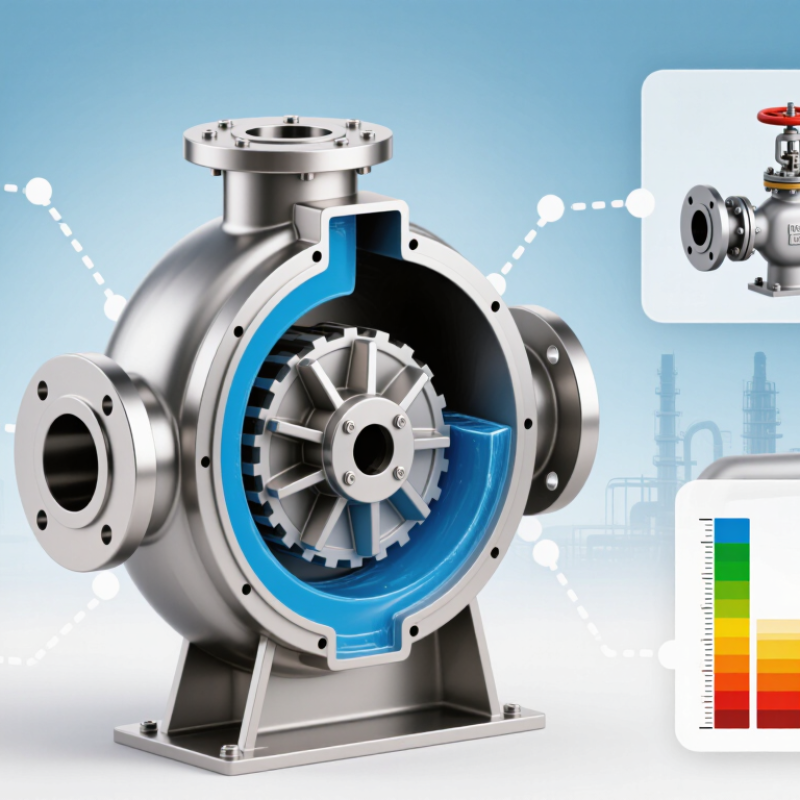
How to Choose Centrifugal Pumps in 2026?
Define the pumping requirements before comparing pump curves. Record the required flow, static head, friction losses, fluid temperature, viscosity, density, and solids content. A pump moving 120 m³/h through clean water differs greatly from one handling warm, abrasive wastewater. The U.S. Department of Energy reports that pumping systems can represent about 25% of industrial electricity consumption. Efficiency matters, but only at the real duty point. Oversizing creates throttling losses, vibration, and unstable operation. Undersizing may leave the process starved.
Operating conditions must include suction pressure, minimum flow, maximum flow, startup frequency, and seasonal changes. Check NPSH available against NPSH required, with a practical safety margin. Cavitation often sounds like gravel inside the casing. It can damage impellers quickly. Hydraulic Institute guidance also stresses evaluating the full system, not the pump alone. A neat spreadsheet can still be wrong. Field measurements may reveal partially closed valves, blocked strainers, or a changed pipeline route.
Tips: Measure flow and pressure during normal and extreme conditions. Keep a simple operating log. Ask whether the stated duty is continuous or occasional. Select a pump that operates near its best efficiency point, but verify control behavior at low demand. Review motor loading, seal compatibility, materials, and maintenance access. Do not trust catalog values blindly; tolerances, fluid properties, and installation details can shift performance. The DOE pumping-system assessment method is a useful reference for identifying avoidable energy losses.
Flow rate is the first practical number. Measure the required volume over time, not the pipe’s maximum capacity. For example, 120 cubic metres per hour equals 0.033 cubic metres per second. Process demand may vary, so record minimum, normal, and peak flow conditions. A pump selected only for peak demand can operate inefficiently for most of its life.
Total dynamic head combines static lift, pressure difference, velocity head, and friction losses. Calculate pipe friction with the Darcy-Weisbach equation, then add losses from elbows, valves, filters, and reducers. The system curve often follows H = Hstatic + KQ². Use actual pipe length and internal diameter. Small fittings can matter. Check twice. The U.S. Department of Energy’s Improving Pumping System Performance sourcebook reports that pumping systems can represent nearly 20% of global industrial electricity demand. That makes resistance calculation financially important, not merely technical.
Compare the pump curve with the system curve at the expected operating point. Confirm NPSH available exceeds NPSH required, with a realistic safety margin. The IEA’s Energy Efficiency 2023 report states that electric motor systems consume about half of global electricity, reinforcing the value of efficient selection. My field experience suggests one common mistake: engineers trust clean design data too much. Pipes foul, valves age, and demand changes. Recheck the calculation after commissioning. A perfect spreadsheet is still an imperfect system model.
How to Choose Centrifugal Pumps in 2026?
Select the Pump Type, Configuration, and Materials
Start with the process, not the catalog. Record flow rate, total head, temperature, viscosity, solids, and suction conditions. A single-stage pump suits many moderate-duty systems. Multistage designs fit higher-pressure duties but demand closer alignment and maintenance. Axial-flow pumps can move large volumes at low head. Mixed-flow models sit between these requirements.
Configuration affects reliability. Horizontal pumps are accessible and practical for many plant rooms. Vertical pumps can save floor space or suit deep sumps. Choose an open impeller for larger solids, but expect lower efficiency. Closed impellers often provide better hydraulic performance with cleaner liquids. Check NPSH margin carefully. A small margin can cause damaging cavitation.
Materials must match the liquid and operating temperature. Cast iron may work for clean water, while stainless steel handles many corrosive services. Duplex alloys offer stronger resistance in demanding environments. Abrasive slurries may require hardened components or replaceable wear parts. Seal materials deserve equal attention. They contact the process continuously. Review the pump curve at the real duty point, not only the best-efficiency point. Field conditions rarely stay perfect. I have seen selections fail because operators overlooked seasonal flow changes or blocked strainers. Recheck the assumptions before approval. A technically correct pump can still be inconvenient to service.
Select the pump type, configuration, and materials according to the required flow, head, fluid, temperature, and operating conditions.
The chart shows representative upper-end values commonly used for preliminary pump selection. End-suction pumps are widely used for general water duties, split-case pumps suit high-flow services, multistage pumps are preferred for high-head applications, and vertical turbine pumps are often used for large-flow or deep-source installations. Final selection must be verified against the actual duty point, efficiency, NPSH available, fluid chemistry, temperature, and solids content.
For materials, cast iron and bronze are common for clean-water services, stainless steel is used when corrosion resistance is required, and duplex stainless steel, high-chrome alloys, or rubber-lined constructions may be considered for chloride-rich, abrasive, or chemically aggressive fluids.
Efficiency should begin with the system curve, not the pump catalogue. The U.S. Department of Energy reports that optimized pumping systems can reduce energy use by 20–50%. That range is substantial. Yet many buyers still select pumps near their maximum rated flow. A pump operating far from its best efficiency point may waste power, increase vibration, and shorten seal life. Compare wire-to-water efficiency, not hydraulic efficiency alone. Include motor, drive, piping, and throttling losses.
Controls now affect lifecycle cost as much as equipment price. A variable-speed drive can match output to changing demand, but it cannot repair poor pipe sizing. The European Commission’s energy-efficiency assessments identify pumping and motor systems as major industrial electricity users. Ask for control response, minimum flow protection, restart behavior, and fault records. Simple logic is often safer. Overcomplicated automation can create hidden maintenance work.
Monitoring should reveal gradual problems before failure. Pressure, flow, motor current, vibration, and bearing temperature create a useful operating picture. The Hydraulic Institute recommends performance testing against defined duty conditions, rather than relying only on nameplate values. In practice, a clean dashboard is more valuable than dozens of unused sensors. I still see teams calculate purchase price carefully, then guess at maintenance and energy costs. That is a costly gap. Build a ten-year lifecycle model with electricity, inspections, spares, downtime, and disposal included. Data sources: U.S. Department of Energy pumping-system guidance, European Commission energy-efficiency studies, and Hydraulic Institute assessment practices.
A pump can look correctly sized and still fail after installation. Verify base flatness, shaft alignment, pipe strain, NPSH margin, rotation, and valve position. Record vibration and bearing temperature during commissioning.
The U.S. Department of Energy’s Improving Pumping System Performance sourcebook reports that pumping systems may consume 25% to 50% of industrial facility electricity. Small hydraulic losses deserve attention.
Request a curve showing duty point, efficiency, power, and operating limits, not only a catalogue headline.
Safety checks must be physical, documented, and repeatable. Guard couplings, isolate energy, and confirm pressure relief arrangements before startup.
ISO 5199 defines technical requirements for centrifugal pumps. The ISO 20816 series supports vibration evaluation. Local codes still control.
Do not treat a certificate as a substitute for site inspection. That is an easy mistake.
Maintenance planning should include seal leakage limits, lubrication intervals, spare-part lead times, and baseline readings.
The DOE Pump System Assessment Tool recommends evaluating pumps near their best efficiency point. Operation far from that point can increase vibration and wear.
Supplier support matters after delivery. Require commissioning assistance, operator training, response times, and readable manuals.
Ask who answers at 2 a.m.
A perfect specification can fail in practice.
I would also question my assumptions: water quality, seasonal demand, and rushed installation often receive less attention than purchase price.