Sealless Pumps for a Safer and Greener World

Choosing the right crucible can determine whether a high-temperature melting process runs smoothly or fails unexpectedly. A Graphite Clay Crucible combines graphite’s thermal conductivity with clay’s structural stability. This combination helps it tolerate repeated heating in foundries, laboratories, and small metalworking operations.
In practical use, the crucible must handle intense heat, sudden temperature changes, and contact with molten materials. Graphite distributes heat efficiently, which can reduce localized hot spots. Clay helps maintain shape when the vessel is loaded and removed. However, performance depends on manufacturing quality, wall thickness, firing conditions, and correct handling. It is not automatically suitable for every furnace.
Small details matter. A dry crucible is essential. Moisture can expand rapidly during heating and cause cracking. Preheating also reduces thermal shock, especially when the crucible has been stored in a cold or humid area. Operators should inspect the surface for chips, deep scratches, or unusual discoloration before use. Never ignore a minor crack.
From an engineering perspective, resistance to oxidation remains a key concern. Graphite can gradually react with oxygen at elevated temperatures, particularly when the furnace atmosphere is poorly controlled. Protective coatings or suitable furnace conditions may extend service life, but they cannot correct careless operation. Selecting a crucible from a traceable manufacturer provides better confidence in composition, testing, and rated temperature limits.
The choice still requires judgment. A crucible designed for aluminum may not perform well with copper, iron, or reactive alloys. Actual results can vary. Careful material matching, controlled heating, and documented inspections make the Graphite Clay Crucible a dependable option for demanding high-temperature work.
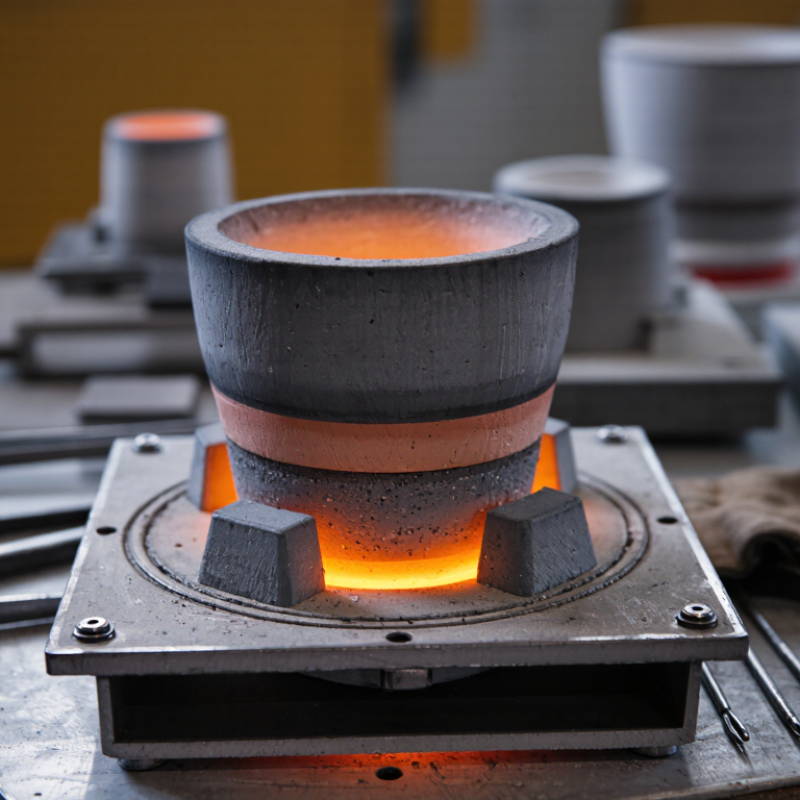
A graphite clay crucible is a reusable vessel made from graphite, refractory clay, and carefully selected mineral additives. It is not a solid graphite cup. During manufacture, these materials are shaped, dried, and fired to create a dense container for molten metal.
Graphite transfers heat efficiently, so metal melts more evenly and may require less furnace time. The clay structure adds stiffness and helps the crucible resist heat-related stress. This combination suits many non-ferrous metals, including aluminum, copper, brass, and certain precious-metal alloys. Its dark surface also makes metal residue easy to notice.
In practical furnace work, correct handling matters as much as material quality. A damp crucible can crack when heated. Preheat it gradually, keep the flame properly adjusted, and avoid sudden temperature changes. Always inspect the wall and base before use. Small cracks are serious.
It is not indestructible. Oxidation, mechanical impact, and excessive temperature shorten its service life. The best choice depends on the alloy, furnace atmosphere, working temperature, and crucible capacity. A larger crucible is not automatically safer or more efficient. Mistakes can happen when these details are ignored.
What Is a Graphite Clay Crucible?
A graphite clay crucible combines graphite’s thermal-shock resistance and heat transfer with the refractory stability of clay. The melting temperatures below show why this crucible type is commonly selected for non-ferrous metal casting and other high-temperature applications. Actual operating limits depend on the crucible composition, wall condition, heating method, atmosphere, and manufacturer’s specifications.
Why Choose Graphite Clay Crucible for High Temperature Use?
How Graphite Clay Crucibles Withstand High Temperatures
Graphite clay crucibles combine a refractory clay body with graphite’s efficient heat transfer. This structure helps distribute heat across the vessel instead of concentrating it at one hot spot. During melting, the crucible can respond more evenly to furnace temperature changes. That matters. Graphite also improves resistance to thermal shock, especially when heating cycles are carefully controlled. A cold crucible should never enter an aggressively heated furnace. Moisture trapped in its pores may expand and cause cracking. Preheating is a small step, but it protects the wall.
The clay matrix provides shape stability at elevated temperatures, while graphite helps the crucible heat quickly and consistently. Its dark surface also makes visual inspection easier under furnace lighting. Operators should still control the atmosphere, because graphite can oxidize when exposed to hot air for extended periods. In practical furnace work, uneven flame contact often causes more damage than the peak temperature itself. Keep the crucible centered and avoid scraping the inner surface with hard tools. No crucible is indestructible. Small cracks can begin as hairline marks near the rim, then spread during the next cycle. I would not rely on appearance alone; checking wall thickness, rim condition, and previous heating history is more dependable. Even careful handling cannot remove every uncertainty, which is why temperature records and gradual heating remain useful.
Graphite clay crucibles combine graphite’s thermal conductivity with clay’s structural stability. This balance supports demanding high-temperature work. Graphite spreads heat quickly across the vessel wall, reducing sharp temperature differences during heating. Clay helps maintain shape when the crucible carries heavy molten material. In practical furnace use, this combination can improve temperature response and reduce localized stress.
Thermal shock resistance is a key property. A crucible may face sudden heating, uneven flame contact, or rapid cooling after removal. Lower thermal expansion generally helps it tolerate these changes. Graphite also resists wetting by many molten metals, so residues may release more easily after cooling.
However, performance depends on porosity, wall thickness, firing quality, and the specific metal being processed. No crucible performs perfectly.
Oxidation remains an important limitation. In air, exposed graphite can gradually react at elevated temperatures, especially when heating continues for long periods. A controlled furnace atmosphere can reduce this risk, but operators still need practical checks.
Inspect the rim, base, and inner surface before each cycle. Small cracks may widen quickly after thermal loading.
Preheating also matters. A slow, even warm-up is usually safer than placing a cold crucible directly into intense heat.
From workshop experience, overloading is another common mistake; it increases mechanical stress and slows uniform heating. Specifications should be verified against the working temperature, charge material, and furnace conditions.
Why Choose Graphite Clay Crucible for High Temperature Use?
Benefits in Melting and Casting Applications
In melting and casting work, a graphite clay crucible offers balanced thermal performance. Graphite transfers heat quickly and helps reduce uneven melting. Clay adds stiffness and supports the crucible during repeated heating cycles. This combination suits nonferrous alloys, including aluminum, copper, brass, and selected precious metals.
Experienced foundry operators value the crucible’s resistance to sudden temperature changes. A properly preheated vessel is less likely to crack when charged with solid metal. Its smooth inner surface can also reduce metal sticking and simplify slag removal. Clean metal matters. Less residue often supports more consistent pouring and fewer surface defects in cast parts.
Performance still depends on handling. Graphite oxidizes when exposed to air at high temperatures, so excessive overheating can shorten service life. The crucible should match the alloy, furnace atmosphere, and working temperature. Inspect it before every melt for hairline cracks, swelling, or damaged edges. A small defect can become serious during pouring. Never ignore that possibility.
Controlled heating remains essential. Rapid charging, wet tools, or uneven support may create thermal stress. In practical use, crucibles often fail because of poor preparation rather than weak material. That is an uncomfortable point, but it deserves attention. Gentle preheating, dry charge materials, and suitable lifting tools improve reliability during repeated melting and casting operations.
Choosing a graphite clay crucible starts with the material, furnace, and heating cycle. The crucible must tolerate the intended temperature without weakening or deforming. Check its rated temperature under your actual furnace atmosphere. Graphite can oxidize quickly in excessive air.
Select a crucible with enough capacity for expansion and safe handling. A nearly full crucible may spill when the charge melts. Examine the wall, rim, and base before every use. Small cracks matter. Reject pieces with chips, deep scratches, or visible swelling. Keep it dry. Moisture trapped inside can cause violent cracking during heating.
Heat the crucible gradually, especially after storage in a cold area. Place it securely on a suitable support, away from direct flame impact. Use heat-resistant gloves, face protection, and properly sized tongs. Maintain ventilation because heated materials may release fumes. Avoid sudden cooling with water or a cold surface. Do not rush. Follow the supplier’s technical data and your workplace safety procedures, since clay content and furnace conditions vary. In practice, operators sometimes focus only on maximum temperature and overlook thermal shock, which can be the real failure point. Record heating cycles and inspect the crucible after cooling; this simple habit can reveal damage before the next melt.
| Selection or Safety Factor | Why It Matters | Practical Selection Guidance | Safe-Use Indicator |
|---|---|---|---|
| High-Temperature Capability | Graphite-clay crucibles combine the thermal resistance of graphite with the structural support of a ceramic clay matrix. They are commonly used for melting non-ferrous metals and alloys. | Choose by application Confirm the supplier's maximum continuous-use temperature and compare it with the planned furnace temperature. The actual limit depends on composition, atmosphere, heating rate, and load. | Do not treat a published maximum temperature as a recommended operating temperature. Maintain a safety margin below the stated limit. |
| Thermal Shock Resistance | Rapid temperature changes can create internal stresses, which may cause cracking, edge failure, or sudden breakage. | Select a crucible designed for the furnace type and heating cycle. A suitable shape, wall thickness, and graphite content can improve resistance to thermal shock. | Avoid sudden changes Preheat gradually and never place a cold crucible directly into an intensely heated furnace. |
| Thermal Conductivity | Graphite transfers heat efficiently, helping the charge melt more evenly and reducing local hot spots when the furnace is properly controlled. | Choose a size and wall thickness that provide adequate strength without unnecessarily slowing heat transfer. Match the crucible to the furnace power and heating method. | Use controlled heating. Uneven charging or a flame concentrated on one area can still cause localized overheating. |
| Chemical Compatibility | Molten metals, oxides, fluxes, and furnace gases can react with or erode crucible materials. Oxidizing conditions are especially damaging to exposed graphite. | Verify compatibility with the specific metal and flux. Graphite-clay crucibles are often used for non-ferrous metals, but unsuitable alloys or aggressive fluxes may shorten service life. | Check before use Do not use an unverified crucible for reactive materials, strong oxidizers, or applications involving unknown chemical residues. |
| Furnace Atmosphere | Graphite oxidizes when exposed to oxygen at elevated temperature. Oxidation reduces wall thickness, weakens the crucible, and can cause premature failure. | For air-fired furnaces, choose a crucible with suitable protective treatment or coating when specified by the manufacturer. Inert or reducing atmospheres can reduce oxidation but require properly controlled equipment. | Limit oxygen exposure Keep the furnace atmosphere appropriate and avoid leaving a hot empty crucible exposed to air for extended periods. |
| Capacity and Working Fill | Molten metal expands and may splash or overflow. Overloading also increases mechanical and thermal stress. | Select capacity according to the metal density, charge mass, and available freeboard. The required volume is not determined by metal weight alone. | Leave sufficient headspace for bubbling, flux action, thermal expansion, and safe pouring. Never fill to the rim. |
| Crucible Shape and Support | Shape affects heat distribution, pouring control, load stability, and stress concentration. Inadequate support can cause distortion or breakage. | Match the base and external profile to the furnace and lifting equipment. Use a compatible plinth, tongs, or pouring shank that supports the crucible without point loading. | Keep the crucible centered and stable. Do not drag it across the furnace floor or lift it by a damaged rim. |
| Moisture and Preheating | Water trapped in a crucible, tool, charge, or flux can rapidly turn into steam and eject molten material. | Use only dry equipment Store crucibles in a dry location and follow a controlled drying or preheating schedule before charging metal. | Never add wet scrap, damp tools, or moist flux to molten metal. Inspect stored crucibles for moisture before heating. |
| Surface Condition | Cracks, deep scratches, oxidation, wall thinning, and damaged rims reduce mechanical strength and can lead to leakage or breakage. | Inspect the entire crucible before every use, including the base, sidewall, rim, pouring lip, and lifting contact areas. | Reject if damaged Remove crucibles with visible cracks, severe warping, deep erosion, exposed large pores, or significant wall thinning. |
| Charging Practice | Heavy or sharp pieces can impact the bottom and sidewalls. Bridged charges may collapse unexpectedly as the metal melts. | Load gently, place heavier pieces at the bottom only when appropriate, and avoid forcing oversized material into the crucible. | Keep hands and body away from the opening. Use suitable tools and add charge in a controlled sequence. |
| Flux and Slag Management | Some fluxes can chemically attack the crucible or increase erosion. Excessive scraping can damage the lining and expose weaker material. | Use only fluxes confirmed as compatible with both the metal and the crucible. Minimize unnecessary flux quantity and prolonged contact. | Remove slag with compatible tools and controlled force. Do not aggressively chip or scrape the crucible wall. |
| Handling and Lifting | Hot crucibles are heavy and brittle. Mechanical shock, poor gripping, or an unbalanced load can cause spills and serious injury. | Use lifting equipment rated for the combined crucible and molten-metal load. Confirm that tongs or shanks fit the crucible profile. | Protective equipment required Use face and eye protection, heat-resistant clothing, gloves, safety footwear, and suitable ventilation. |
| Cooling and Storage | Rapid cooling or contact with cold, wet surfaces can create thermal shock and absorb moisture into the porous body. | Allow the crucible to cool in a controlled, dry area. Store it off the floor and protect it from impact, water, and contamination. | Do not quench a hot crucible or place it on a wet metal surface. Handle only after it has cooled sufficiently for safe inspection. |
| Service-Life Tracking | Crucibles gradually lose strength through oxidation, erosion, repeated heating, and mechanical handling. Failure risk increases when wear is ignored. | Record usage cycles, metals processed, operating conditions, and inspection results. Replace the crucible according to condition rather than appearance alone. | When in doubt, retire the crucible. The cost of early replacement is lower than the risk of a molten-metal spill or furnace damage. |



