Sealless Pumps for a Safer and Greener World

China’s pump market is broad, and “top” depends on the job. A pump specialist may excel in municipal water systems yet have limited experience with chemical processing or mining. Buyers should compare verified performance, manufacturing capability, field service, and lifecycle cost—not rely on brand visibility alone.
The U.S. Department of Energy’s Improving Pumping System Performance sourcebook reports that pumping systems can consume 25–50% of the energy used in some industrial facilities. That range makes efficiency more than a catalog claim. Impeller design, operating point, motor choice, and maintenance all matter. So does the installation.
Rotating-equipment authority Heinz P. Bloch’s reliability guidance supports a practical principle, paraphrased here: select equipment for its real operating duty, not just its nameplate rating. A useful reminder. No single supplier can be “best” for every application. This article examines Chinese pump specialists through evidence readers can check: product data, relevant certifications, service coverage, and documented project experience. It also recognizes a limitation: public information may not reveal long-term field reliability. A polished brochure cannot settle that question. The strongest choice is the specialist whose proven capabilities match the site’s actual demands.
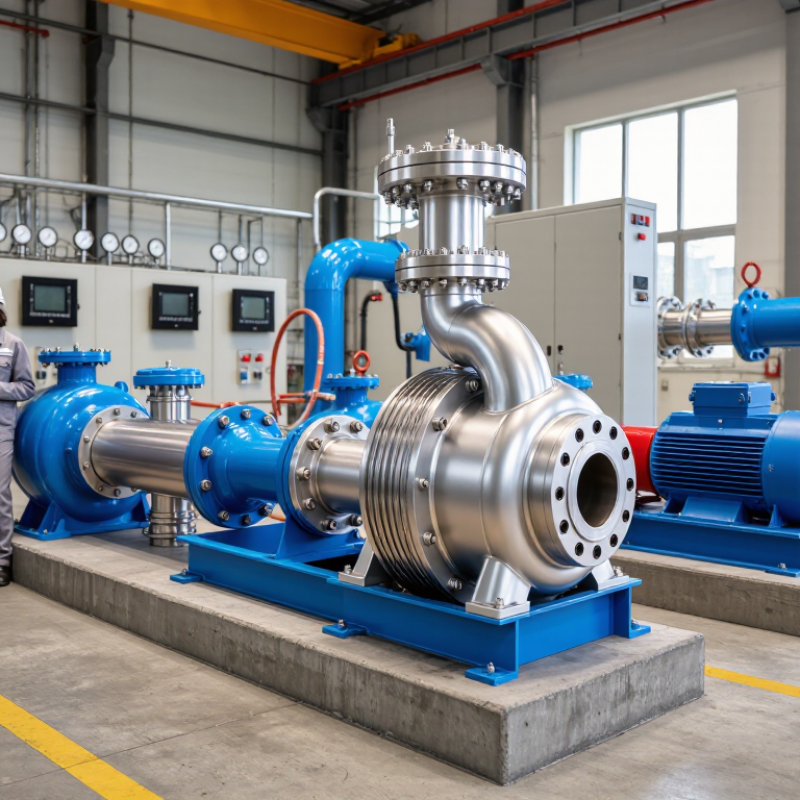
In China, a pump specialist does more than recommend a machine. The role is to connect operating needs with sound engineering choices. That means checking required flow, total head, fluid temperature, viscosity, and any solids in the liquid. A small mismatch can raise energy use or cause unstable operation. A useful specialist asks about the whole system, including pipe length, bends, valves, and the pump’s suction conditions. Details matter.
The work often continues through installation and commissioning. A specialist may review alignment, inspect seals, measure vibration, and compare actual pressure with the design point. They should explain findings in clear terms and provide practical maintenance guidance. Good advice is evidence-based, not just confident. A careful professional also states what remains uncertain; site conditions can change, and one inspection may not reveal every cause. I would not treat a pump selection as perfect on paper alone. Operating data can prove otherwise.
Tips: Share the fluid details and duty cycle before requesting a recommendation. Keep records of pressure, flow, temperature, and unusual noise. Ask how the proposed pump will be checked after installation. Small clues help.
China’s pump industry is best understood as a broad engineering network, not a single “top specialist.” Its main areas of expertise include municipal water supply, wastewater treatment, irrigation, mining, power generation, and chemical processing. Each application places different demands on materials, seals, impeller design, and motor controls. A clean-water pump may wear rapidly when handling abrasive slurry. Small details matter.
The Ministry of Water Resources reported that China completed 1.1996 trillion yuan in water conservancy investment in 2023. This figure reflects infrastructure activity, not pump spending alone.
The Ministry of Housing and Urban-Rural Development reported a 98.2% urban wastewater treatment rate for 2023.
Together, these indicators point to substantial needs for water transfer, drainage, circulation, and sludge-handling equipment.
Engineering strengths include large-flow pumps for water projects, corrosion-resistant models for process fluids, and high-head units for mine drainage. Efficient operation also depends on more than the pump itself: pipe layout, operating speed, and maintenance affect energy use and reliability. Field conditions can be messy. National statistics describe broad demand, but they do not prove that every supplier delivers the same service life or performance; site testing remains essential.
Technical leadership in pump engineering grows through repeated, careful problem-solving. Specialists learn to connect operating data with what they see on site. A pressure reading alone rarely explains poor performance. They also check flow, suction conditions, vibration, alignment, and the pump’s duty point. Small details matter. A partly blocked strainer or a worn coupling can change the diagnosis.
Strong specialists develop judgment by comparing measurements with equipment history and operating conditions. They record what changed, what stayed uncertain, and which test should come next. That takes practice. A useful report explains the reasoning in clear terms, so operators and maintenance teams can act safely. It should also note measurement limits, such as an uncalibrated gauge or readings taken during unstable operation.
Leadership is built by sharing knowledge, not by pretending to know every answer. A specialist can guide a team through a failure review, ask focused questions, and explain why a repair may not address the root cause. Even experienced teams can misread a symptom. Not always. Revisiting an earlier assumption is part of sound technical work. Over time, consistent analysis and honest communication earn trust across engineering and operations.
This chart illustrates the pump affinity laws for the same pump and impeller diameter: flow varies approximately with speed, head with speed squared, and shaft power with speed cubed. These idealized relationships help pump specialists evaluate speed control and explain its potential impact; actual results depend on the pump, system, and operating conditions.
A useful comparison of China’s pump specialists begins with the application, not a sales ranking. Define the required flow, head, fluid, temperature, and operating hours. Ask how the proposed pump performs near your actual duty point, not only at its best-rated condition. Request test records, material specifications, and efficiency data for the selected configuration. Numbers matter. Check that documents identify test conditions and measurement tolerances. A capable specialist should explain trade-offs clearly, including wear, energy use, and maintenance access.
Review engineering support as carefully as product data. Can the team interpret a site layout, suction conditions, and expected solids content? Ask for examples of similar applications, with enough technical detail to judge their relevance. Check whether inspection plans, spare-parts lists, and service response arrangements are practical for your location. Small details count. A polished catalogue cannot prove dependable field support. No scorecard is perfect; I would still question any comparison that gives one efficiency figure more weight than operating conditions. A fair assessment uses verifiable evidence and leaves room for follow-up questions.
Choosing a pump specialist starts with the duty, not a product catalogue. Write down the required flow and total head, then note whether demand stays steady or changes by shift. Include liquid temperature, viscosity, acidity, and any sand, fibers, or other solids. Details matter. A capable specialist will ask how the pump starts, how often it runs, and what happens during a blockage. They should explain the recommended operating point on a pump curve, not just quote maximum flow. Ask how they check suction conditions and available NPSH; poor inlet design can cause noise, vibration, and early wear.
Materials and maintenance deserve equal attention. Request evidence from comparable installations, such as measured flow, power use, seal life, and service intervals. A useful technical discussion includes installation space, pipe losses, control method, spare-part access, and expected downtime. Ask for assumptions in writing. Then ask what changes if the liquid becomes colder or flow falls at night. A specialist may not know every detail immediately; a careful answer identifies what must be tested or confirmed. Be cautious of instant certainty. Incomplete site data can weaken even a sound recommendation. Share operating logs, photos of the suction line, and fluid samples when practical. Compare options by fit, efficiency, reliability, and support, not price alone.
| Pumping Need | Pump Type to Consider | Relevant Specialist Expertise | Information to Provide | Evidence to Request | Checks Before Selection |
|---|---|---|---|---|---|
| Transfer of clean, low-viscosity water | End-suction or other centrifugal pump | Matching pump selection to required flow, total head, operating hours, and installation conditions | Required flow rate, suction and discharge pressures, liquid temperature, pipe layout, and operating schedule | A pump curve showing the proposed duty point, plus efficiency and power data for that point | Confirm the duty point is within the recommended operating range and review suction conditions and NPSH requirements |
| High-pressure clean-water supply | Multistage centrifugal pump | Designing for the required pressure while accounting for flow, staging, motor power, and system control | Required flow and discharge pressure, suction conditions, water temperature, and pressure-control requirements | Performance data at the specified duty point and documentation of the proposed materials and motor rating | Check maximum working pressure, pressure transients, NPSH, and whether a control system is needed |
| Viscous liquid transfer | Positive-displacement pump, such as a gear, screw, or lobe type | Evaluating viscosity across the operating temperature range, flow control, sealing, and material compatibility | Liquid properties, viscosity and temperature range, required flow, pressure, solids content, and cleaning needs | Written confirmation that the selected pump is suitable for the stated viscosity and operating conditions | Review speed limits, seal compatibility, relief protection, and the effects of viscosity on power and flow |
| Abrasive slurry or solids-bearing liquid | Slurry-duty centrifugal pump or another solids-handling design suited to the fluid | Assessing solids concentration, particle size, abrasion, settling, and wear-part maintenance | Particle size and shape, solids concentration, liquid density, flow, head, and expected operating hours | Material recommendations and performance information for the stated slurry conditions | Check passage size, wear-part access, expected wear, and whether the proposed materials suit the liquid |
| Wastewater containing solids | Non-clog or solids-handling centrifugal pump | Matching the pump to the type and size of solids, installation arrangement, and wastewater operating cycle | Flow, head, solids type and size, liquid temperature, installation depth, and start frequency | Solids-handling limits, installation guidance, and maintenance requirements for the proposed configuration | Confirm the pump can pass the expected solids and that access for inspection and maintenance is practical |
| Accurate chemical dosing | Metering pump, often a diaphragm or other positive-displacement design | Providing controllable dosing across the required flow range and checking chemical compatibility | Chemical identity and concentration, required dosing rate, discharge pressure, temperature, and control signal | Capacity and accuracy information under stated conditions, along with wetted-material compatibility details | Review calibration method, pulsation control, leakage protection, and chemical-handling requirements |
How to identify a suitable specialist: There is no single pump specialist that is best for every application. Compare candidates using the same operating data, and ask each to explain the pump selection, assumptions, performance at the duty point, material compatibility, and service requirements. Final selection should be based on the actual liquid and system conditions.