Sealless Pumps for a Safer and Greener World

Rail Freight moves goods by train across local, regional, and long-distance networks. It can carry heavy loads such as grain, steel, timber, and shipping containers. A single train may haul the equivalent of many truckloads, though its capacity depends on the route, equipment, and cargo. Efficient, but not effortless.
Ian Jefferies, president and chief executive of the Association of American Railroads, has described rail as “the most fuel-efficient way to move freight over land.” That advantage is especially useful for large shipments traveling long distances. Still, rail is not automatically the right choice for every delivery. Access to rail lines, transfer time, and the final distance to a customer all matter.
How does the process work? A shipper books space with a rail carrier or logistics provider. Workers load freight into railcars or intermodal containers, which are then assembled into trains. Locomotives pull them along scheduled routes, through terminals, and sometimes between different rail networks. At the destination, cargo may transfer to a truck for its final leg. A container might leave a warehouse, travel hundreds of miles by rail, then arrive at a store by road. The handoffs need coordination.
This guide explains the main rail freight services, equipment, costs, and operating steps. It also looks at benefits and practical limits. One detail can change the answer: an extra transfer may erase some expected savings. Rail freight is powerful, but planning still matters.
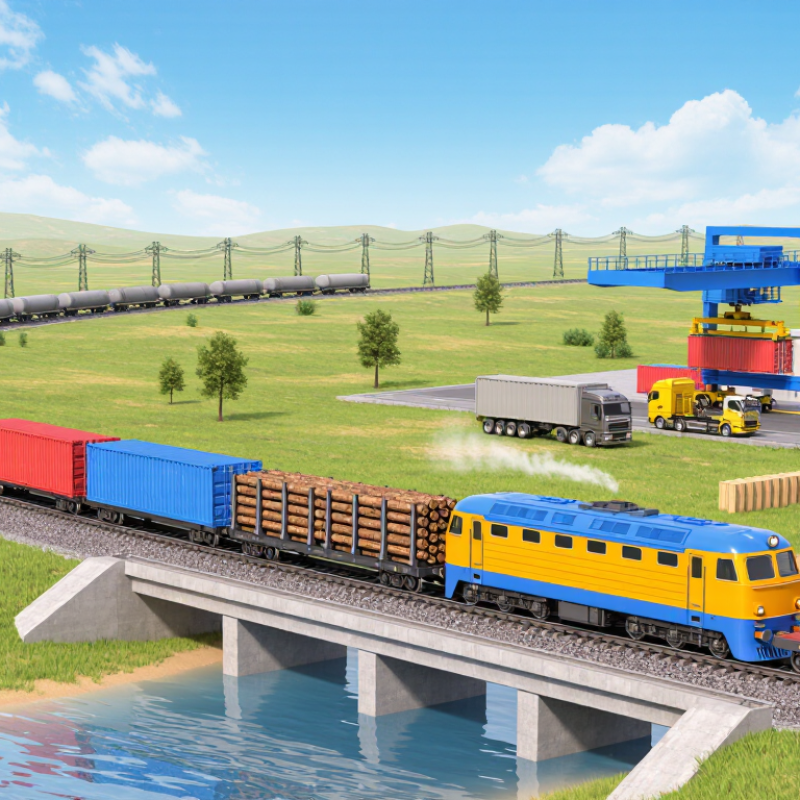
Rail freight is the movement of goods by train across a rail network, often between freight terminals, ports, and distribution centers. Trains pull connected wagons designed for different cargo: covered hoppers carry grain, flatcars hold steel or lumber, and containers protect packaged goods. Heavy, steady loads. Common shipments include food, building materials, machinery, vehicles, and industrial inputs. A train can move large quantities in one journey, but cargo usually needs trucks for delivery beyond the rail line.
The mix depends on local industries and routes. In the United States, the Association of American Railroads’ 2024 rail facts report says rail carries nearly 40% of long-distance freight volume, measured in ton-miles. Eurostat recorded about 378 billion tonne-kilometres of rail freight across the European Union in 2023. Those figures describe different regions and measures, so they are not directly comparable. Rail suits dense, long-haul shipments; it is less flexible when a sender needs a small load delivered directly to a remote address. That trade-off is easy to overlook. A quiet drawback. Transfers between trains and trucks can add handling time, and missed connections may disrupt a delivery schedule.
Rail freight depends on a connected physical system, not just a train. Steel rails carry locomotives and freight cars across long distances, while switches guide trains between tracks. The track bed, drainage, and regular inspections matter too. A small defect can limit speed or require repairs. Track conditions vary.
Terminals connect rail with roads, ports, and storage yards. Workers use cranes, forklifts, and loading ramps to move containers or bulk materials between modes. A container may arrive by truck, wait in a marked yard, then be lifted onto a flatcar. Timing matters. Delays happen. Congestion can leave equipment waiting, even when the main line is clear. Yard layouts also affect how efficiently cars are sorted and assembled into trains.
Different cargo needs different equipment. Boxcars protect packaged goods from weather; tank cars carry liquids; hopper cars release grain or other loose materials through bottom gates. Flatcars support containers, steel, or machinery secured with suitable restraints. Matching a car to a shipment takes planning. Rail can be efficient for long-distance loads, yet transfers and first- or last-mile access may add time. The system is capable, not flawless. It is worth checking how local track conditions affect a delivery schedule.
Before a rail shipment moves, the cargo must be measured, weighed, and matched to a suitable railcar or container. Staff check the shipment details against the booking and identify handling needs, such as protection from moisture or careful stacking. Goods are usually packed in sturdy cartons, crates, or containers, then secured on pallets when practical. Fragile items need cushioning and clear handling instructions. Details matter.
The loading method depends on the cargo and terminal equipment. Forklifts may place palletized goods into a freight car, while cranes can lift containers onto flatcars. Workers distribute weight evenly and use straps, braces, or blocking to limit movement during the journey. They also check doors, seals, and visible packaging damage before the train departs. A small gap can become a problem over a long ride. Even careful preparation has limits: packaging that looks secure at the dock may shift if the load is uneven. That is why a final inspection and accurate shipment records are important.
Rail freight routing begins with a shipment’s origin, destination, weight, and delivery window. At the departure terminal, crews inspect cars and paperwork, then sort wagons into groups called blocks. A block may stay together across several terminals, reducing repeated switching. The route depends on track access, train length, gradients, yard capacity, and connections with other railways. Small details matter: a delayed wagon can miss its connection and wait hours for the next available train.
Dispatchers coordinate movements over shared tracks. They use signal systems and operating plans to control spacing, arrange passing trains, and manage access to busy sections. On single-track lines, trains may wait in sidings while opposing traffic passes. The process is planned, but never perfectly smooth. Weather, equipment faults, and crowded terminals can disrupt schedules. The U.S. Federal Railroad Administration’s Freight Analysis Framework provides data used to model freight flows and network demand; such forecasts help identify where capacity may become constrained. The Association of American Railroads’ 2024 environmental fact sheet reports that freight rail can move one ton of freight about 500 miles on one gallon of fuel. That efficiency depends partly on keeping trains well loaded and routes coordinated. Still, a timetable is only a plan. Actual operations require continuous adjustments as crews, locomotives, and freight cars move between terminals.
When a freight train reaches its destination terminal, unloading depends on the cargo and available equipment. Cranes lift containers from flatcars onto waiting trailers, while forklifts handle palletized goods. Bulk materials may move through enclosed hoppers and conveyors into storage areas. The work is coordinated around train schedules, truck availability, and space in the yard. Timing matters.
Before a load leaves, staff may check shipment documents, container seals, and visible signs of damage. They also confirm where each item must go. A small mismatch in paperwork can delay a delivery, even when the freight is already on the right platform. Not every terminal has the same equipment, so some loads need another transfer or a short wait.
The final journey is often by truck, especially when a customer’s site has no rail siding. Dispatchers plan routes and delivery windows, then drivers secure the load and report any issues along the way. At the destination, goods may be unloaded at a warehouse, factory, or distribution yard. Heavy or awkward freight can require special lifting arrangements. Rail can move goods efficiently over long distances, but the handoff at each end still takes planning—and sometimes the schedule slips.



