Sealless Pumps for a Safer and Greener World

A Heavy Duty Chipper Shredder is built for demanding yard and land-clearing work. It processes branches, brush, leaves, and other organic debris more efficiently than light residential machines. Its reinforced frame, powerful engine, and larger feed opening support longer working sessions. However, “heavy duty” does not mean unstoppable. Material size, moisture, operator skill, and maintenance still affect performance.
In practical use, the machine can turn a pile of rough branches into manageable chips within minutes. The sound is intense, and the feed area requires constant attention. Experienced operators check cutting blades, belts, guards, and discharge paths before starting. They also match branch diameter with the manufacturer’s specifications. This simple habit protects the equipment and produces more consistent results. A reliable machine should also include clear controls, stable wheels, and accessible service points.
This guide explains what a Heavy Duty Chipper Shredder is, how its main systems work, and where it performs best. It also considers fuel use, maintenance needs, safety practices, and common limitations. Not every powerful model suits every property. A large commercial-style unit may be excessive for occasional garden cleanup. That assumption deserves questioning. Buyers should compare capacity, noise, transport requirements, warranty support, and replacement-part availability. Real performance matters more than impressive numbers. The most trustworthy choice is the one that fits the material, workload, and operator’s experience. Small details often decide whether the machine remains dependable after years of seasonal use.
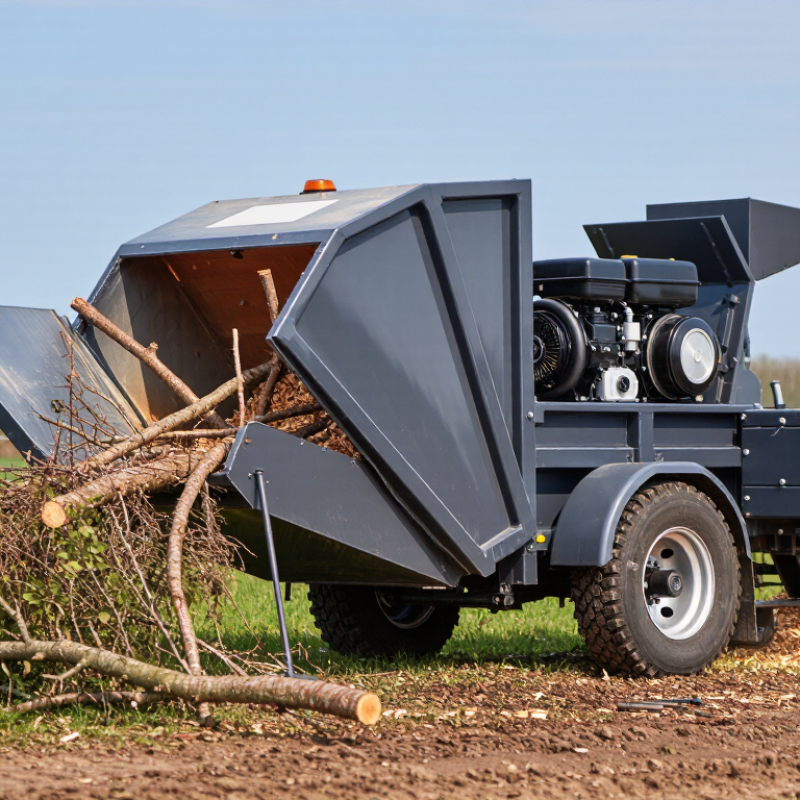
A heavy duty chipper shredder is a high-capacity machine designed to reduce branches, logs, brush, and other woody residues. Its core function combines chipping and shredding in one processing system. A feed hopper accepts bulky material, while rotating knives or hammers cut it into smaller pieces. Screens then control the final particle size.
The machine is built for demanding work. It usually includes a reinforced frame, a wide feed opening, high-torque power transmission, and a discharge chute. A chipper produces relatively uniform wood chips. A shredder tears mixed green waste into a less consistent mulch-like material. In field use, wet branches can reduce throughput and increase clogging. That detail is easy to underestimate.
The U.S. Environmental Protection Agency reported 35.4 million tons of yard trimmings generated in 2018, with about 24.4 million tons recovered through composting or mulching. This data shows why efficient size reduction matters in municipal and commercial waste operations. However, “heavy duty” has no single universal performance standard. Capacity depends on wood density, moisture, knife sharpness, engine output, and operator feeding practices. Bigger is not always better. A poorly matched machine may consume more fuel, create uneven material, and require frequent maintenance. In practical terms, the best definition is functional: it is equipment engineered to process large volumes of difficult organic material reliably, repeatedly, and with controlled output.
What Is a Heavy Duty Chipper Shredder?
Main Components and How the Machine Processes Organic Material
A heavy duty chipper shredder reduces branches, logs, leaves, and garden waste into smaller organic pieces. Its design combines cutting force, controlled feeding, and material screening. Real material is less cooperative than manuals suggest.
The hopper guides organic waste toward a rotating rotor. Hardened knives mounted on the rotor cut branches against fixed counter-knives. A strong engine supplies torque through a drive system, while bearings support the rotating assembly. The frame must resist vibration and repeated impact. Poor alignment can create uneven cuts and unnecessary wear.
The screen controls the final particle size. Smaller pieces pass through its openings, while larger pieces remain inside for another cutting cycle. Airflow and the discharge chute then move processed material away from the chamber. Moist leaves may clump, while dry branches can produce dust and sharp fragments. Feedstock changes everything.
In practical operation, an operator should inspect knives, fasteners, guards, and the screen before feeding material. Mixed waste often includes stones or hidden metal, which may damage cutting parts quickly. Feeding too much at once can overload the rotor and reduce processing quality. Slow feeding usually works better.
The machine does not create uniform compost-ready material automatically. Output size depends on the screen, knife condition, moisture, and material type. Even experienced operators can misjudge a wet, tangled pile. That is why inspection and adjustment remain necessary throughout the work.
| Category | Component or Process Stage | Primary Function | Typical Material or Operating Detail | Result |
|---|---|---|---|---|
| Machine Definition | Heavy-Duty Chipper Shredder | A powered size-reduction machine designed to process branches, logs, brush, leaves, and other plant-based organic material. | Usually combines chipping and shredding actions in one machine, although the exact design varies by model. | Smaller, more manageable organic material. |
| Material Handling | Feed Hopper and Infeed Chute | Receives organic material and guides it toward the cutting chamber while helping keep operators away from moving parts. | Accepts material within the machine’s specified feed opening; oversized or contaminated material should be removed before feeding. | Controlled and continuous material entry. |
| Material Handling | Feed Rollers or Feed Mechanism | Pulls branches and brush into the cutting chamber at a controlled rate. | Hydraulic or mechanical systems may be used; feed speed depends on material size, moisture, and machine design. | More consistent processing and reduced manual pushing. |
| Size Reduction | Chipper Disc or Chipper Drum | Uses rotating knives to cut larger wood pieces across the grain into chips. | Commonly used for branches and small logs; chip dimensions depend on knife geometry, clearance, and feed configuration. | Uniform wood chips. |
| Size Reduction | Shredder Rotor | Tears, cuts, or breaks softer and irregular organic material into smaller pieces. | Suitable for brush, leaves, garden waste, and mixed green material; it generally produces a less uniform output than a dedicated chipper. | Coarse shredded organic matter. |
| Cutting System | Knives, Blades, Hammers, or Flails | Provides the cutting, tearing, or impact action required to reduce material size. | Knife systems favor cleaner wood chips, while hammer or flail systems are commonly used for fibrous, leafy, or irregular feedstock. | Reduced particle size and improved handling. |
| Size Control | Screen or Sizing Grid | Limits the size of discharged particles and retains material that requires additional processing. | Screen openings are selected according to the desired output size and the material being processed. | More consistent discharge size. |
| Power System | Engine and Drive Assembly | Supplies rotational power to the cutting rotor, chipper disc, drum, feed system, and auxiliary components. | Heavy-duty units may use diesel or gasoline engines; power requirements vary with feed capacity and material density. | Mechanical energy for processing. |
| Power Transmission | Belts, Shafts, Bearings, and Clutches | Transfers engine power to rotating components and supports controlled engagement of the cutting system. | Correct belt tension, lubrication, alignment, and bearing condition are important for reliable operation. | Efficient and stable power transfer. |
| Discharge | Discharge Chute | Directs processed material away from the cutting chamber. | Adjustable chutes can help place chips or shredded material into a pile, container, trailer, or composting area. | Controlled material placement. |
| Discharge | Blower or Ejector System | Uses airflow or rotor momentum to move processed material through the discharge path. | Air-assisted discharge is more common on machines intended to project chips over a short distance. | Continuous removal from the cutting chamber. |
| Protection | Guarding and Emergency Controls | Reduces access to moving parts and provides a method for stopping the machine during an unsafe condition. | Typical safety features include guards, emergency-stop controls, feed-reverse controls, and interlocks, depending on the design. | Improved operator protection. |
| Processing Stage | 1. Inspection and Sorting | Operators inspect organic material and remove stones, metal, soil-heavy items, wire, and other contaminants. | Contaminants can damage knives, hammers, screens, bearings, and other internal components. | Safer and more reliable feeding. |
| Processing Stage | 2. Feeding | Material enters the hopper and is moved toward the cutting chamber by gravity, rollers, or a conveyor arrangement. | Material should be fed within the machine’s stated capacity and without forcing oversized pieces into the opening. | Material reaches the cutting zone. |
| Processing Stage | 3. Chipping | Rotating knives sever branches and woody pieces into chips. | Chipping performance is affected by wood diameter, species, moisture content, knife sharpness, and feed rate. | Wood chips with relatively defined dimensions. |
| Processing Stage | 4. Shredding | Rotating hammers, flails, knives, or other tools tear and break leaves, brush, and softer organic material. | Shredding normally creates a more varied particle shape than dedicated wood chipping. | Loosened and reduced organic material. |
| Processing Stage | 5. Screening and Recirculation | A screen or grid controls the material leaving the chamber; larger pieces may remain for additional impact or cutting. | Repeated processing can improve size consistency but may reduce throughput when material is wet or difficult to break. | Output that meets the selected size range. |
| Processing Stage | 6. Discharge and Collection | Processed material exits through the discharge chute and is directed to the desired collection or application area. | Material may be used for mulch, erosion-control cover, compost feedstock, or volume reduction, subject to local requirements. | Transportable and reusable organic residue. |
| Performance Factors | Feedstock Condition | Material properties influence cutting resistance, throughput, wear, and the quality of the final output. | Wet, tangled, fibrous, frozen, or contaminated material generally requires more power and can reduce processing efficiency. | Variable productivity and output quality. |
| Maintenance | Knife, Hammer, Screen, and Bearing Inspection | Routine inspection keeps cutting edges, impact tools, sizing components, and rotating supports in working condition. | Maintenance intervals should follow the equipment manual and operating conditions; damaged or dull cutting parts can increase vibration and power demand. | Reliable operation and controlled wear. |
What Is a Heavy Duty Chipper Shredder?
A heavy-duty chipper shredder processes branches, brush, logs, leaves, and garden debris. It combines cutting and shredding in one machine. The chipper section handles woody material, while the shredder section reduces softer waste. This matters on farms, parks, and storm-cleanup sites. According to the U.S. Environmental Protection Agency’s 2018 Advancing Sustainable Materials Management report, Americans generated about 35.4 million tons of yard trimmings. Nearly 69% was recovered through composting or mulching.
Clean branches and small tree trunks are usually suitable materials. Dense hardwood may require slower feeding and sharper blades. Leaves, grass clippings, vines, and thin brush can pass through the shredding chamber. Palm fronds and stringy plants are more difficult. They can wrap around rotating parts. Wet material may also clog the discharge path. A rough rule still fails.
The FAO Global Forest Resources Assessment 2020 reports 4.06 billion hectares of forest worldwide. However, forest availability does not make every piece of wood suitable for processing. Stones, soil, metal, glass, and treated wood can damage internal components or contaminate the output. The USDA Forest Service Wood Handbook also notes that wood density varies by species and moisture content. Therefore, two logs with identical diameters may demand different power levels. Operators should inspect debris carefully, adjust feed speed, and follow the machine’s rated material limits. Small mistakes become expensive quickly.
A heavy duty chipper shredder is built for continuous handling of branches, brush, and woody waste. Its performance depends on more than engine power. A large feed opening, hardened cutting components, steady torque, and controlled discharge reduce blockages during demanding work.
The U.S. Department of Labor’s OSHA guidance identifies guarding, emergency stops, and safe feeding practices as essential controls around chipping equipment.
Operator safety begins at the feed table.
Keep hands away from the opening, use a push tool for short material, and stand beside the feed path. Never climb onto the machine. NIOSH FACE investigation reports repeatedly link fatal incidents to entanglement, unexpected material movement, and bypassed safety devices.
A reversible feed system can help clear jams, but the engine must be stopped before inspection.
It sounds obvious. It is still ignored.
Noise and vibration also matter.
OSHA’s occupational noise standard uses 90 decibels over eight hours as the permissible exposure limit for many workplaces. Heavy duty machines can exceed that level near the discharge area, so hearing protection and exposure checks are practical requirements.
Guards should remain secure, access panels should close fully, and the emergency shutoff should be tested before each shift.
In real yards, rushed maintenance creates risk. A strong machine cannot correct poor habits.
A heavy-duty chipper shredder turns branches, brush, and woody debris into manageable chips. Its reliability depends on disciplined maintenance, not engine size alone. Before each shift, inspect guards, feed rollers, belts, fasteners, and emergency controls. Remove debris around the infeed throat. Never service moving parts.
Knife sharpness deserves close attention. Dull knives increase vibration, fuel use, and operator strain. Check the anvil gap according to the service manual. Lubricate bearings and inspect hydraulic hoses for abrasion or leaks. OSHA’s Wood Chipper Safety guidance emphasizes training, guarding, safe feeding, and energy isolation during servicing. A rushed inspection remains a weak inspection. Operators may also miss subtle changes in sound.
Applications vary across municipal, forestry, landscaping, and storm-cleanup work. The U.S. Environmental Protection Agency’s 2018 Advancing Sustainable Materials Management report recorded 35.4 million tons of yard trimmings generated in the United States. About 24.4 million tons were composted. Chipped material can support mulch production, erosion control, biomass handling, and site restoration when contamination is controlled. Forestry crews often process branches after thinning operations. Landscaping teams use smaller output for pathways and planting beds. Heavy-duty equipment is useful, but oversized machines can waste fuel on light workloads. That trade-off deserves review.
Regular maintenance helps preserve cutting performance, reduce downtime, and improve operator safety. The intervals below are typical operating-hour guidelines; always follow the equipment manufacturer's service manual for exact requirements.



