Sealless Pumps for a Safer and Greener World

Choosing the right supplier matters when battery performance affects medical devices, industrial sensors, robotics, or remote equipment. This guide introduces the Top 10 Specialty Battery Suppliers for Global Buyers, with attention to engineering capability, production consistency, and international service. These companies may offer lithium-ion, lithium primary, rechargeable systems, custom battery packs, and other Specialty Batteries for demanding applications.
The selection considers practical factors that purchasing teams often examine: cell quality, pack design, safety testing, traceability, certifications, minimum order quantities, and delivery support. A supplier may provide excellent prototypes but struggle with high-volume production. Another may offer strong manufacturing capacity but limited customization. That difference matters. Buyers should request test reports, datasheets, sample units, and clear warranty terms before signing a contract. Small details, such as connector placement or cold-weather capacity, can affect field performance.
This list is a research starting point, not a universal ranking. Supplier capabilities change, and published information can become outdated. Verify current certifications and regional compliance requirements directly with each company. Experienced buyers also compare cycle-life data under realistic loads, rather than relying only on headline specifications. Real conditions are rarely perfect. A battery tested at room temperature may perform differently inside a sealed enclosure or during repeated vibration.
Reliable sourcing requires technical questions, documented communication, and careful sample evaluation. The strongest supplier is not always the largest. It is the one that can consistently match the application, timeline, and risk profile.
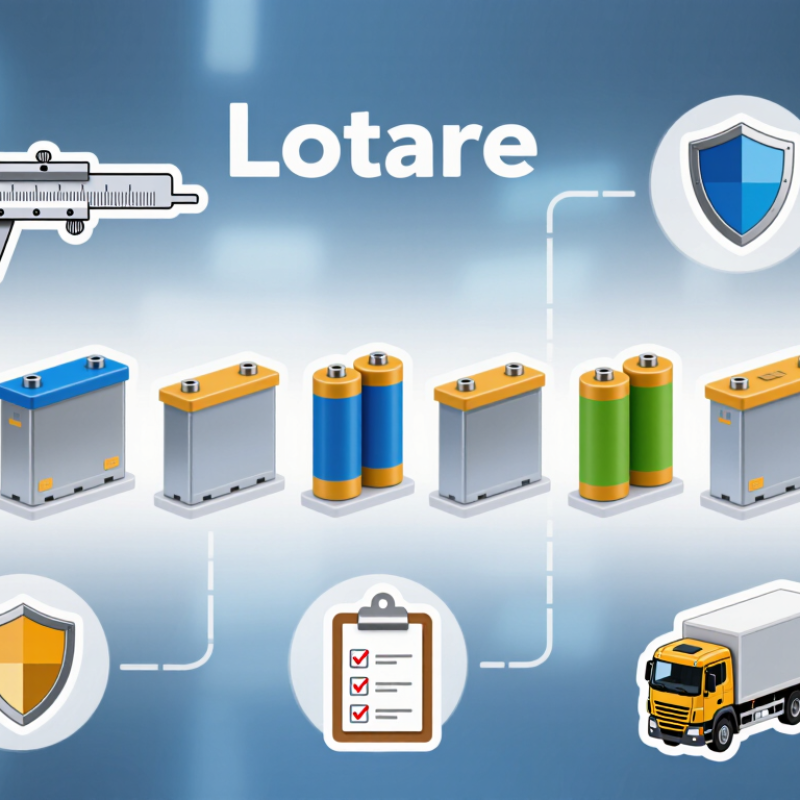
Specialty batteries are engineered for tasks that standard cells cannot handle efficiently. They may use unusual chemistries, compact shapes, extended shelf life, or carefully controlled discharge rates. A medical sensor, for example, might need a small cell that delivers stable power for months. An industrial monitor may require reliable operation in dust, vibration, or wide temperature ranges. The battery is not merely a power source. It is part of the device design.
Key features include high energy density, low self-discharge, dependable pulse performance, and customized terminals or casings. Rechargeable models are evaluated through cycle testing, thermal checks, and capacity retention. Primary cells often receive closer attention for storage life and leak resistance. Serious suppliers should provide test records, material traceability, transport documentation, and quality controls aligned with recognized international standards. Specifications matter.
Global buyers comparing specialty battery suppliers should examine engineering support, sample testing, production consistency, and communication speed. A supplier that offers only a catalog may not understand the final application. Ask how cells perform after storage, vibration, or repeated temperature changes. Small details matter.
No specification is complete.
A practical concern is often missed: laboratory results may not reflect field conditions. A battery could pass a capacity test yet fail inside a cold, tightly sealed device. Buyers should validate prototypes under realistic loads before approving volume production. The process may feel slower, but it exposes weaknesses early and protects equipment reliability.
Choosing specialty battery suppliers requires more than comparing quoted prices.
Procurement teams should verify cell chemistry, cycle-life testing, thermal behavior, and production traceability. The IEA’s Global EV Outlook 2024 reported that global battery demand exceeded 750 GWh in 2023, increasing pressure on materials and manufacturing capacity. This matters for smaller orders. A supplier may promise short lead times, then prioritize larger contracts.
Request independent test records, not only laboratory summaries. Check IEC 62133-2, UN 38.3, ISO 9001, RoHS, and applicable recycling obligations. Ask for sample-level data, including discharge curves at low temperatures and capacity after repeated cycles. A battery rated for 2,000 cycles may achieve less in a sealed medical device. Real conditions are rarely perfect.
Tips: Build a weighted scorecard covering safety, consistency, engineering support, warranty terms, and financial stability. Audit one production line when possible. Inspect incoming cells, barcode records, and humidity controls. Also examine the supplier’s second-source strategy.
BloombergNEF’s 2024 Battery Price Survey placed average lithium-ion pack prices at 115 dollars per kWh, a 20% annual decline. Lower prices can improve budgets, but specialty batteries often carry higher testing and customization costs. Do not treat a low quotation as proof of value.
My practical view is less comfortable: even a well-qualified supplier can fail during a sudden material shortage. Keep contingency stock, but calculate its aging cost carefully.
The leading ten specialty battery suppliers compete through engineering depth, not catalog size. Their capabilities cover lithium primary cells, rechargeable packs, thin-film designs, solid-state prototypes, and custom battery systems. Some support medical sensors with miniature cells. Others build rugged packs for aerospace, defense, industrial monitoring, and remote infrastructure. Safety testing, traceability, and stable thermal performance remain essential purchasing criteria.
The International Energy Agency reported that global electric-vehicle battery demand exceeded 750 GWh in 2023. That scale is reshaping materials access and production discipline. BloombergNEF reported an average lithium-ion pack price of 115 US dollars per kWh in 2024. Specialty batteries cost more because they require tighter tolerances, certification, and low-volume customization. Suppliers with in-house cell design can reduce integration risk.
The strongest suppliers offer chemistry selection, battery management systems, enclosure design, and validation testing. They also provide sample builds before mass production. This practical step often reveals connector, charging, or heat issues. Some suppliers still overpromise cycle life. Buyers should request test conditions, failure-rate data, and independent laboratory evidence. A polished datasheet is not enough. Forecast accuracy also matters, although even experienced teams can misjudge demand. Lasanble
Specialty battery suppliers now support medical devices, robotics, aerospace equipment, and remote sensors. Their solutions extend beyond standard lithium-ion packs. Lithium iron phosphate offers strong thermal stability and long cycle life. Nickel-rich cells provide higher energy density, but require tighter temperature control. Solid-state designs remain promising, although production scale and cost still need improvement.
The International Energy Agency reported that global battery demand in the energy sector reached about 750 GWh in 2023. Electric vehicles represented most of this growth. However, specialty buyers often need different priorities. A surgical monitor may require low noise and stable discharge. An inspection drone may need high energy density and rapid charging. Outdoor sensors may require wide-temperature performance, sealed housings, and multi-year shelf life. Custom options can include cell chemistry, voltage, battery management software, connectors, enclosure materials, and certification testing.
Supplier evaluation should include real cycle data, abuse-test results, traceability, and field-service experience. The IEC 62133 standard remains relevant for portable sealed secondary cells and batteries. UN 38.3 testing is also essential for transport compliance. Buyers should request test conditions, not only headline capacity. A battery rated at 10 Ah may deliver less under cold temperatures or high current. This is easy to overlook. I would also question optimistic lifetime claims, because laboratory cycles rarely match vibration, dust, irregular charging, and human mistakes in the field.
| No. | Specialty Supplier Profile | Primary Battery Technology | Typical Electrical Range | Typical Pack-Level Energy Density | Customization Options | Common Compliance Targets | Typical Industry Use Cases | Key Procurement Considerations |
|---|---|---|---|---|---|---|---|---|
| 1 | Medical Device Battery Specialist | Lithium-ion NMC Lithium-polymer | 3.7–25.2 V nominal; commonly 1–6 series cells | Approximately 100–200 Wh/kg | Custom enclosure, low-profile cells, fuel-gauge electronics, state-of-charge display, locking connectors, temperature sensing, sterilization-compatible housings | UN 38.3; IEC 62133-2; applicable medical-device quality and risk-management requirements | Patient monitors, portable ultrasound systems, infusion equipment, diagnostic instruments, powered medical carts | Traceability, battery life under clinical duty cycles, alarm behavior, transport documentation, and controlled change management |
| 2 | Industrial Robotics Battery Specialist | Lithium-ion NMC Lithium iron phosphate | 24–96 V nominal; capacities commonly 20–300 Ah | Approximately 90–180 Wh/kg | CAN or RS-485 communication, high-current connectors, quick-swap modules, shock-resistant housings, regenerative-braking support, active thermal monitoring | UN 38.3; IEC 62619 for industrial lithium secondary cells and batteries; application-specific machinery requirements | Automated guided vehicles, autonomous mobile robots, warehouse equipment, collaborative robots, floor-cleaning machines | Cycle life, peak-current capability, charging time, communication protocol compatibility, vibration resistance, and serviceability |
| 3 | Light Electric Vehicle Battery Specialist | Lithium-ion NMC Lithium iron phosphate | 36–72 V nominal; capacities commonly 10–40 Ah | Approximately 110–190 Wh/kg | Custom frame or downtube formats, smart BMS, anti-theft communication, waterproof connectors, thermal cut-off, charger matching, vibration-resistant mounting | UN 38.3; IEC 62133-2; regional requirements for e-bikes, scooters, and light electric vehicles | E-bikes, electric scooters, delivery vehicles, mobility aids, compact utility vehicles | Mechanical integration, water and dust protection, abuse protection, charging compatibility, local transport rules, and field-replaceable design |
| 4 | Marine and Recreational Battery Specialist | Lithium iron phosphate Absorbent glass mat lead-acid | 12, 24, or 48 V nominal; capacities commonly 50–600 Ah | Approximately 35–140 Wh/kg, depending on chemistry | IP-rated housings, marine-grade terminals, low-temperature charge protection, parallel connection support, battery heating, remote monitoring, corrosion-resistant hardware | UN 38.3 for lithium batteries; applicable marine electrical and installation requirements | Electric boats, trolling motors, navigation systems, onboard electronics, recreational vehicles, marine auxiliary power | Saltwater corrosion protection, compartment ventilation, low-temperature operation, fire-risk management, shock resistance, and installation space |
| 5 | Telecom Backup Battery Specialist | Lithium iron phosphate Valve-regulated lead-acid | Typically 48 V nominal; modular systems from 1 to 10 kWh | Approximately 35–160 Wh/kg, depending on chemistry | 19-inch rack mounting, front-access terminals, hot-swappable modules, remote monitoring, thermal sensors, cabinet integration, parallel strings | UN 38.3 for lithium systems; IEC 62619 where applicable; stationary battery and telecom installation requirements | Cellular base stations, broadband networks, edge-computing sites, network cabinets, emergency communication systems | Backup duration, calendar life, high-temperature performance, remote diagnostics, rack compatibility, and maintenance intervals |
| 6 | Residential and Commercial Energy Storage Specialist | Lithium iron phosphate Flow battery systems | 48–1,000 V DC system architecture; commonly 5–500 kWh | Approximately 70–180 Wh/kg for lithium-based systems | Modular cabinets, battery-management software, inverter compatibility, indoor or outdoor enclosures, liquid or air cooling, fire detection, remote energy monitoring | UN 38.3; IEC 62619; stationary energy-storage safety requirements such as UL 1973 or equivalent regional standards | Solar self-consumption, peak shaving, microgrids, backup power, commercial load shifting, renewable-energy integration | Round-trip efficiency, usable depth of discharge, warranty cycle limits, thermal propagation controls, installation permits, and grid-interconnection requirements |
| 7 | Aerospace and High-Reliability Battery Specialist | High-reliability lithium-ion Lithium primary cells | Application-specific; commonly 12–50 V battery assemblies | Approximately 100–220 Wh/kg, depending on design and qualification level | Redundant monitoring, custom telemetry, hermetic or sealed packaging, low-outgassing materials, radiation-aware component selection, specialized connectors, qualification testing | UN 38.3; customer-defined aerospace, defense, environmental, vibration, shock, and electromagnetic-compatibility requirements | Uncrewed aircraft, avionics backup, satellite subsystems, remote sensing equipment, high-altitude platforms, defense electronics | Qualification evidence, lot acceptance testing, long-term storage behavior, vibration and thermal-vacuum performance, export controls, and documentation depth |
| 8 | Portable Electronics and Wearable Battery Specialist | Lithium-polymer Lithium-ion pouch cells | 3.7 V nominal; commonly 100 mAh–10 Ah | Approximately 150–250 Wh/kg at cell level | Ultra-thin or shaped cells, custom tabs, protection circuits, thermistors, adhesive mounting, short-circuit protection, flexible cable assemblies, fuel gauges | UN 38.3; IEC 62133-2; applicable product-safety and radio-equipment requirements | Wearable devices, handheld scanners, portable terminals, smart sensors, consumer electronics, compact instruments | Minimum order quantity, dimensional tolerance, swelling control, connector reliability, charging profile, shelf life, and sample approval process |
| 9 | Industrial NiMH and Legacy Battery Specialist | Nickel-metal hydride Nickel-cadmium alternatives | 1.2 V per cell; commonly 6–24 cells per pack | Approximately 60–120 Wh/kg | Drop-in replacement formats, custom tabs, temperature sensors, high-rate cells, maintenance chargers, legacy connector matching, ruggedized housings | UN 38.3 where applicable; IEC 62133-1 for portable sealed secondary cells; regional restrictions on hazardous substances | Emergency lighting, industrial controls, backup instrumentation, cordless tools, railway equipment, legacy medical and automation systems | Compatibility with existing chargers, memory-effect expectations, self-discharge, operating temperature, replacement availability, and end-of-life recycling |
| 10 | Emerging Solid-State and Pilot-Scale Battery Specialist | Solid-state lithium Advanced lithium-metal | Typically 3.6–4.2 V per cell; pilot modules are application-specific | Target ranges may exceed 200 Wh/kg, but commercial pack results vary widely | Prototype cell formats, custom test fixtures, controlled charging algorithms, research-grade BMS, small-batch modules, accelerated-life testing | UN 38.3 when shipped as transportable batteries; customer-defined validation, abuse, thermal, and cycle-life testing | Research platforms, aerospace prototypes, premium mobility concepts, medical prototypes, high-energy portable equipment | Technology-readiness level, production scalability, repeatability, charging limits, sample-to-sample variation, qualification timeline, and intellectual-property ownership |
Top 10 Specialty Battery Suppliers for Global Buyers
Global battery sourcing depends on more than unit price. Buyers should examine cell chemistry, cycle-life data, operating temperature, and safety controls. A capable supplier provides test reports linked to specific production batches. Small details matter. Ask for evidence, not polished claims. Factory audits, sample testing, and traceable serial records can reveal differences that brochures hide. In my sourcing experience, suppliers with clear limits often prove more reliable than those promising perfect performance.
Compliance must match the destination market and the battery’s intended use. Check transport documents, safety testing, labeling, recycling obligations, and required conformity records before placing an order. Requirements can change by country and application. A supplier should explain who prepares each document and when updates occur. Missing paperwork can delay a shipment for weeks. It is also wise to verify whether test results cover the exact model, not merely a similar design.
Logistics planning should include packaging, temperature exposure, storage limits, lead times, and emergency procedures. Request a realistic production schedule with inspection points. Support matters after delivery, especially when field data shows unexpected capacity loss. Engineers should respond with measurements and corrective actions, rather than vague reassurance. No supplier is perfect. Even experienced buyers can underestimate forecast changes or port delays. A small pilot order, followed by performance review, can expose weak communication before larger commitments begin.
Global Sourcing Factors: Quality, Compliance, Logistics, and Support
This benchmark model assigns a 100-point sourcing-priority score to the factors most commonly assessed in international battery procurement. Quality consistency and regulatory compliance receive the highest weighting, followed by delivery reliability, technical support, and commercial flexibility.
Benchmark basis: normalized buyer-evaluation framework for specialty battery sourcing; scores are not linked to any individual supplier or brand.



