Sealless Pumps for a Safer and Greener World

In the world of industrial fluid management, the choice of pressure pump can greatly influence operational success. Renowned expert Dr. Linda Hayes, a leading authority in pump technology, once stated, "The right pressure pump not only enhances efficiency but also reduces downtime." With this insight, businesses can grasp the critical nature of selecting the appropriate pressure pump type for their specific needs.
Pressure pumps come in various designs, each tailored for distinct applications. Whether dealing with high-pressure systems or demanding fluid types, understanding these differences is essential. Many organizations overlook this factor, resulting in inefficiencies and increased costs. The diverse landscape of pressure pumps offers options like centrifugal and positive displacement pumps, each presenting unique advantages and challenges.
Optimal performance hinges on selecting the right pressure pump. Yet, even industry veterans find this choice complex. Factors such as energy consumption and maintenance requirements must be considered. A well-chosen pump can significantly enhance productivity, while a poor selection can lead to ongoing issues. Investing time in exploring these pump types can yield substantial returns in efficiency and durability.
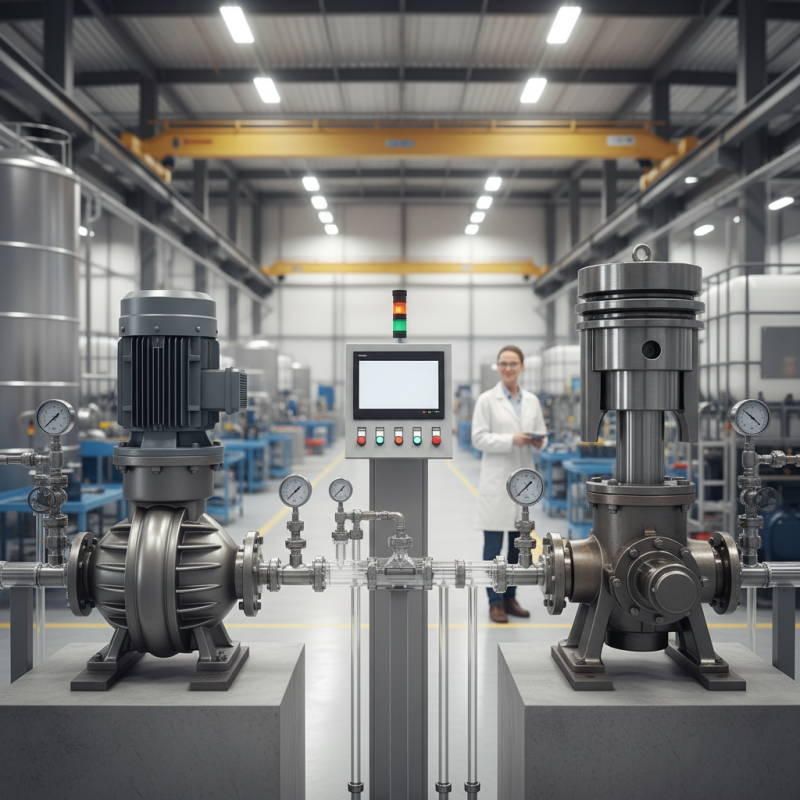
Choosing the right pressure pump is crucial for
optimal performance and efficiency in various applications. Different pump types serve
distinct purposes. For instance, positive displacement pumps
are known for their ability to handle viscous fluids with precision. According to a report by
the Hydraulic Institute, these pumps maintain a steady flow rate, which is advantageous in
processes requiring consistent pressure.
Centrifugal pumps, on the other hand, dominate the market for
moving liquids efficiently. These pumps are ideal for
applications with lower viscosity. Data from the American Society of Mechanical Engineers (ASME)
indicates that centrifugal pumps account for nearly 80% of the total pump market.
However, their performance can be affected by fluctuations in fluid properties, necessitating careful selection
based on specific needs.
In sectors such as water management and
industrial processes, the choice becomes even more critical. For example,
pump efficiency is a key performance indicator. Studies show that improper pump
selection can lead to energy losses of up to 30%. This highlights the
need for thorough consideration of pump types and their respective applications.
Engaging with experts can provide valuable insights into making the right choice.
Pressure pumps play a vital role in many industries. Their basic function is to move liquid from one point to another. They use energy to increase the pressure of the liquid, enabling it to flow efficiently. Understanding how these pumps work can enhance both performance and efficiency.
When choosing a pressure pump, consider the application. Different types perform uniquely under specific conditions. Centrifugal pumps, for example, are ideal for low-viscosity liquids. They offer high flow rates but may struggle with high-pressure applications. Positive displacement pumps, on the other hand, excel in high-pressure situations but can be less efficient for simple liquid transfer.
**Tip:** Regular maintenance is essential. Check for leaks and wear in seals or valves. Addressing these issues promptly can prevent costly downtime.
In addition, pump placement affects overall performance. Ensure pumps are positioned to minimize suction lift. This reduces the effort needed for the pump to draw liquid and promotes longevity.
**Tip:** Inquire about the operating conditions and fluid characteristics before selecting a pump. Knowledgeable professionals can help you avoid mistakes. It’s common to overlook drivetrain alignment, which can lead to premature pump failure and increased energy consumption.
Pressure pumps play a vital role in various industries, and optimizing their efficiency is crucial. Several factors significantly influence how well these pumps perform. First, the design of the pump affects its efficiency. For instance, vortex pumps typically exhibit lower efficiency compared to centrifugal pumps at high flow rates. Research shows that even small changes in pump design can alter efficiency by up to 20%.
Another critical factor is the operating conditions. Pressure, temperature, and fluid viscosity can all impact a pump's performance. A study indicates that operating a pump outside its optimal range can reduce efficiency by nearly 30%. Therefore, understanding the operating environment is essential for maintaining optimal performance.
Tips: Regular maintenance is key. Scheduled check-ups can prevent significant efficiency losses. Also, monitoring the pump's operating conditions can help identify potential issues early on. Investing in training for operators can enhance overall efficiency. Knowledgeable staff can optimize settings according to varying conditions.
In conclusion, effectively managing these factors can lead to more reliable and efficient pressure pumps. As industry standards evolve, continuous learning and adjustment are necessary for achieving peak performance.
When comparing reciprocating and centrifugal pressure pumps, it’s important to consider their design and function.
Reciprocating pumps use pistons to create pressure, moving fluid in a back-and-forth motion. This method can handle high-viscosity fluids and offers precise flow rates. However, they tend to require more maintenance due to their mechanical parts. Regular inspections are crucial to avoid failures.
On the other hand, centrifugal pumps operate using a rotating impeller to move fluid. This design is generally more efficient for low-viscosity fluids. They can achieve higher flow rates and are simpler to maintain. However, they may struggle with high-pressure applications and can be sensitive to changes in fluid characteristics. Understanding these differences helps in selecting the right pump for specific needs.
Both pump types have their advantages and downsides. Reciprocating pumps excel in specific applications but require diligent upkeep. Centrifugal pumps are highly favored for their efficiency, yet may not perform well in all situations. Reflecting on these aspects helps ensure optimal performance and efficiency in various pumping applications.
When discussing pressure pumps, different types serve distinct roles across industries. Centrifugal pumps are widely utilized in water treatment plants. Their ability to move water quickly makes them efficient for large-scale operations. However, they may struggle with highly viscous fluids. This limitation can hinder their adaptability in certain applications.
Positive displacement pumps find their niche in oil and gas exploration. They excel at handling thick fluids, ensuring consistent flow rates. Yet, they can produce more wear on components over time. This aspect must be considered in maintenance schedules. The right choice of pump influences not only efficiency but also operational cost.
In the agricultural sector, diaphragm pumps are popular for irrigation systems. These pumps can handle abrasive materials without damaging internal parts. Despite their robustness, they can be less effective for high-pressure applications. Evaluating the specific requirements of each industry is crucial for optimal performance.
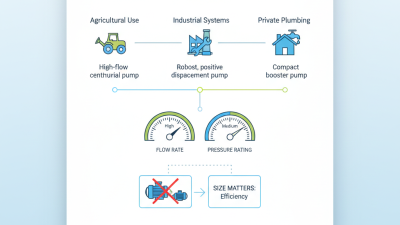
The chart below illustrates the applications and efficiency ratings of various pressure pump types used across different industries.
Pressure pumps play a crucial role in various industrial applications by delivering fluids efficiently and effectively. Understanding the basic functionality of these pumps is essential for optimizing their performance and efficiency. Key factors that influence pressure pump efficiency include the design, operating conditions, and maintenance practices.
This article compares reciprocating and centrifugal pressure pumps, highlighting their unique features and suitable applications across different industries. Additionally, it provides valuable maintenance tips to ensure long-term performance, emphasizing the importance of regular servicing and monitoring. By selecting the appropriate pressure pump type and maintaining it properly, industries can enhance productivity and reduce operational costs.