Sealless Pumps for a Safer and Greener World

China’s Invar Material industry supports precision applications where thermal movement must remain extremely small. Invar 36 typically contains about 36% nickel and shows a low coefficient of thermal expansion near room temperature. That performance suits optical benches, satellite components, semiconductor tooling, cryogenic equipment, and precision molds.
Market demand is connected to wider trends in aerospace, electronics, and advanced manufacturing. The International Energy Agency’s Global Critical Minerals Outlook 2024 highlights the growing strategic importance of nickel supply chains. The U.S. Geological Survey’s Mineral Commodity Summaries 2024 also reports continuing global dependence on nickel for engineered alloys and industrial products. These reports do not measure Invar demand directly. Still, they clarify the material’s supply risks and cost pressures.
China has a broad supplier base, including producers of Invar sheet, plate, rod, tube, wire, and machined parts. Reliable manufacturers should provide chemical certificates, heat-treatment records, dimensional reports, and traceability documents. ASTM F1684 is a useful reference for evaluating iron-nickel alloys with controlled expansion characteristics. However, compliance claims require careful verification. A certificate alone is not proof of stable production.
Real performance depends on melting practice, rolling control, annealing, and final machining. Small differences can affect expansion values. That matters when a component must hold a tight optical alignment or maintain a repeatable gap. Supplier comparisons should examine test methods, production capacity, export experience, and response quality. Some online rankings remain incomplete. This guide therefore focuses on evidence, technical capability, and practical purchasing risks when identifying China’s top Invar Material manufacturers and suppliers.
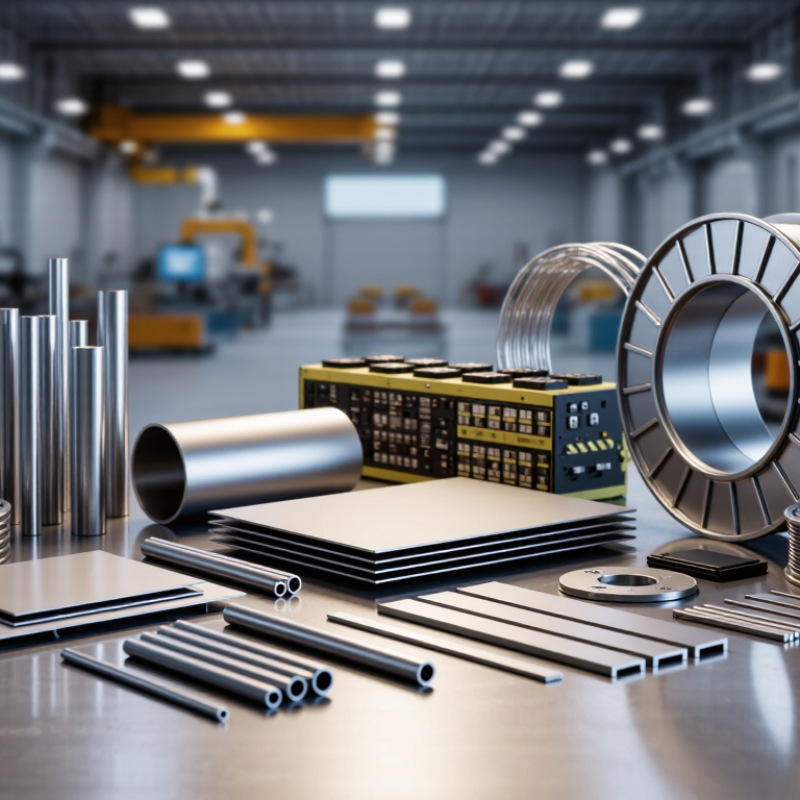
Invar is a nickel-iron alloy designed to resist thermal expansion. Its nominal composition contains about 36% nickel, according to ASTM F1684. ASM Handbook data report a room-temperature coefficient of thermal expansion near 1.2–1.5 μm/m·K. Ordinary steel expands much more under the same conditions. That difference matters when a component must hold a tight dimension.
Invar is used for precision rulers, optical benches, aerospace frames, electronic packages, and instrument parts. A 1000-millimeter Invar rail may change by only about 0.12 millimeters after a 100°C temperature increase. The exact result depends on grade, heat treatment, stress, and measurement direction. It is not magic. Residual machining stress can still cause movement later. That risk is often underestimated.
The alloy performs best near room temperature. Its expansion rises sharply as it approaches the Curie temperature, commonly around 230°C. Suppliers should provide chemical analysis, thermal-expansion curves, grain information, and heat-treatment records. ASTM F1684 offers a useful purchasing reference. However, a certificate alone cannot prove stable performance in every design. Engineers should test finished parts through expected temperature cycles. Small errors become expensive in optical and semiconductor equipment. Careful aging, controlled machining, and gradual stress relief remain important, especially for large Chinese-made components.
| Data Dimension | Verified Material or Supply Information | Why It Matters to Buyers |
|---|---|---|
| Material definition | Invar is a group of low-expansion iron-nickel alloys. The most widely used grade is Invar 36, also known as Fe-Ni36. | The alloy is selected when dimensional stability is more important than high strength or low cost. |
| Typical chemical composition | Invar 36 generally contains approximately 36% nickel, with iron as the balance. Typical maximum limits include carbon about 0.02%, manganese about 0.50%, silicon about 0.25%, phosphorus about 0.025%, and sulfur about 0.025%; exact limits depend on the applicable specification. | A controlled chemistry is essential for achieving the required thermal-expansion performance and consistency between production lots. |
| Common designations | UNS K93600 and EN 1.3912 are commonly associated with Invar 36. Specifications may also identify the alloy as Fe-Ni36 or Ni36Fe. | Using the correct designation reduces the risk of receiving a similar-looking but unsuitable nickel-iron alloy. |
| Coefficient of thermal expansion | The average coefficient of thermal expansion is approximately 1.2 × 10⁻⁶/K over roughly 20–100°C, although the reported value varies with temperature, heat treatment, product form, and test method. | Low expansion helps maintain alignment, spacing, and dimensional accuracy during temperature changes. |
| Density | Approximately 8.05 g/cm³ at room temperature. | Invar is heavier than aluminum and many stainless steels, so weight should be considered in lightweight assemblies. |
| Magnetic behavior | Invar 36 is ferromagnetic below its Curie temperature, which is approximately 230°C, and its magnetic properties change as temperature approaches this point. | Magnetic response must be evaluated when the component is used near sensors, precision instruments, or magnetic fields. |
| Mechanical characteristics | Typical annealed Invar 36 has a tensile strength around 450–550 MPa and yield strength commonly around 240–350 MPa, depending on product condition and test requirements. | Mechanical values should be confirmed from the supplier’s mill certificate rather than assumed from the alloy name alone. |
| Available product forms | Common forms include sheet, plate, strip, foil, bar, rod, wire, tube, precision-machined parts, and welded fabrications. | The required form affects minimum order quantity, lead time, machining allowance, and total production cost. |
| Typical thickness and size range | Commercial suppliers may offer foil below 0.10 mm, thin strip and sheet from approximately 0.10 mm upward, and plate or bar in larger custom dimensions. Actual availability varies by mill capability. | Buyers should provide thickness, width, length, flatness, tolerance, and quantity when requesting quotations. |
| Manufacturing and processing | Invar can be cut, formed, machined, drilled, welded, brazed, and surface finished. Its low thermal conductivity and work-hardening tendency require controlled cutting parameters and adequate cooling. | Processing conditions can influence distortion, residual stress, dimensional accuracy, and final thermal-expansion behavior. |
| Stress relief and stabilization | Stress-relief annealing, stabilization treatments, and controlled cooling may be specified after forming or rough machining to reduce dimensional movement. | Precision parts may require a defined heat-treatment sequence before final machining and inspection. |
| Welding considerations | Invar is weldable using suitable processes such as TIG, laser, or resistance welding. Heat input, joint design, filler selection, and post-weld stress relief require engineering control. | Improper welding can cause local distortion and dimensional changes that are significant in precision assemblies. |
| Common applications | Typical applications include optical benches, precision instrument frames, cryogenic equipment, electronic package components, measuring equipment, aerospace tooling, glass-sealing components, and temperature-stable structures. | The material is useful where thermal movement could impair calibration, optical alignment, sealing, or component positioning. |
| Corrosion resistance | Invar provides moderate atmospheric corrosion resistance but is not generally selected as a substitute for highly corrosion-resistant stainless or nickel alloys. | Surface protection or a different alloy may be required for marine, chemical, or high-humidity service. |
| Relevant quality documents | A professional supplier should be able to provide chemical analysis, mechanical test results when specified, dimensional inspection data, surface-condition details, heat-treatment records, and a material certificate traceable to the production lot. | Documentation supports incoming inspection, regulatory compliance, and traceability for critical components. |
| Supplier capability categories | China-based supply channels commonly include integrated alloy mills, precision strip and foil producers, metal service centers, custom machining workshops, and fabricated-component suppliers. | The best supplier type depends on whether the requirement is raw material, narrow-tolerance strip, near-net-shape parts, or a finished assembly. |
| Key quotation requirements | Specify grade, standard or designation, product form, dimensions, tolerances, surface finish, condition, heat treatment, quantity, inspection requirements, packaging, and destination. | Clear technical requirements make quotations comparable and help prevent substitutions or unexpected surcharges. |
| Main purchasing risks | Common risks include incorrect nickel content, inconsistent thermal-expansion results, excessive residual stress, poor flatness, inadequate traceability, and insufficient control of weld or machining distortion. | Pre-production samples, approved drawings, third-party testing, and lot-by-lot certificates can reduce technical and delivery risk. |
Note: Material properties are typical reference values. Final acceptance should be based on the applicable specification, purchase order, test method, and supplier certificate.
Invar alloys are valued for their unusually low thermal expansion. Their iron-nickel structure limits dimensional movement as temperatures change. Invar 36 typically contains about 36% nickel and remains the most recognized low-expansion grade. Near room temperature, its coefficient of thermal expansion can approach 1.2 × 10⁻⁶/K, although the actual value depends on temperature, processing, and testing method.
Invar 42 offers a higher expansion rate than Invar 36 and can help match glass, ceramics, or selected electronic materials. Invar 48 expands further and may suit controlled sealing or joining applications. These grades are not interchangeable. Chemical composition matters, but so do annealing, cold work, grain direction, and surface condition. Small processing differences can affect fit.
Reliable suppliers should provide heat numbers, chemical reports, mechanical data, and thermal expansion results. Ask whether the material was stress-relief annealed or fully annealed. Flatness and thickness tolerance also deserve attention, especially for etched parts and precision frames. In practical inspections, a certificate alone is not enough. A sample may still warp after machining if residual stress remains. This is often overlooked.
Low expansion is not the only selection criterion. Welding behavior, corrosion protection, strength, and service temperature must be reviewed together. No grade is universally best. That distinction is easy to miss.
China’s leading Invar material manufacturers serve precision sectors that cannot tolerate ordinary thermal movement. Invar 36, containing about 36% nickel, typically delivers a near-zero expansion range around room temperature. Published technical data commonly reports a coefficient near 1.2 µm/m·°C from 20°C to 100°C. Actual results vary with heat treatment, rolling direction, and test method.
Reliable Chinese manufacturers usually provide sheet, plate, bar, tube, and custom-machined parts. Their stronger facilities control melting, vacuum refining, forging, annealing, and final inspection under one system. ASTM E228 testing helps verify thermal expansion, while ISO 6892-1 supports tensile-property checks. Buyers should request batch-level chemistry, grain-size results, surface inspection records, and dimensional reports. A polished surface may still hide internal stress.
Raw-material security also matters. The USGS Mineral Commodity Summaries 2024 reported global mined nickel production at approximately 3.6 million metric tons in 2023. Indonesia supplied about half of that output. This concentration can influence alloy costs and delivery planning. Experienced suppliers should explain their nickel sourcing and provide realistic lead times, not optimistic promises. I have found that a low quotation often excludes ultrasonic testing, edge trimming, or export packaging. That is easy to miss. Chinese manufacturers seeking long-term supply relationships should also discuss prototype support, traceability, and corrective-action procedures when a batch fails inspection.
Reference comparison of widely used iron–nickel controlled-expansion alloy grades. The values shown are nominal nickel contents; actual specifications may vary by applicable standard, heat treatment, and product form.
Material note: Invar alloys are selected for applications requiring low thermal expansion. Invar 36 contains approximately 36% nickel and typically provides a thermal expansion coefficient near 1.2 × 10⁻⁶/K over a controlled temperature range. Higher-nickel grades generally exhibit higher thermal expansion and are used when a specific expansion match is required.
Evaluating Chinese Invar material suppliers requires more than comparing prices. Invar, commonly a nickel-iron alloy, is selected for its low thermal expansion. Ask each supplier for chemical composition, thermal expansion data, hardness results, and applicable material standards. Review heat numbers on mill certificates and confirm that they match the delivered coils, sheets, or machined parts. Samples reveal more. Request a small batch before approving a large order, then test it under your actual temperature range. A supplier may provide excellent laboratory data but still struggle with flatness, surface scratches, or dimensional stability after machining.
Factory evidence matters. Examine production equipment, furnace records, inspection procedures, and calibration dates. Reliable suppliers should explain how they control annealing, cutting, packaging, and moisture protection. Ask for reports from qualified independent laboratories when the application is sensitive. Clear answers usually show process knowledge. Vague promises create risk. Communication is another practical test: send a drawing with tolerances and observe whether the supplier identifies missing details. Check production capacity, lead times, traceability, and corrective-action records rather than trusting a polished website.
Do not choose solely by the lowest quotation. Very low prices may hide thinner tolerances, substituted grades, or incomplete testing. I would also compare several sample results, because one successful piece proves little. Some evaluations fail by focusing on paperwork while ignoring how the material behaves during welding or precision forming. That weakness deserves attention before a purchase order is issued.
China Top Invar Material Manufacturers and Suppliers
Applications, Quality Standards, and Export Services
Invar materials are nickel-iron alloys with very low thermal expansion near room temperature. Manufacturers supply sheets, bars, tubes, wires, and precision machined parts. These products support optical benches, sensor housings, electronic frames, measuring instruments, and aerospace assemblies. Dimensional stability matters most.
Experienced suppliers control melting, rolling, annealing, and surface finishing. Each batch should include chemical composition records and heat numbers. Thermal expansion testing is essential. Testing laboratories may follow recognized ASTM or ISO methods, depending on the product and contract. Some buyers also request hardness, tensile strength, flatness, and ultrasonic inspection results.
Quality systems should include documented procedures, calibrated equipment, and traceable inspection reports. ISO 9001 certification can support confidence, but it does not replace product testing. A practical supplier explains tolerances before production begins. Not every quotation is complete. Some omit machining allowance, packaging details, or testing temperature. That creates avoidable disputes.
Export services should cover moisture-resistant packaging, clear markings, commercial invoices, packing lists, certificates of origin, and inspection documents. Suppliers should confirm delivery terms, port arrangements, and import requirements with the buyer. Wooden cases may need compliant treatment and identification. Communication also matters during production. Progress photographs and pre-shipment checks can reveal scratches, warping, or incorrect dimensions.
Small gaps become costly. A careful supplier admits uncertainty and proposes verification instead of making broad promises.



