Sealless Pumps for a Safer and Greener World

Electric Power Substations are where transmission plans meet physical equipment: transformers, breakers, protection relays, and control systems. The International Energy Agency’s 2023 report, Electricity Grids and Secure Energy Transitions, says more than 80 million kilometres of grids must be added or refurbished by 2040. That is roughly the length of today’s global grid. The report also estimates that annual grid investment needs to exceed USD 600 billion by 2030, up from about USD 300 billion. These are grid-wide figures, not substation-only forecasts. Still, they signal why reliable equipment and capable suppliers matter. A transformer’s hum is ordinary. Its failure is not.
China has a broad supplier base, but a catalogue alone proves little. Buyers comparing manufacturers should examine voltage ratings, short-circuit performance, factory test records, protection and control capabilities, delivery experience, and after-sales support. Ask how claims are verified. Check the details.
IEA Executive Director Fatih Birol described electricity grids as “the missing link in clean energy transitions.” His observation concerns grids as a whole, yet substations are part of that link. This overview introduces leading Chinese suppliers and the evidence readers can use to assess them. It is not a substitute for project-specific engineering review. Supplier rankings can also miss important differences: a strong product range does not automatically mean a good fit for every site. That deserves a closer look.
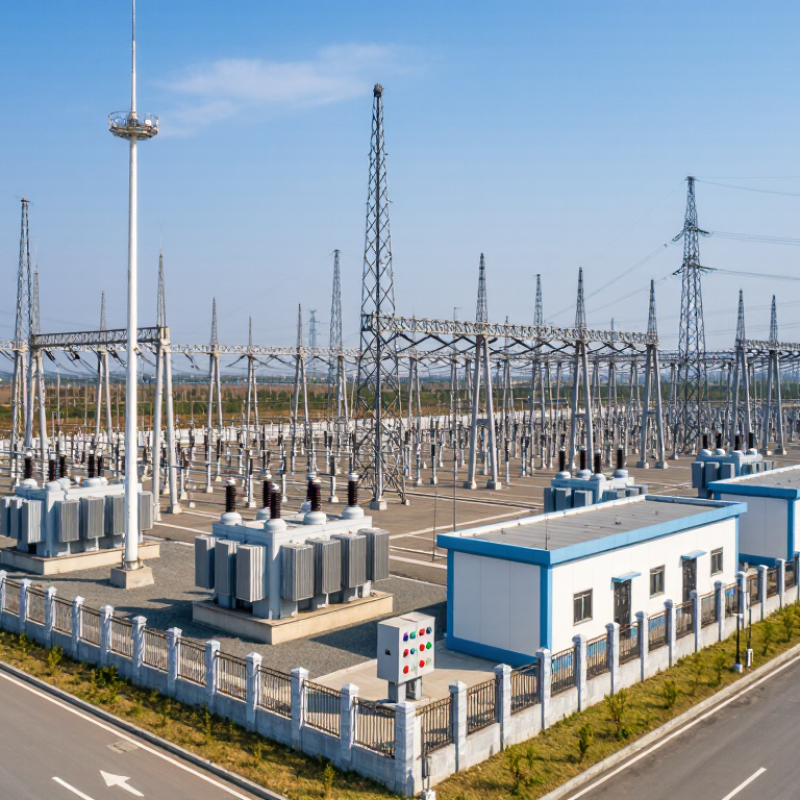
China’s substation supply sector serves projects across a wide voltage range. At 10 kV, equipment may support local distribution networks and industrial sites. At 1,000 kV, requirements shift to ultra-high-voltage transmission and carefully coordinated system design. Not every supplier covers the full range. Confirm the actual product scope for each project.
Typical packages can include power transformers, switchgear, circuit breakers, busbars, protection relays, and control systems. For a 50 Hz system, check that equipment ratings match the network frequency and specified operating conditions. Compare rated voltage, short-circuit withstand capability, insulation level, and environmental limits. A catalog range alone is not proof of project suitability. Request technical datasheets, test records, and clear interface drawings. Small details matter.
Tips: Share the single-line diagram, site altitude, ambient temperatures, and fault-level data before requesting a quotation. Ask who handles integration and commissioning support. One detail is easy to overlook: delivery scope may exclude cables, civil works, or site testing. Put exclusions in writing. A tidy specification can still miss something, so have an independent engineer review critical selections.
China’s electric power substation suppliers provide core equipment that must work as a coordinated system. Power transformers are selected for voltage ratio, rated capacity, cooling method, and expected load profile. Buyers should review temperature-rise data, impedance values, and routine test records, not just the nameplate. Details matter. A transformer may meet its rating yet perform poorly if ventilation or site access is overlooked.
Gas-insulated switchgear (GIS) can reduce the space needed in dense urban substations. Its sealed compartments also make installation quality and gas monitoring important. Air-insulated switchgear may suit sites with more room and simpler access. Compare rated voltage, short-circuit withstand capability, operating mechanisms, and maintenance clearances. A tidy specification sheet does not show every installation challenge. That gap deserves attention.
Protection relays detect abnormal conditions and trigger circuit breakers, so their settings must match the network design. Check supported communication protocols, event records, test procedures, and coordination studies. Switchgear and relays should be assessed together, including trip-circuit wiring and breaker response time. Supplier evaluations can include factory inspections, witnessed tests, spare-parts plans, and clear technical documentation. Some project details remain uncertain until the site survey; treating early estimates as fixed can create avoidable rework.
China’s substation suppliers span large state-linked engineering groups and specialist equipment makers. Their core offerings include power transformers, gas-insulated switchgear, protection systems, and turnkey substation packages. In practice, the strongest fit depends on voltage class, site conditions, and how smoothly equipment integrates with existing control systems. A catalogue alone tells little.
For a 220-kilovolt project, buyers should examine transformer loss data, short-circuit withstand ratings, factory test records, and spare-parts support. Ask how designs handle heat, dust, and limited installation space. These details matter on crowded urban sites and in remote regions. Factory acceptance tests are useful, but they cannot replace clear commissioning plans. Some gaps remain.
The International Energy Agency’s 2023 report, Electricity Grids and Secure Energy Transitions, estimates global annual grid investment at about USD 300 billion and says it must exceed USD 600 billion by 2030 in its net-zero pathway. That outlook raises demand for reliable substation capacity, but it does not guarantee delivery quality. Compare verified test documents, delivery references, and service response times. Also check whether quoted specifications match the project’s actual duty cycle; small mismatches can become costly later.
Top Electric Power Substation Suppliers in China
When evaluating electric power substation suppliers in China, check how clearly they apply IEC standards to actual equipment. IEC 60076 covers power transformers, while IEC 62271 addresses high-voltage switchgear and controlgear. A standard reference is only a starting point. Project voltage, site conditions, and operating requirements still matter.
For transformers, review rated power, cooling method, insulation levels, temperature-rise limits, and short-circuit withstand data. Ask for test reports that match the proposed unit, not a similar model. For switchgear, confirm rated voltage, current, short-time withstand current, and internal arc classification where required. Inspect drawings and test records for consistent equipment ratings. Small mismatches can complicate installation. Standards and project specifications may also use different editions, so confirm the applicable versions before approval. Paperwork can be incomplete; request clarification rather than making assumptions.
Tips: Compare technical schedules line by line. Check nameplates, test certificates, and interface dimensions. Keep a written list of open questions. A tidy document set helps, but it cannot replace a careful review of operating conditions.
Non-branded technical comparison reference. Use the project specification and contractually agreed IEC editions as the basis for supplier assessment; the standards do not prescribe one universal rating for every installation.
| Equipment / evaluation area | Applicable IEC standard | Technical scope or check | Supplier data to request | Review point |
|---|---|---|---|---|
| Power transformers — general requirements | IEC 60076-1 | General requirements, ratings, connections, nameplate information, and test provisions for power transformers. | Rated power and voltage, frequency, phase arrangement, winding connections, impedance, cooling method, and applicable standard edition. | Check that the guaranteed rating and nameplate data match the project specification and approved drawings. |
| Liquid-immersed transformer temperature rise | IEC 60076-2 | Temperature-rise requirements and test methods for liquid-immersed transformers. | Specified temperature-rise limits, cooling arrangement, insulating liquid type, and temperature-rise test results where required. | Confirm that the offered cooling mode and declared limits are consistent with the guaranteed load and site conditions. |
| Transformer insulation and dielectric tests | IEC 60076-3 | Insulation levels, dielectric tests, and external clearances in air. | Insulation-level schedule for each winding and terminal, test list, and routine or type-test reports applicable to the design. | Verify that insulation levels correspond to the specified system voltage and project insulation coordination. |
| Transformer short-circuit withstand | IEC 60076-5 | Ability of a transformer to withstand the thermal and dynamic effects of external short circuits. | Short-circuit withstand declaration, relevant design calculations, and supporting test evidence where available or specified. | Compare the declared withstand capability with the project fault level and protection-clearing time. |
| Transformer routine test documentation | IEC 60076-1; relevant parts of IEC 60076 | Typical routine checks include winding resistance, voltage ratio and phase displacement, impedance voltage and load loss, no-load loss and current, and applicable dielectric tests. | Factory test plan, calibrated-instrument records, signed test reports, and traceability to the supplied unit’s serial number. | Confirm the test scope against the contract; additional tests may be specified for a particular project. |
| AC switchgear — common requirements | IEC 62271-1 | Common specifications for high-voltage switchgear and controlgear, including service conditions, ratings, and general test requirements. | Rated voltage, rated frequency, rated current, short-time withstand current and duration, peak withstand current, and declared service conditions. | Check that equipment ratings and environmental assumptions suit the installation location and system study. |
| AC circuit-breakers | IEC 62271-100 | Requirements and tests for AC circuit-breakers used in high-voltage switchgear and controlgear. | Rated breaking and making capabilities, operating sequence, operating mechanism details, and applicable type-test reports. | Check the breaker’s duties against the system short-circuit study and the specified protection and reclosing requirements. |
| Disconnectors and earthing switches | IEC 62271-102 | Requirements for AC disconnectors and earthing switches, including their applicable switching and withstand duties. | Rated characteristics, interlocking arrangement, operating method, and applicable type-test documentation. | Review the interlocking scheme and confirm that the specified earthing-switch duty matches the installation design. |
| Metal-enclosed switchgear up to and including 52 kV | IEC 62271-200 | AC metal-enclosed switchgear and controlgear for rated voltages above 1 kV and up to and including 52 kV; includes classification and design requirements such as internal arc classification where specified. | Switchgear type, rated values, accessibility and internal arc classification (IAC) if required, compartment arrangement, and type-test evidence. | Ensure the offered panel configuration and any IAC classification match the project layout and personnel-access conditions. |
| Gas-insulated switchgear above 52 kV | IEC 62271-203 | Gas-insulated metal-enclosed switchgear for rated voltages above 52 kV. | Rated values, insulation medium and gas-handling information, enclosure details, maintenance requirements, and applicable type-test reports. | Confirm the standard’s voltage scope, project-specific environmental requirements, and applicable gas-management obligations. |
| Cross-equipment quality and delivery records | Applicable IEC product standards and project specification | Document control, manufacturing inspection, testing, identification, and delivery records for the supplied equipment. | Quality plan, inspection and test plan, material records, factory acceptance test procedure, final reports, packing list, and operation and maintenance manuals. | Confirm document completeness, equipment traceability, and agreed witness or hold points before shipment. |
Note: Standard editions and amendments should be confirmed for each procurement. Ratings, test requirements, and acceptance criteria are project-specific unless expressly defined by the applicable standard or contract.
Top Electric Power Substation Suppliers in China
Choosing a substation supplier starts with the project’s actual duty, not a brochure. Confirm the required voltage class and insulation levels against the grid connection and site conditions. Then check transformer MVA ratings, including expected load growth and contingency needs. A rating that looks adequate on paper may leave little operating margin.
Ask for records from projects with comparable voltage, capacity, and environmental conditions. Commissioning reports, delivery schedules, and references can reveal more than a project list. Where possible, discuss how the supplier handled a late design change or a failed factory test. Details matter. Still, reference checks have limits; one successful site cannot predict every project.
Service coverage should be specific. Identify who supports installation, testing, commissioning, and later maintenance, and ask about response times and spare-parts access. For remote sites, clarify whether qualified engineers can travel promptly and which tasks require local crews. Review technical documents carefully, including protection interfaces and equipment boundaries. Small omissions can create delays. Supplier comparisons are not always neat, and scoring sheets can hide practical weaknesses. Keep written evidence for each claim, and revisit assumptions before placing an order.
Reference grid voltage classes help frame supplier qualification. They are not a ranking of suppliers or a measure of any supplier’s capabilities.
How to use this: Match the required voltage class against verified project references and service coverage. MVA ratings depend on the project and transformer design, so confirm the specified nameplate rating and delivered operating record rather than inferring them from voltage class.
Reference values show nominal AC grid voltage classes used in China; they do not represent supplier-specific data.



