Sealless Pumps for a Safer and Greener World

Choosing a dependable Ev Charger Type 2 supplier requires more than comparing prices on a product page. Global buyers need evidence of engineering quality, production consistency, and after-sales support. This guide examines suppliers serving different markets, from residential garages to commercial parking facilities. It focuses on practical details, including 7.4 kW home chargers, 11 kW and 22 kW three-phase units, cable length, enclosure protection, connector durability, and charging stability.
Real purchasing experience often reveals what brochures omit. A factory may provide attractive samples but struggle with large-volume consistency. Ask for test reports, quality-control records, warranty terms, and production photographs. Request a sample before signing a major order. Check whether the supplier supports OCPP, RFID access, dynamic load balancing, and remote monitoring when these features matter. Firmware updates should also be explained clearly, not hidden behind vague promises.
Certification still needs local verification.
A reliable supplier should communicate honestly about lead times, component sources, customization limits, and installation conditions. Buyers should confirm compatibility with local electrical systems and applicable safety requirements before deployment. No supplier fits every project. A small exporter may offer flexible branding, while an established manufacturer may provide stronger technical service and spare-parts planning. Some claims will require deeper checking. That is part of responsible sourcing. By comparing documentation, factory capability, field feedback, and response quality, global buyers can make a more informed Ev Charger Type 2 purchasing decision.
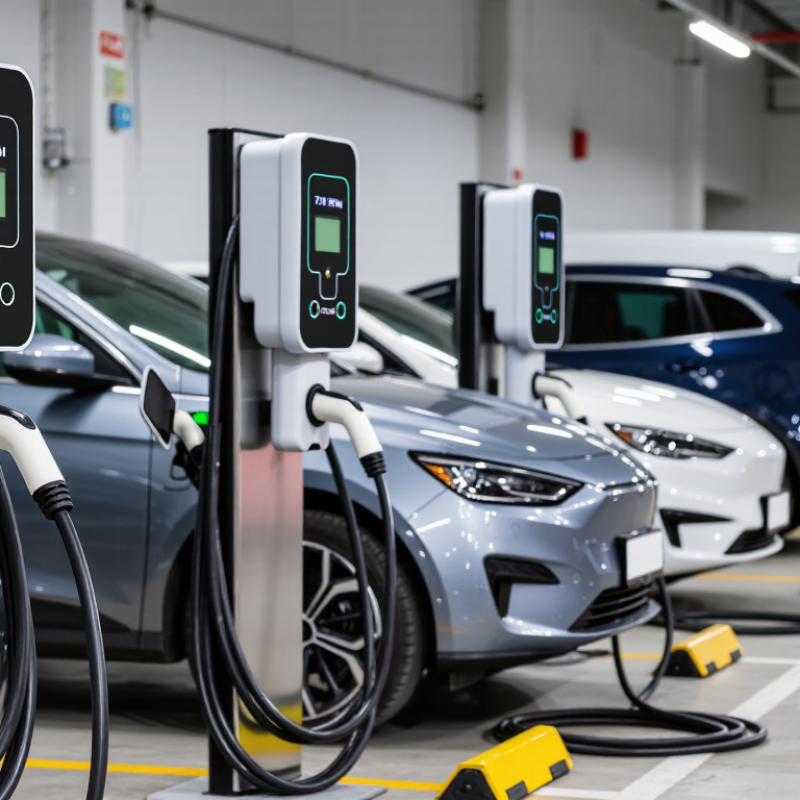
Type 2 EV chargers use the IEC 62196-2 connector for alternating-current charging. They are common across Europe and many export markets. The connector supports single-phase charging, usually up to 7.4 kW, and three-phase charging, commonly up to 11 or 22 kW. Some systems can reach 43 kW, but vehicle limits often reduce the real result. The International Energy Agency reported more than four million public charging points worldwide by the end of 2023. That expansion makes a familiar connector valuable for global buyers.
Global buyers choose Type 2 because it offers broad vehicle compatibility, simple installation, and stable supply options. A wall-mounted 11 kW unit can charge many vehicles overnight. A 22 kW unit may suit workplaces, apartments, and commercial parking areas. However, faster does not always mean better. Grid capacity, cable temperature, connector quality, and vehicle acceptance rates matter. The European Alternative Fuels Observatory recorded over 600,000 public charging points in the European Union during 2023, showing why interoperability remains commercially important. Still, regional requirements differ. Certification, residual-current protection, enclosure ratings, and communication protocols need independent verification.
Tips: Ask suppliers for IEC test reports, IP and IK ratings, load-management details, and measured output data. Inspect cable flexibility in cold conditions. It is easy to overlook. Request sample testing before large orders. Check whether the charger supports OCPP, scheduled charging, and local grid settings. A polished enclosure proves little. Field reliability deserves more attention, and buyers should remain skeptical of impressive but incomplete specifications.
When comparing Chinese Type 2 EV charger suppliers, global buyers should examine compliance evidence before comparing prices. A reliable supplier should provide test reports for IEC 62196-2 and IEC 61851 requirements. Market-specific certificates may also apply, depending on the destination. A certificate number alone is not enough. Ask whether it covers the exact charger model, socket, cable, and firmware.
Hardware details reveal everyday reliability. Check the IP and IK ratings, connector temperature monitoring, residual-current protection, and enclosure materials. A 22 kW unit should clearly state its three-phase operating limits and installation conditions. Cable length matters in real driveways. So does the plug’s strain relief. Smart chargers need stable Wi-Fi, Ethernet, or cellular options, plus documented OCPP compatibility. Load balancing should respond smoothly when household demand changes. Delays can frustrate drivers.
Supplier capability deserves equal attention. Request sample units, production photos, inspection records, and serial-number traceability. Ask how failed chargers are diagnosed and repaired. Spare parts availability may matter more than a generous warranty. Some suppliers offer impressive customization, but engineering changes can weaken testing discipline. That risk is easy to miss. A small pilot order can expose connector heating, app errors, or unclear manuals before a large shipment. Compare response times, not just promised support. A polished datasheet is not proof. Practical evidence is stronger.
For global buyers, Type 2 quality begins with evidence, not attractive specifications. The International Energy Agency’s Global EV Outlook 2024 reports over four million public chargers worldwide at the end of 2023. Public charging points also grew by more than 40% that year. This rapid expansion increases the need for stable connectors, accurate temperature control, and traceable production.
Check compliance with IEC 61851-1 and IEC 62196-2 before comparing prices. IEC 61851-1 addresses conductive charging safety, while IEC 62196-2 defines Type 2 interface requirements. Ask suppliers for complete test reports, certificate numbers, and the tested model reference. A certificate may cover one configuration only. That detail is easy to miss.
Inspect the cable jacket, plug pins, locking mechanism, and strain relief on physical samples. Look for IP protection, impact resistance, insulation testing, leakage protection, and over-temperature shutdown. For European shipments, verify applicable CE documentation and the Declaration of Conformity. Other markets may require different national approvals or recognized laboratory testing. The IEA’s Global EV Outlook 2023 also highlighted uneven charging deployment across regions, so voltage, grid frequency, and installation conditions require careful review. Factory audits, batch records, and random third-party tests add reliability. No checklist is perfect. Suppliers can still change components after approval. Include change-control clauses and repeat testing in the purchasing agreement.
| Evaluation Dimension | Recommended Technical Benchmark | Why It Matters to Global Buyers | Documents or Tests to Request |
|---|---|---|---|
| Type 2 Connector Standard | IEC 62196-2 compliant Type 2 coupler, plug, or vehicle connector | Confirms mechanical compatibility with the Type 2 AC charging interface commonly used in Europe and many international markets. | Declaration of conformity, third-party test report, connector datasheet, and pin configuration documentation. |
| AC Charging Mode | Mode 3 charging in accordance with IEC 61851-1 | Mode 3 provides controlled AC charging through dedicated EV supply equipment rather than a standard household outlet. | IEC 61851-1 test report, charging-control schematic, pilot-signal test results, and installation manual. |
| Rated Charging Output | Common AC configurations include 3.7 kW, 7.4 kW, 11 kW, and 22 kW; the actual rating must match the local electrical system. | Power output affects charging time, installation requirements, cable size, circuit protection, and compatibility with single-phase or three-phase supplies. | Product nameplate, electrical schematic, rated-current test report, and verification of single-phase or three-phase operation. |
| Rated Current Accuracy | Advertised current settings should correspond to tested values, such as 16 A or 32 A, with appropriate selectable-current controls. | Accurate current control helps prevent circuit overload and allows installers to configure the charger for different grid capacities. | Calibration records, load-test data, current-limiting test results, and firmware configuration documentation. |
| Residual Current Protection | Protection should follow the applicable installation standard, typically using Type A residual-current protection together with 6 mA DC detection, or an approved Type B arrangement. | EV charging can produce smooth DC residual currents that may affect the operation of some conventional residual-current devices. | Residual-current protection test report, detection threshold data, circuit diagram, and installation instructions specifying upstream protection. |
| Overcurrent and Short-Circuit Protection | Integrated monitoring and protection should be coordinated with the upstream miniature circuit breaker or fuse selected for the installation. | Proper coordination reduces the risk of overheating, equipment damage, and nuisance tripping during high-load charging. | Protection strategy, fault-current test results, thermal test report, and recommended breaker or fuse specifications. |
| Ingress Protection | Outdoor wall-mounted chargers commonly target IP54 or higher; IP65 provides stronger protection against dust and water ingress when verified by testing. | Ingress protection is important for outdoor installations, but the rating applies only when the enclosure is correctly assembled and installed. | IEC 60529 IP test report, enclosure construction drawings, gasket specifications, and installation conditions. |
| Impact Resistance | IK08 or IK10 may be appropriate for public or exposed installations, provided the rating is supported by a test report. | Impact resistance helps protect the enclosure from accidental contact, tools, and other mechanical impacts. | IEC 62262 impact-resistance test report, enclosure material specification, and sample inspection record. |
| Operating Temperature | A clearly stated tested operating range, commonly around -25 °C to +50 °C for outdoor equipment, with charging-current derating where necessary. | Temperature performance affects charging reliability in cold, hot, and rapidly changing climates. | Environmental test report, thermal protection logic, derating curve, and storage-temperature specification. |
| Cable and Connector Durability | Cable cross-section, bending radius, connector temperature rise, and mechanical endurance should be suitable for the rated current and intended duty cycle. | High-current charging creates thermal and mechanical stress at the cable, plug, socket, and termination points. | Cable datasheet, temperature-rise test, insertion and withdrawal cycle test, torque records, and terminal inspection report. |
| Electrical Safety Testing | Routine and type testing should cover dielectric strength, insulation resistance, protective-earth continuity, leakage current, and abnormal-operation conditions. | These tests identify insulation failures, grounding problems, and unsafe behavior under fault or abnormal conditions. | Production inspection plan, sample test reports, factory quality records, and traceable serial-number documentation. |
| Electromagnetic Compatibility | Compliance with applicable EMC emission and immunity requirements, including the requirements adopted in the destination market. | EMC compliance helps prevent interference with nearby electronics and ensures stable operation in electrically noisy environments. | EMC laboratory report, test configuration, cable layout used during testing, and declaration of conformity. |
| European Market Compliance | CE marking supported by applicable conformity documentation, which may include the Low Voltage Directive, EMC Directive, RoHS, and other relevant EU requirements. | CE is a regulatory conformity marking rather than a single product-quality certificate. The applicable legislation depends on product design and intended use. | EU Declaration of Conformity, technical file index, risk assessment, test reports, and product-label photographs. |
| United Kingdom Market Compliance | UKCA requirements where applicable, together with compliance with the relevant UK electrical, EMC, environmental, and EV-charging regulations. | UK market obligations can differ from EU requirements, particularly for installation, smart charging, and regulatory documentation. | UK Declaration of Conformity, applicable test reports, software or smart-charging compliance evidence, and technical documentation. |
| International Safety Certification | A valid third-party certification or CB Scheme report based on the standards required by the destination country. | Independent certification can reduce approval risk, support customs and tender requirements, and provide evidence beyond a supplier self-declaration. | Certificate number, certification scope, laboratory accreditation, model list, factory location, and certificate validity status. |
| Environmental Compliance | Restriction of hazardous substances and chemical-material information should meet the legal requirements of the destination market, such as RoHS and REACH obligations where applicable. | Environmental compliance supports import clearance, responsible sourcing, and customer requirements for restricted substances. | RoHS test report, material declarations, supplier declarations, REACH statement, and restricted-substance control procedure. |
| Communication Protocol | For networked chargers, documented support for a recognized protocol such as OCPP 1.6J or OCPP 2.0.1, with clear feature limitations. | Open communication protocols improve interoperability with charging-management platforms and reduce dependence on one software ecosystem. | Protocol conformance information, API documentation, cybersecurity policy, remote-update procedure, and interoperability test records. |
| Load Management | Optional dynamic load balancing, current scheduling, or energy-management integration should include defined measurement accuracy and fail-safe behavior. | Load management can help prevent main-breaker overload and optimize charging where grid capacity is limited. | Functional test report, current-transformer specification, control logic description, response-time data, and failure-mode analysis. |
| Software and Cybersecurity | Unique credentials, controlled firmware updates, encrypted communications where applicable, access management, and a documented vulnerability-response process. | Connected chargers can affect electrical assets, user data, and network infrastructure, making cybersecurity part of product quality. | Security architecture, penetration-test summary, update policy, password policy, data-privacy documentation, and vulnerability-contact process. |
| Quality Management System | A documented quality system, preferably certified to ISO 9001, with incoming inspection, process controls, final testing, and corrective-action procedures. | A quality-system certificate does not replace product testing, but it indicates that manufacturing processes are formally managed and audited. | Valid certificate, certification scope, audit body details, process-control plan, inspection records, and corrective-action reports. |
| Factory Acceptance Testing | Every production unit should undergo traceable functional, electrical-safety, communication, and visual inspections before shipment. | Routine testing reduces the risk of shipping units with wiring errors, failed protection functions, damaged housings, or incorrect firmware. | Inspection checklist, test-station records, calibrated-instrument list, test limits, operator authorization, and serial-number traceability. |
| Warranty and Service Support | Written warranty terms, spare-parts availability, response-time commitments, remote diagnostics, and a defined process for handling product failures. | After-sales capability is essential for global buyers because installation faults and field failures may require rapid technical support. | Warranty policy, service-level agreement, spare-parts list, troubleshooting guide, escalation process, and repair or replacement procedure. |
| Documentation Quality | Complete, consistent documentation in the required languages, including datasheet, installation guide, user manual, wiring diagram, labels, and conformity records. | Accurate documentation reduces installation errors and supports regulatory review, customer training, and maintenance activities. | Controlled document revision list, multilingual manuals, wiring diagrams, label artwork, and cross-check between documents and product samples. |
| Pre-Shipment Inspection | Independent or buyer-authorized inspection covering quantity, model configuration, appearance, accessories, packaging, labels, and functional sampling. | Pre-shipment inspection helps identify specification deviations before goods leave the manufacturing location. | Approved inspection standard, sampling plan, inspection photos, packing-list reconciliation, and signed inspection report. |
China Best EV Charger Type 2 Suppliers for Global Buyers
Global buyers need more than a Type 2 connector that looks polished. Reliable suppliers control copper quality, terminal crimping, insulation, and final assembly. Experienced factories often operate injection molding, cable assembly, and electrical testing lines in one facility. This can shorten communication during revisions. Ask for production photos, test records, and sample approval steps. A dependable supplier should explain rated current, cable length, IP protection, and operating temperature clearly. Certification support also matters, but documents must match the exact product.
Customization may include housing color, cable length, plug configuration, wall-mount brackets, labels, and packaging. Some manufacturers also adjust firmware, display language, charging schedules, and connector locking systems. These changes require engineering review, not only a quotation. Request drawings, 3D files, material specifications, and a pilot batch before mass production. In my experience, strain relief and cable flexibility strongly affect field satisfaction. They are easy to overlook during online negotiations. A supplier that records corrective actions shows stronger quality discipline.
Tips: Compare samples under real conditions. Check bending, heat, moisture, and repeated insertion. Confirm traceability for major components. Keep written approval for every customized part. Do not assume a low unit price includes tooling, testing, or export packaging. One uncomfortable question can prevent an expensive redesign. Even capable suppliers may miss a minor requirement. Review every sample carefully.
Common Type 2 AC charging configurations available from Chinese manufacturers, showing nominal charging power and the ideal time required to add 60 kWh of energy. Actual results vary with vehicle limits, battery temperature, installation conditions, and charging losses.
Type 2 AC charging is standardized under IEC 62196-2. Typical supplier services include wall-mounted or pedestal designs, cable and socket configurations, enclosure and color customization, communication options such as OCPP, regional plug adaptations, branding, and production testing. Charging-time figures are calculated as 60 kWh divided by nominal power and do not include losses.
Selecting a reliable China-based Type 2 EV charger partner requires more than comparing prices. Start with technical evidence. Check IEC 62196-2 compatibility, charging communication performance, insulation quality, and protection ratings. Ask for recent test reports from accredited laboratories, not only factory-created documents. A dependable supplier should explain cable temperature limits, connector durability, and IP protection in clear terms.
Factory experience matters. Request production photos, process records, and a live video audit when an onsite visit is difficult. Inspect how workers assemble terminals, seal housings, and test every finished charger. Traceable serial numbers are useful during warranty investigations. Ask about sample approval, batch consistency, spare parts, and response times. Keep everything in a written quality agreement.
Our first shortlist was too focused on price. That was a mistake. A low quotation may exclude testing, packaging, software support, or replacement units. Request a small trial order before signing a large contract. Test chargers with different vehicles, outdoor sockets, cold temperatures, and repeated connection cycles. Some suppliers offer impressive samples but inconsistent mass production. Discuss this risk openly. A reliable partner accepts reasonable inspection, communicates production delays early, and provides documents for your target market’s certification and installation requirements. Availability is important, but honest limitations matter more.



