Sealless Pumps for a Safer and Greener World

The Aeration Process In Wastewater Treatment plays a vital role in enhancing the efficiency of purification systems. According to Dr. Sarah Miles, a leading expert in environmental engineering, "Effective aeration is the cornerstone of successful wastewater treatment." This emphasizes the need for an in-depth understanding of various aeration methods.
Different aeration techniques can significantly influence the microbial activity responsible for breaking down pollutants. However, selecting the right method can be challenging. Factors such as the type of wastewater, treatment goals, and environmental conditions all impact the effectiveness of these processes. This complexity makes it crucial for engineers and operators to continuously evaluate their choices in aeration.
As the industry evolves, it's important to reflect on past methods and innovate for the future. Some traditional processes may no longer meet modern efficiency standards. Therefore, exploring new aeration technologies can lead to better outcomes in wastewater treatment. The continual pursuit of knowledge will enhance the overall effectiveness of the aeration process in wastewater treatment and benefit communities globally.
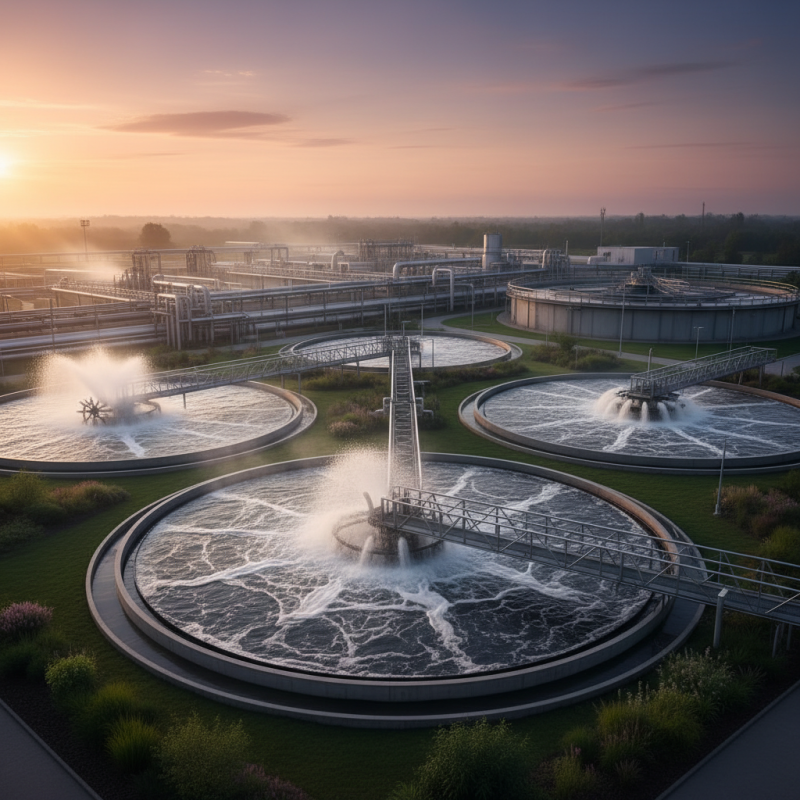
Aeration is a vital process in wastewater treatment, promoting the breakdown of organic matter. It introduces air into the water, stimulating microbial activity. These microorganisms thrive on the organic waste, converting it into carbon dioxide and biomass. Effective aeration enhances the efficiency of biological treatment methods, making it crucial in design and operation.
When implementing aeration systems, consider the specific characteristics of the wastewater. Not all systems are equally effective for all types of waste. For instance, high-strength waste may require different aeration strategies than municipal wastewater. This calls for careful planning.
Tips for efficient aeration include monitoring dissolved oxygen levels regularly. Insufficient oxygen can stop microbial processes, while excess can lead to wasted energy. Choosing the right type of aerator is also critical. For some facilities, surface aerators may work better than diffused systems. However, the latter can be more efficient in deeper tanks.
Remember, regular maintenance of aeration equipment is necessary. Clogged diffusers can hinder performance, leading to operational challenges. Evaluate your system's performance routinely and be ready to adapt if issues arise. Aeration is not just about adding air; it's about optimizing conditions for effective treatment.
Effective aeration in wastewater treatment is vital for ensuring pollutant removal and promoting healthy microbial activity. Proper aeration introduces oxygen into the system, supporting the growth of aerobic bacteria. These microorganisms break down organic contaminants, making them essential in treating wastewater effectively.
A well-designed aeration process plays a crucial role in maintaining the balance of aquatic ecosystems. It enhances the removal of nitrogen and phosphorus, which are key contributors to water pollution. However, many facilities struggle with optimal aeration due to factors like equipment inefficiencies or subpar design choices. Reevaluating aeration systems can lead to improved treatment outcomes.
There’s also the challenge of energy consumption with various aeration methods. While some systems may work well, they can be costly and environmentally unsustainable. It’s important for operators to reconsider aeration strategies regularly. Finding a balance between efficiency and effectiveness is essential. Innovative methods may offer improvements, but thorough testing and analysis are necessary for long-term success.
The chart below illustrates the effectiveness of various aeration methods used in wastewater treatment based on oxygen transfer efficiency (OTE) and operational cost. Each method is evaluated on a scale from 0 to 100, where higher values indicate better performance and efficiency.
Aeration is a critical process in wastewater treatment. It enhances the removal of organic pollutants. Various techniques serve this purpose, each with unique benefits and limitations. For instance, fine bubble aeration can achieve up to 95% efficiency in oxygen transfer, as reported by the Environmental Protection Agency. This method injects air through small bubbles, maximizing surface area and promoting microbial activity.
Another method is mechanical aeration, which involves stirring the wastewater. While effective, it often requires more energy. A study from the Water Environment Federation indicates that this method can consume up to 30% of a treatment facility's total energy. Users must balance efficiency with costs when selecting a technique.
Membrane aerated biofilm reactors (MABRs) represent a more advanced approach. They use membranes to supply oxygen directly to biofilms. Data shows they can cut down energy consumption by nearly 50%, though they may involve higher upfront costs. This duality emphasizes the need for ongoing assessment. The choice of aeration method can significantly affect operational efficiency and environmental impact. Understanding these processes is vital for effective wastewater management.
Aeration is a crucial step in wastewater treatment. Different methods vary in efficiency and energy costs. A comprehensive study published by the Water Environment Federation indicates that fine bubble aeration systems can increase oxygen transfer by 30% compared to coarse bubble systems. However, these systems may require more regular maintenance and monitoring, raising operational costs.
Comparatively, surface aerators are often simpler to manage. They can handle a wide range of wastewater qualities but may offer lower oxygen transfer efficiency. According to a report from the Environmental Protection Agency, these systems operate at about 1.5 kg of oxygen per kWh, while advanced aeration methods can reach over 4 kg per kWh. This poses a challenge in selecting the right aeration method.
Data shows that energy consumption is a significant factor in aeration method selection. Energy costs account for about 50% of total operational costs in some treatment plants. Therefore, a more efficient aeration process could lead to substantial savings. Despite these advantages, each method also has drawbacks that require careful evaluation. Factors like space requirements and capital investment cannot be overlooked.
The future of aeration technology in wastewater treatment is evolving rapidly. Innovations aim to enhance efficiency and reduce environmental impact. Advanced aeration methods involve the use of fine bubble diffusers and multi-stage processes. These methods can significantly improve oxygen transfer rates. Higher transfer rates lead to better biological activity. Consequently, this results in more effective pollutant removal.
Emerging technologies also include automated monitoring systems. These systems can optimize aeration based on real-time data. This adaptability may reduce energy consumption. However, the reliance on technology raises questions about system reliability and maintenance. Moreover, incorporating renewable energy sources is becoming increasingly important. Solar and wind power can help reduce the carbon footprint of treatment plants.
Despite these advancements, challenges remain. Many facilities struggle with integrating new systems. Training staff to manage complex technologies is necessary. Operators need to understand the intricacies of modern solutions. Without proper training, errors may occur. Future trends indicate that collaboration between technology providers and wastewater facilities will be crucial. Sharing knowledge can lead to more effective solutions in aeration processes.
| Method | Efficiency (%) | Energy Consumption (kWh/m³) | Cost (USD/m³) | Future Trends |
|---|---|---|---|---|
| Diffused Aeration | 85 | 0.5 | 0.70 | Improved membrane technology |
| Fine Bubble Aeration | 90 | 0.4 | 0.85 | Integration with smart sensors |
| Surface Aeration | 75 | 0.6 | 0.60 | Reduction of operational costs |
| Activated Sludge Process | 80 | 0.45 | 0.75 | Biological nutrient removal technology |
| Cascade Aeration | 70 | 0.7 | 1.00 | Use in decentralized systems |
| Jet Aeration | 88 | 0.3 | 0.90 | Enhanced efficiency techniques |
| Aerated Lagoons | 78 | 0.5 | 0.55 | Natural treatment innovations |
| Submerged Aeration | 82 | 0.4 | 0.80 | Increasing aerator lifespan |
| Ozone Aeration | 92 | 0.45 | 1.10 | Emerging technology for disinfection |
| Hybrid Aeration Systems | 95 | 0.35 | 1.00 | Optimized for energy efficiency |



