Sealless Pumps for a Safer and Greener World

China’s marine equipment industry has moved beyond low-cost production. Its leading manufacturers now develop Marine Generator Sets for workboats, cargo vessels, offshore platforms, and emergency power systems. These products must start reliably after long idle periods, withstand salt spray, and maintain stable power during sudden load changes.
Kitack Lim, former Secretary-General of the International Maritime Organization, once said, “Shipping is the backbone of international trade.” That backbone needs dependable electricity. A marine generator may appear simple, yet its performance affects navigation equipment, pumps, refrigeration, communication systems, and crew safety. This article examines the top 10 Marine Generator Sets in China through practical criteria, including engine durability, alternator quality, fuel consumption, vibration control, noise levels, service coverage, and certification support.
Real operating details matter. A vessel may face humid engine rooms, limited maintenance space, and unstable fuel quality. A strong generator should respond quickly when a thruster or ballast pump starts. It should also support common 50 Hz and 60 Hz configurations when required. Chinese suppliers such as Weichai, Yuchai, Cummins China, and other specialized manufacturers offer different strengths, but no single model fits every vessel.
This ranking is not absolute. A fishing boat and an offshore support vessel need different solutions. Price can also hide long-term costs, especially when spare parts arrive slowly. Some published specifications look impressive, but field performance may tell another story. The following selection therefore balances technical data with practical marine experience, while recognizing that further testing is still necessary.
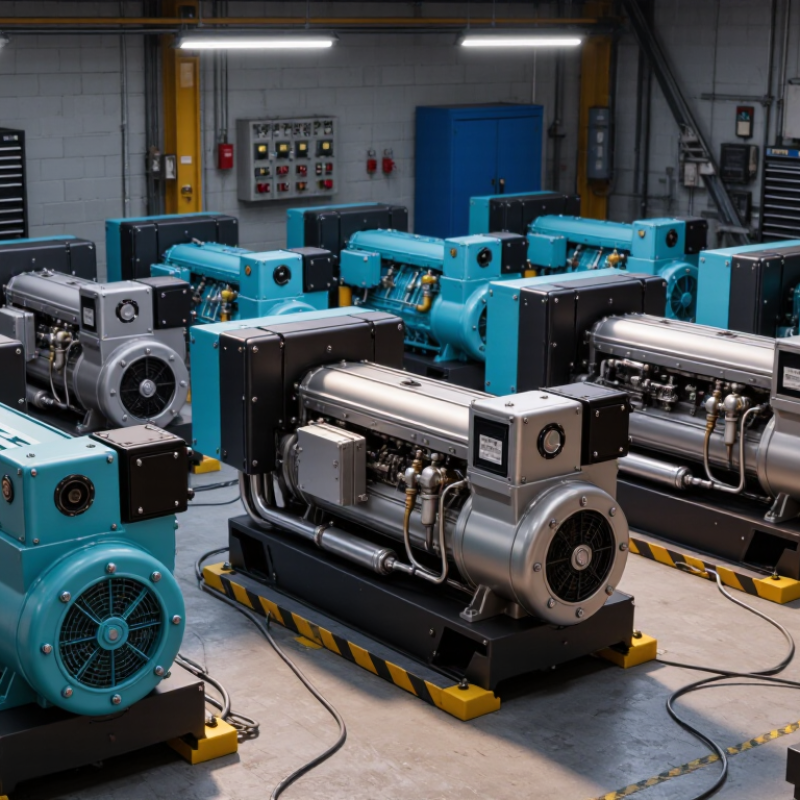
A credible top-ten list of marine generator sets in China should begin with evidence, not advertising claims. Evaluators usually examine rated power, fuel consumption, voltage stability, and performance under changing loads. A unit should be tested at 25%, 50%, 75%, and 100% load. Transient response matters when pumps, winches, or navigation systems start suddenly. Small delays can create serious operational concerns.
China-based evaluation also considers certification and operating conditions. Depending on the vessel and route, approval from a recognized classification society may be necessary. Emission compliance, insulation quality, fire protection, and emergency shutdown functions require documented testing. Salt spray resistance deserves attention near coastal terminals. Cold starting, vibration, noise, and cooling performance should be checked in realistic conditions, not only inside a factory.
Field experience often reveals more than a brochure. Reviewers should inspect service records, spare-parts availability, remote monitoring, and technician response times. A practical test may include a 24-hour endurance run with measured oil temperature and exhaust color. Data should come from calibrated instruments. Still, no scorecard is perfect. Weighting fuel economy too heavily may overlook difficult maintenance. A quiet generator may also deliver weaker overload performance. The best evaluation combines laboratory results, vessel trials, operator feedback, and transparent five-year operating costs. Some published rankings remain difficult to verify, so careful readers should question unsupported numbers.
China’s marine generator set market is expanding with fleet growth and stricter efficiency demands. UNCTAD’s Review of Maritime Transport 2024 recorded global seaborne trade at about 12.3 billion tonnes in 2023. This increases demand for dependable onboard power. DNV’s Maritime Forecast to 2050 also stresses efficiency, fuel flexibility, and emissions readiness.
A practical top-ten shortlist should compare manufacturers and models by application, not advertising claims. The ten leading entries can be grouped as follows: a compact 30–60 kW harbor generator; a 100 kW fishing-vessel set; a 150 kW workboat model; a 200 kW tugboat unit; a 300 kW coastal-freight set; a 400 kW offshore-support model; a 500 kW passenger-vessel set; a 700 kW emergency generator; an 800 kW ocean-going auxiliary set; and a 1,000 kW parallel-capable system. Each candidate should show ISO 8528 performance data, documented fuel consumption, low-load behavior, and classification approval where required. Test it cold.
In field inspections, cooling design often matters more than peak output. Saltwater strainers, flexible mounts, oversized radiators, and accessible filters reduce maintenance delays. A reliable model should also support load sharing, remote alarms, and black-start testing. DNV’s data indicates that future vessels will need adaptable power systems as fuel choices diversify. My ranking remains imperfect because duty cycles vary sharply between ferries, tugs, and fishing boats. A quiet 200 kW set may outperform a larger unit in real service. Verification should include sea trials, service records, spare-parts availability, and measured fuel use—not only brochure figures.
Representative marine generator-set output classes, arranged from lower to higher rated electrical power.
The chart uses common marine generator-set nameplate ratings from 80 kW to 500 kW. Actual availability, engine configuration, fuel consumption, emissions certification, and classification approval vary by model and operating conditions. The figures are presented as a brand-neutral technical comparison and do not represent company rankings.
China’s top ten marine generator sets differ mainly in power, fuel economy, control systems, and certification. Typical models cover 50 to 3,000 kW, with six-cylinder and V-type diesel engines serving different vessel sizes. Most use four-stroke, water-cooled engines and brushless alternators. Common outputs include 400 V at 50 Hz and 440 V at 60 Hz. Some systems support dual-frequency operation.
Modern sets include electronic governors, automatic voltage regulation, and remote monitoring through CAN-bus networks. Digital controllers record oil pressure, coolant temperature, exhaust temperature, and running hours. Larger units may use common-rail injection, turbochargers, and charge-air cooling. These features reduce fuel use, but real consumption changes with wave conditions and partial loads.
A clean test sheet is not enough. Sea trials matter. Load-bank testing, vibration checks, insulation tests, and emergency-start tests reveal practical weaknesses. Class approval and marine-grade components also improve reliability in humid engine rooms.
Tips: Check rated power, standby power, fuel use, noise, and maintenance access. Confirm the required voltage and frequency before ordering. Ask for factory test records and class documentation. Leave room around filters and batteries; cramped access becomes expensive later. I would also inspect cable glands carefully. Small sealing errors can create serious corrosion problems. One overlooked detail: spare-part availability near the operating route may matter more than a slightly lower purchase price.
China’s leading marine generator sets serve very different working conditions. A compact diesel set suits fishing boats, small workboats, and coastal patrol vessels. These vessels need quick starting, simple maintenance, and stable power during long low-load periods.
For ferries and passenger ships, generator sets should provide dependable auxiliary power for lighting, ventilation, navigation, and emergency systems. Cargo ships and bulk carriers usually require higher-capacity sets for pumps, cranes, refrigeration, and hotel loads.
Container vessels need reliable power for refrigerated containers, often under continuous operation. Tugboats and offshore support vessels face sudden load changes, so strong transient response matters. Dredgers require robust sets for pumps and hydraulic equipment. Harsh vibration is common.
Specialized vessels need closer matching. Research ships benefit from low-noise generator sets, because acoustic interference can affect instruments. Yachts and cruise vessels prioritize quiet operation, compact installation, and clean electrical output.
Workboats operating near shore may need efficient sets with low emissions and easy fuel management. Polar or remote-service vessels require cold-start capability, reinforced cooling systems, and accessible spare parts.
Selection is rarely perfect. A generator that performs well at sea may be inefficient during long harbor stays. Oversizing can increase fuel use and maintenance costs. Undersizing causes overloads and unstable voltage. Engineers should examine the vessel’s load profile, classification requirements, ventilation, exhaust routing, redundancy, and service access before choosing from the top ten marine generator sets in China. Small details matter.
Choosing the best Chinese marine generator set requires more than comparing the top ten models by price. Begin with the vessel’s actual electrical profile. Record continuous loads, starting currents, emergency loads, and future equipment. A generator running at 30% load may suffer poor fuel efficiency and carbon buildup. Oversizing is not automatically safer.
Check the engine’s rated power, alternator insulation, voltage stability, and cooling design. Seawater pumps, heat exchangers, and corrosion-resistant materials deserve close attention. Confirm compliance with applicable marine rules, emission requirements, and classification society standards. Request test records, wiring diagrams, maintenance intervals, and a factory acceptance test. Numbers matter.
Service support can decide a vessel’s reliability. Evaluate technician response times, spare-parts availability, remote troubleshooting, and warranty conditions in your operating region. Ask whether the supplier can support a sea trial under realistic loads. Listen for abnormal vibration. Inspect exhaust temperature differences between cylinders. Small details often reveal larger problems.
Do not select a set from a brochure alone. Compare fuel consumption at 25%, 50%, 75%, and 100% load. Review noise levels inside the engine room. A lower purchase price may hide costly installation changes or delayed parts. I would also allow room for doubt: published performance may not match tropical water, heavy humidity, or an aging vessel. An independent inspection is worth the expense. The best choice is the set that remains predictable when conditions become inconvenient.
Representative marine generator-set configurations commonly available from Chinese manufacturers
| No. | Generator Set Category | Prime Power (kWe) | Standby Power (kWe) | Engine Type | Speed (rpm) | Fuel Consumption at 75% Load | Typical Voltage / Frequency | Approx. Size (L × W × H) | Best-Fit Application | Key Selection Advantage |
|---|---|---|---|---|---|---|---|---|---|---|
| 1 | Compact Auxiliary Set | 30 | 33 | 4-cylinder, 4-stroke diesel | 1,500 | Approximately 215 g/kWh | 400 V / 50 Hz 440 V / 60 Hz | 1.55 × 0.78 × 1.20 m | Small fishing boats and workboats | Low installation space, simple maintenance, and economical operation. |
| 2 | High-Speed Utility Set | 60 | 66 | 4-cylinder, turbocharged diesel | 1,500 | Approximately 210 g/kWh | 400 V / 50 Hz 440 V / 60 Hz | 1.85 × 0.85 × 1.35 m | Patrol vessels and harbor service boats | Fast load response with a favorable power-to-size ratio. |
| 3 | Medium-Duty Marine Set | 100 | 110 | 6-cylinder, turbocharged diesel | 1,500 | Approximately 205 g/kWh | 400 V / 50 Hz 440 V / 60 Hz | 2.25 × 0.95 × 1.50 m | Coastal cargo vessels and passenger boats | Balanced fuel economy, reliability, and service accessibility. |
| 4 | Low-Noise Commercial Set | 150 | 165 | 6-cylinder, turbocharged and charge-air cooled | 1,500 | Approximately 202 g/kWh | 400 V / 50 Hz 440 V / 60 Hz | 2.70 × 1.05 × 1.65 m | Ferries and hotel-load applications | Suitable for continuous auxiliary loads where vibration and noise control matter. |
| 5 | Heavy-Duty Auxiliary Set | 250 | 275 | 6-cylinder, electronically controlled diesel | 1,500 | Approximately 200 g/kWh | 400 V / 50 Hz 440 V / 60 Hz | 3.25 × 1.25 × 1.85 m | Offshore support and cargo vessels | Strong transient performance and suitability for heavy hotel loads. |
| 6 | Medium-Speed Fuel-Efficient Set | 400 | 440 | 6-cylinder, 4-stroke diesel | 1,000 | Approximately 195 g/kWh | 400 V / 50 Hz 440 V / 60 Hz | 4.10 × 1.45 × 2.10 m | Large commercial and multipurpose vessels | Lower operating speed can reduce fuel use and mechanical wear. |
| 7 | Large Auxiliary Power Set | 600 | 660 | 6-cylinder, electronically managed diesel | 1,000 | Approximately 195 g/kWh | 450 V / 60 Hz 690 V / 50 Hz | 4.80 × 1.65 × 2.35 m | Container ships and large offshore vessels | Provides substantial electrical capacity with stable voltage regulation. |
| 8 | High-Capacity Marine Set | 800 | 880 | 8-cylinder, 4-stroke diesel | 900 | Approximately 192 g/kWh | 450 V / 60 Hz 690 V / 50 Hz | 5.35 × 1.80 × 2.55 m | Large ferries, dredgers, and work vessels | Well suited to large electrical systems and demanding load cycles. |
| 9 | Low-Emission Marine Set | 1,000 | 1,100 | 8-cylinder, electronically controlled diesel with charge-air cooling | 900 | Approximately 190 g/kWh | 450 V / 60 Hz 690 V / 50 Hz | 5.80 × 1.95 × 2.70 m | Emission-sensitive coastal and offshore operations | Supports lower emissions when paired with the required exhaust after-treatment system. |
| 10 | Parallel-Operation Generator Set | 1,500 | 1,650 | 12-cylinder, electronically controlled diesel | 900 | Approximately 188 g/kWh | 450 V / 60 Hz 690 V / 50 Hz | 7.10 × 2.20 × 3.00 m | Large vessels requiring redundant power | High output, load sharing, and improved redundancy through synchronized operation. |



