Sealless Pumps for a Safer and Greener World

Cold Rolled Steel is easy to overlook. Yet it shapes car doors, appliance panels, office cabinets, and the smooth edges of precision components. Its clean finish and close dimensional tolerances make supplier capability matter. A bright coil can look convincing; consistent thickness and reliable delivery matter more.
The World Steel Association reported 1,892.2 million tonnes of global crude steel production in 2023. That figure covers all steelmaking, not cold-rolled output alone. It still shows the scale behind this supply chain. The association’s October 2024 Short Range Outlook also projected global steel demand to rise to 1,804 million tonnes in 2025. These reports offer useful context, but they cannot tell buyers which mill will meet a specific grade, surface, or delivery schedule. Details matter.
Metallurgist John D. Speer’s research at Colorado School of Mines highlights how steel processing and microstructure shape material performance. That principle is central to evaluating cold-rolled producers, even when a polished brochure makes every mill sound alike. This Top 10 guide compares manufacturers through product range, production scale, technical capability, and market reach. It is a practical starting point, not a substitute for checking certifications, sample quality, and current lead times. Rankings also involve judgment. Not every buyer will agree.
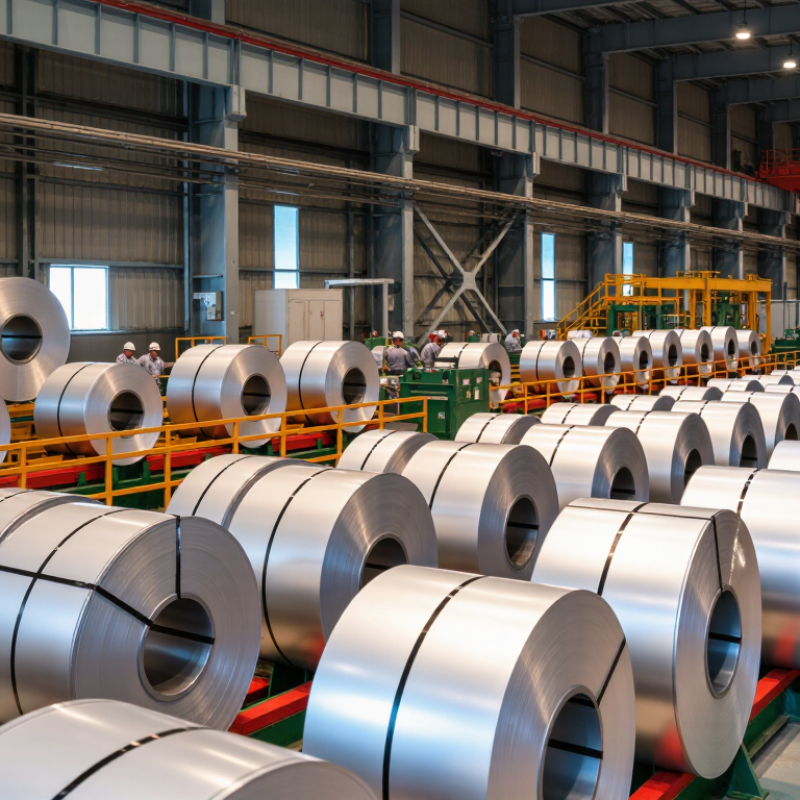
Cold rolled steel begins as hot rolled coil. After cooling, the coil is cleaned, often with an acid pickling process, to remove surface scale. It then passes through powerful rollers at temperatures below the steel’s recrystallization point. Each pass reduces thickness and can improve dimensional accuracy and surface smoothness. The metal may emerge hard and less ductile because rolling changes its grain structure. That trade-off matters.
Production does not end at the rolling stand. Depending on the intended use, the strip may be annealed in a controlled furnace to restore some softness and formability. A light final pass, called skin passing, can help refine flatness and surface texture. Operators check thickness, shape, and surface defects along the line. A small variation can affect how a sheet bends or fits during fabrication. Still, “smooth” is not a single specification; finish and tolerance requirements vary by application.
Tips: Check the grade, thickness tolerance, and finish requirements before ordering. Ask whether the material is annealed, especially if deep forming is planned. Store coils dry and inspect edges for damage. One practical caution: a clean-looking surface does not guarantee suitable forming performance.
How the Manufacturers Were Selected and Compared
The comparison weighs cold-rolling capability, product range, quality controls, delivery reach, and technical support. Public capacity figures are useful, but they do not always distinguish cold-rolled output from total steel production. That distinction matters. World Steel Association’s World Steel in Figures 2024 reports global crude steel production of 1,892.2 million tonnes in 2023. This sets the industry’s scale; it does not prove a manufacturer’s specific cold-rolling capacity. Individual claims were therefore treated cautiously and checked against published facility data, product specifications, and certification records where available.
Comparisons also consider practical details: thickness and width options, surface finish, dimensional tolerances, and consistency between batches. A coil that meets a specification on paper may still create problems if delivery schedules shift or technical support is slow. Sustainability disclosures were reviewed as supporting evidence, not as a substitute for product performance. Some data remains difficult to compare across producers, so the ranking should not be read as a precise measurement of every mill’s ability.
Tips: Request a recent inspection report, sample tolerances, and a written delivery window before comparing quotations. Check whether the quoted specification matches your actual forming process. Small gaps matter. When a supplier’s data is incomplete, record that uncertainty rather than assuming the strongest claim is correct.
The top ten cold rolled steel manufacturers worldwide are best compared by more than annual tonnage. Buyers should examine cold-rolling capacity, product consistency, delivery reach, and the ability to meet demanding thickness tolerances. World Steel Association’s World Steel in Figures 2024 reports that global crude steel production reached 1.892 billion tonnes in 2023. That figure offers scale, but it is not cold rolled output. The distinction matters. Cold rolling follows hot rolling and often includes pickling, annealing, and tempering; each stage can affect surface finish and performance.
OECD’s Steel Outlook 2024 projects global steelmaking capacity could approach 2.5 billion tonnes by 2026. More capacity does not automatically mean better supply. A useful top-ten assessment should check whether producers can deliver consistent coils, clear technical specifications, and dependable lead times across regions. For a buyer, a sample coil’s surface and measured gauge may say more than a headline ranking. Rankings can also blur differences between crude steel capacity and finished cold rolled products. This comparison is imperfect, and public data is not always directly comparable. Companies report product volumes differently.
Steelmaking output by country, 2023 (million tonnes)
Country-level crude steel output is shown as an industry-scale indicator, not as a ranking of cold-rolled steel manufacturers or their cold-rolling capacity. Figures are for 2023 and are reported by the World Steel Association.
A comparison of the top ten cold rolled steel manufacturers is most useful when it looks beyond headline rankings. Product ranges can include low-carbon sheet for formed parts, higher-strength grades for structural components, and narrow strip for precision applications. Check stated thickness, width, surface finish, and delivery formats against the job. Details matter.
Production capacity indicates potential supply, but a large annual figure does not guarantee an available slot. Actual output depends on mill schedules, maintenance, product mix, and orders already committed. A buyer should compare capacity with the manufacturer’s cold rolling and finishing equipment, then ask how lead times change during peak demand. Published figures may use different definitions, so they are not always directly comparable.
Global reach is reflected in more than export destinations. Regional warehouses, local technical support, reliable shipping routes, and experience with varied packaging needs can all affect delivery. For example, coil protection must suit the journey and storage conditions, not just the mill’s loading bay. Verify which facilities serve the target market and whether they can support repeat orders. Even a strong supplier profile leaves unanswered questions; request recent specifications and delivery records before treating a broad network as proof of dependable service.
Cold rolled steel is being shaped by three practical pressures: lighter vehicle structures, tighter surface tolerances, and lower-carbon production. World Steel Association’s October 2024 Short Range Outlook forecast global steel demand at 1,751 million tonnes in 2024, rising to 1,772 million tonnes in 2025. These figures cover all steel, not cold rolled products, but they signal a broad market where producers must balance volume with specification. Buyers increasingly assess coil flatness, coating compatibility, and consistent thickness, not just price. Small defects show up fast on a painted panel.
Decarbonization is changing investment decisions. The International Energy Agency estimates that iron and steel production accounts for around 7% of global energy-system CO2 emissions. That makes efficient reheating, improved process control, and greater use of recycled feedstock important areas to watch. Still, progress is uneven. Recycled inputs can vary in quality, and low-carbon routes may require costly upgrades. A cleaner claim needs evidence across the production process, not a single attractive figure.
Tips: Ask suppliers for thickness tolerances, surface inspection records, and verified emissions data. Compare like with like. A low price can hide extra finishing or scrap costs. And check the numbers twice.



