Sealless Pumps for a Safer and Greener World

Choosing the right Mining Dredge is a practical investment, not a decision based on brochure photos alone. The machine must match your deposit, water depth, target production, and site conditions. A dredge that looks powerful on paper may struggle when faced with coarse gravel, changing water levels, or a long discharge pipeline.
This guide outlines seven buying considerations, from production capacity and pump design to mobility, maintenance, and supplier support. Look closely at the materials you expect to handle. Sand, silt, and gravel place different demands on pumps, cutters, and pipelines. Ask suppliers for performance data under conditions similar to your project, then check what routine service requires. Can your crew reach the wear parts quickly? Are replacement components available when the season is busy? Small details matter.
Fit matters more than flash. A higher-capacity model is not automatically the better choice; excess capacity can add cost without solving your actual bottleneck. Site surveys, realistic production estimates, and clear operating requirements help narrow the options. “Measure twice.” That is useful advice here, though no verified quotation from a named Mining Dredge expert was provided with the source material. I won’t assign invented words to a real person. Use the seven tips that follow to compare equipment carefully, test supplier claims, and identify compromises before they become expensive surprises.
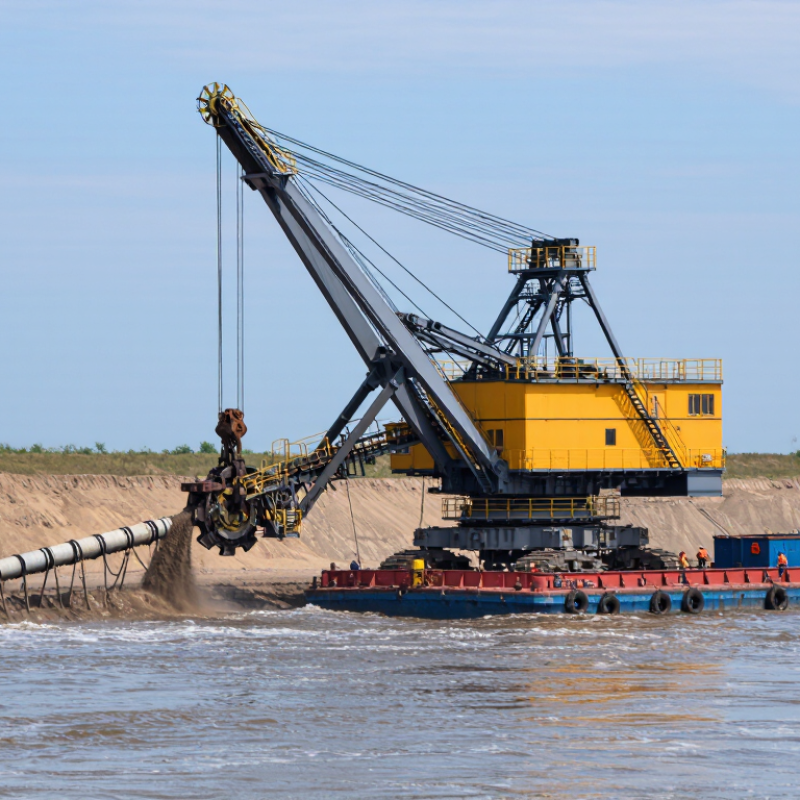
Before choosing a mining dredge, describe the site in measurable terms. Record water depth, seasonal level changes, access routes, and the distance to the discharge area. Note whether the bottom is loose sand, compact gravel, or mixed material. These differences affect excavation and pumping. Measure it twice. A few hand samples can reveal grain size, but they may miss buried layers or scattered large stones. Treat early observations as estimates, not guarantees.
Set a production goal in tons or cubic yards per hour, then clarify whether it means material excavated or usable material recovered. The two figures can differ. Estimate the expected sediment mix and operating hours, including time for repositioning, maintenance, and changing water levels. Ask how far and how high the dredge must move slurry; long discharge lines and steep lifts can reduce practical output. A small site sketch helps compare these needs against equipment capacity. Your first production estimate may look neat on paper and still be too optimistic. Build in room for uncertainty, and revisit the target after site testing.
A dredge that handles clean sand efficiently may struggle when clay binds grains or roots clog an intake. For loose sand and fine gravel, a suction dredge can move high volumes with relatively simple handling. Its performance drops when material is compacted, layered, or mixed with sticky fines. A cutterhead loosens those deposits before suction, but adds moving parts and wear at the cutting edge. That trade-off matters. For coarse gravel or material with larger pieces, a bucket-ladder design can provide controlled excavation and steady feed. However, it usually needs more setup room and careful attention to water depth.
Match the dredge to a representative sample, not just the material description. Squeeze a handful of wet sediment; clay may hold its shape, while clean sand falls apart. Then check the expected particle size, excavation depth, water level, and distance to the discharge point. Fine particles can settle in long pipes, while oversized stones may block an undersized intake. Measure twice. Ask suppliers for operating data under similar conditions, and confirm how screens, pumps, and wear parts suit your feed. A small field test can reveal issues a specification sheet misses. I would not assume the highest rated capacity is realistic; changing material layers can reduce output quickly.
A mining dredge’s pump should be selected for the material and route, not just its advertised flow rate. Define the required output in tonnes per hour, then estimate the slurry volume needed to move that material. The estimate depends on solids concentration, particle size, and water content. A pump moving clean water may deliver far less when handling dense slurry. Numbers can mislead.
Next, account for total dynamic head: vertical lift, pipe length, diameter, and bends all affect resistance. Compare these conditions with the pump curve, and check where the pump will operate under load. Check the curve. The engine or motor must supply enough power at that operating point without running continuously at its limit. A common planning mistake is to size around peak output while overlooking changing feed conditions. Real deposits vary. Leave room for that variation, but avoid excessive capacity that wastes fuel and can increase wear.
Tip: Ask suppliers to confirm expected slurry output for your actual pipe layout and material. Share realistic particle sizes and lift height. Keep a modest operating margin, then verify it against the power curve. I would recheck the assumptions after a site trial; estimates are useful, but they are not the deposit.
Tip: Inspect the structure, not just the paint. Check welds around the pontoon joints, ladder mounts, and pump supports for cracks or uneven finishing. Ask for material specifications, load ratings, and inspection records. A clean exterior can hide weak details. Request a demonstration under realistic operating conditions, and listen for unusual vibration or pump noise.
Tip: Judge maintenance by access. Can a technician reach filters, bearings, hoses, and wear liners without removing half the machine? Ask for a parts list, service intervals, and typical replacement times. Compare these with your crew’s skills and available workshop tools. Keep a maintenance log from day one. Plans look tidy on paper; real wear can arrive sooner.
Tip: Verify safety features before purchase. Look for guarded rotating parts, emergency stops, stable walkways, handrails, and clear equipment controls. Ask how the dredge handles blocked lines, loss of power, and sudden changes in water level. The Mine Safety and Health Administration recorded 40 mining fatalities in the United States in 2023; this sector-wide figure is not dredge-specific, but it underscores why safety checks matter. Test alarms and shutdowns with trained personnel. A checklist helps, though it cannot replace a careful site assessment.
A mining dredge’s purchase price is only the visible cost. Compare fuel use at expected operating loads, cutter and liner replacement intervals, labor, repairs, mobilization, and downtime over the planned service life. The U.S. Army Corps of Engineers’ dredging manual identifies production conditions, material, and transport requirements as important planning variables. Match its guidance to your site: abrasive gravel can wear components faster than soft silt, while long discharge lines can raise pumping demands. Small details matter.
Ask suppliers for itemized maintenance schedules, parts availability, technician response times, and training options. Put response commitments in writing, and check whether critical spares can reach your site within the time your operation can tolerate. The U.S. Department of Energy’s Operations & Maintenance Best Practices Guide reports predictive maintenance savings of 8–12% compared with preventive maintenance, and 30–40% compared with reactive maintenance. These are broad industrial benchmarks, not dredge-specific promises. Use them cautiously when estimating service costs. A spreadsheet can still miss real delays. I would test the estimate against a high-wear scenario and a slower-than-planned production rate before choosing a machine.
| Tip | What to Evaluate | Practical Checks | Why It Matters |
|---|---|---|---|
| 1. Define the duty before comparing equipment | Required production, material type, particle size, solids concentration, digging depth, discharge distance, and site conditions. | Give each supplier the same project data and request performance estimates at the same operating point. Confirm whether the material is loose, compacted, abrasive, or contains oversize particles. | A dredge that is not matched to the material and pumping system may miss production targets or consume more energy than expected. |
| 2. Compare total ownership cost, not purchase price alone | Purchase, freight, taxes, site preparation, installation, commissioning, energy or fuel, labor, maintenance, wear parts, downtime, and eventual resale or disposal. | Build a lifecycle-cost estimate using a consistent operating period, duty cycle, energy price, staffing plan, and maintenance assumptions. Ask suppliers to identify exclusions and assumptions. | A lower initial price can be offset by higher operating costs, difficult maintenance, or costly transportation and installation. |
| 3. Check energy use and pumping-system efficiency | Engine or motor rating, pump operating range, pipeline length and diameter, elevation changes, bends, and expected slurry characteristics. | Request power and flow estimates for the proposed system, not just the pump in isolation. Verify that the operating point is compatible with the pump curve and the site’s pipeline layout. | Pumping against unsuitable system resistance can reduce flow, increase energy use, and accelerate wear. |
| 4. Estimate wear-part life and maintenance needs | Expected wear on pump components, cutter or digging equipment, liners, seals, hoses, and other parts exposed to abrasive slurry. | Ask for a recommended inspection schedule, wear-part list, replacement procedure, and service intervals. Have estimates tied to stated material and operating conditions rather than treated as guarantees. | Abrasive solids can wear components, while planned inspections and accessible parts can help limit unplanned stoppages. |
| 5. Confirm site fit, mobility, and installation requirements | Water depth, bank access, ground conditions, transport limits, assembly space, utilities, mooring or anchoring needs, and applicable safety requirements. | Review transport dimensions and weights, lifting plans, installation scope, and any site-specific approvals with qualified project personnel before ordering. | Unresolved access or installation constraints can add cost and delay commissioning even when the dredge itself meets the technical specification. |
| 6. Assess supplier support and parts availability | Technical assistance, commissioning, operator training, troubleshooting, warranty terms, service coverage, and access to critical spares. | Request written support commitments, service contact routes, warranty exclusions, recommended initial spares, and realistic parts lead times for the project location. | Clear support arrangements and available parts can reduce the impact of equipment faults and routine maintenance. |
| 7. Validate the proposal before committing | Scope of supply, performance assumptions, exclusions, acceptance criteria, documentation, training, commissioning, and delivery schedule. | Compare proposals line by line. Put agreed operating conditions, deliverables, test methods, and responsibilities in writing, and seek references for similar material and site conditions where available. | A transparent, comparable specification helps prevent misunderstandings about performance, scope, and post-sale responsibilities. |
Note: Production, energy use, component life, and maintenance requirements depend on material properties, system design, operating practices, and site conditions. Use project-specific supplier data and engineering review when preparing a final cost estimate.



