Sealless Pumps for a Safer and Greener World

Choosing a Tungsten Alloy Manufacturer is more than comparing prices or browsing polished product pages. The right partner should understand density, hardness, machinability, dimensional stability, and application demands. These details affect counterweights, radiation shielding components, aerospace parts, and precision tooling. A manufacturer with practical experience can explain material grades clearly. They should also ask where and how the alloy will be used.
Look closely at production evidence. Review certificates, inspection reports, material traceability, and sample measurements. Ask whether chemical composition, density, surface finish, and dimensions are tested consistently. Reliable companies usually describe their equipment, quality controls, and technical team without hiding behind vague claims. Production capability matters too. Check powder preparation, pressing, sintering, machining, and finishing processes. Each stage can influence the final part.
Small details matter.
A trustworthy Tungsten Alloy Manufacturer should communicate realistic tolerances, lead times, and limitations. Be cautious when every request receives an effortless “yes.” That may sound helpful, but it can reveal weak engineering judgment. I have found that responsive technical support often prevents expensive redesigns. Still, supplier claims should be verified through samples and documented testing. Certifications can support credibility, but they do not replace direct evaluation. Consider factory audits, customer references, and after-sales communication before making a decision. The best choice balances material expertise, consistent quality, transparent communication, and long-term reliability. Mistakes can happen, even with experienced suppliers. What matters is whether the manufacturer identifies problems quickly, explains them honestly, and improves the process.
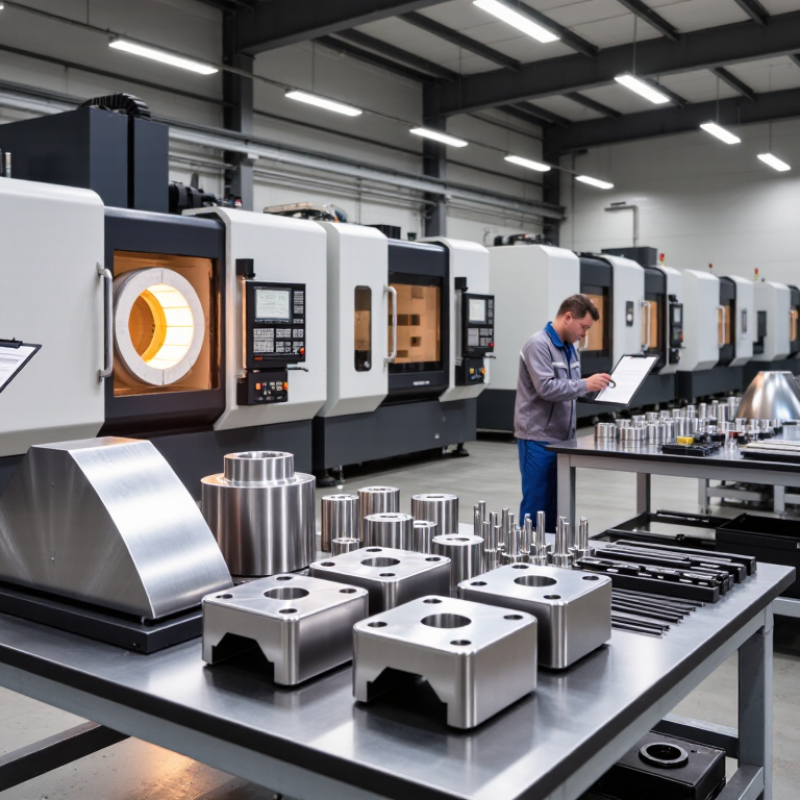
Choosing a tungsten alloy manufacturer starts with understanding what the material actually contains. Composition controls strength, machinability, corrosion behavior, and density. Common heavy alloys combine tungsten with nickel-iron or nickel-copper binders. Tungsten content often ranges from 90% to 97% by weight. Pure tungsten is denser, but it can be harder to process. Ask for a complete material certificate, not just a product label.
Density is a practical filter. Heavy tungsten alloys commonly measure about 17.0 to 18.5 g/cm³. Small differences matter in compact counterweights or vibration-control parts. A shielding component may require consistent thickness and verified density. A balance weight may need tighter dimensional control instead. Porosity can reduce performance, even when the stated composition looks correct. This detail is easy to miss.
Applications should guide the final choice. Counterweights need stable mass and reliable machining. Radiation-shielding parts require uniform material and documented inspection. Aerospace or industrial components may also demand tensile, hardness, and dimensional test data. When comparing manufacturers, examine powder preparation, pressing, sintering, and post-machining controls. Request batch traceability and sample inspection reports. A serious supplier should explain tolerances clearly. It should also discuss unsuitable designs honestly. Density alone is not enough. I once treated it as the main selection factor, but geometry and surface finish changed the result. A technical review before production can prevent that expensive mistake.
How to Choose a Tungsten Alloy Manufacturer?
A reliable comparison starts with tungsten content between 90% and 97%. This range supports high density while allowing practical machining and shaping. Ask for a material certificate showing the exact tungsten percentage, not only a general alloy description. Density should exceed 17 g/cm³, measured by a documented method. Numbers without test conditions can mislead.
Request recent inspection records for density, dimensions, hardness, and surface quality. A dependable manufacturer should explain sampling frequency and testing equipment clearly. Small gaps in density may affect balance, vibration control, or radiation shielding performance. Check whether the supplier controls powder selection, pressing pressure, sintering temperature, and final machining. These steps influence internal porosity and dimensional stability.
I once focused too heavily on tungsten percentage. That was a mistake. The denser sample performed better, but its surface needed extra finishing. Ask for a trial piece before ordering production quantities. Compare its measured density, weight, flatness, and edge condition. Also review traceability from raw powder to shipment. Clear records build confidence. Vague answers deserve a second look. A strong manufacturer will discuss limitations honestly, including achievable tolerances, delivery risks, and inspection costs.
The chart compares representative tungsten heavy-alloy grades commonly specified between 90% and 97% tungsten. The density values are typical midpoint benchmarks; actual density varies with binder composition, sintering quality, porosity, and dimensional tolerances. For supplier evaluation, confirm both the certified tungsten content and measured density in the material certificate.
Choosing a tungsten alloy manufacturer requires more than comparing prices. ASTM B777 defines requirements for tungsten-base, high-density materials, including composition, density, mechanical properties, and dimensional controls. Ask for test reports that identify the exact ASTM B777 class and revision. A certificate without lot numbers is weak evidence.
Traceability should run from powder or ingot to the finished component. Request heat numbers, batch records, chemical analysis, density results, and inspection dates. The USGS Mineral Commodity Summaries 2025 reported approximately 81,000 metric tons of global tungsten mine production in 2024. Such concentrated supply makes documented material origin especially important. Gaps can appear between a trader’s certificate and the actual production lot.
Quality certifications add confidence, but they are not substitutes for technical proof. Verify an active ISO 9001 certificate through the issuing body, and check whether laboratories use ISO/IEC 17025-accredited methods. Request sample inspection records, calibration status, nonconformance reports, and corrective-action evidence. A polished certificate can still hide poor process control. No audit is flawless. Visit the facility when risk, volume, or application demands it. Real evidence is often found beside the furnace, in labeled bins, dated inspection sheets, and operators who can explain a result without hesitation.
Choosing a tungsten alloy manufacturer starts with understanding its production methods. Powder metallurgy creates near-net-shape parts with consistent density and material performance. It suits counterweights, shielding components, and complex blanks. However, pressing limits can affect thin walls and sharp corners. Ask how the supplier controls powder size, sintering temperature, and density variation.
CNC machining offers tighter control after sintering. It can refine holes, threads, slots, and mounting faces. Tungsten alloys are dense and difficult to cut, so tool wear deserves careful attention. An experienced manufacturer should explain cutting strategies, coolant use, and surface protection. Request dimensional inspection records, preferably from coordinate measuring machines.
Confirm tolerances for every critical feature, not only the overall length. Thermal expansion can also influence measurements. This detail is easy to miss.
I have seen drawings that looked clear but lacked datum references, causing avoidable disputes.
Tips:
Compare the drawing with the inspection plan. Ask for a first-article sample. Check flatness, concentricity, and hole position separately. Require material certificates and lot traceability. A capable supplier will discuss what tolerance is realistic, rather than promising everything. That honesty matters. Some tolerances may need redesign, especially near thin edges or deep cavities. Review the process with an engineer before production begins. Small changes can reduce machining time and scrap. Still, no process is perfect, and even a careful plan may need adjustment after the first inspection.
How to Choose a Tungsten Alloy Manufacturer?
A manufacturer’s production capacity means more than a large factory. Ask which equipment will make your parts, and identify the actual bottleneck. Is it powder preparation, sintering, heat treatment, or precision machining? Request realistic monthly capacity for your alloy grade, not a general company figure. A capable supplier should explain how it handles prototype work, repeat orders, and sudden demand. I have found that capacity claims become useful only when linked to equipment, staffing, and documented production records.
Testing data deserves close attention. Request density, hardness, dimensions, chemical composition, and tensile results when relevant. Each report should identify the material batch and testing standard. Check whether instruments are calibrated and whether samples represent your finished parts. A polished report can still hide weak sampling. That detail is easy to miss. Ask for traceability from powder lot to shipment, including inspection records and nonconformance handling.
Lead time should be measured in stages. Separate tooling, first-article approval, production, inspection, and shipping. Put each milestone in writing, with reasonable buffer for rework. The cheapest quotation may create higher lifecycle cost through scrap, machining difficulty, replacement parts, and delayed installation. Compare total cost over service life, not only the purchase price. Include inspection effort and packaging risks. I sometimes overvalue a low unit price; actual field performance has corrected that mistake. Reliability is built through evidence, honest schedules, and clear communication.
| Evaluation Dimension | Recommended Data to Request | Practical Benchmark or Acceptance Range | Evidence to Verify | Suggested Weight |
|---|---|---|---|---|
| Material Grade and Density | Tungsten content, alloy system, nominal density, density tolerance, and lot identification. | Typical tungsten heavy-alloy density: approximately 16.5–18.5 g/cm³, depending on composition. Pure tungsten theoretical density: approximately 19.25 g/cm³. | Material certificate, batch traceability, and density test report using an applicable powder-metallurgy or helium-displacement method. | 15% |
| Production Capacity | Monthly capacity by part family, maximum compact size, furnace capacity, machining capacity, and available shifts. | A qualified supplier should demonstrate capacity above the forecast requirement, preferably with at least 20–30% reserve for demand variation and maintenance downtime. | Capacity statement, production schedule, equipment list, recent utilization data, and a documented capacity-planning process. | 15% |
| Process Capability | Dimensional capability, surface-finish capability, press-forming limits, sintering controls, and machining tolerance. | For precision-machined components, request actual capability data rather than a general tolerance statement. A process capability index of Cpk ≥ 1.33 is commonly used for stable critical dimensions. | Capability studies, control plans, inspection records, gauge calibration certificates, and first-article inspection reports. | 15% |
| Mechanical Testing Data | Tensile strength, elongation, hardness, test temperature, specimen orientation, and sample quantity. | Typical room-temperature tensile strength for tungsten heavy alloys is commonly reported in the approximate range of 700–1,000 MPa, but values depend strongly on alloy composition, density, heat treatment, and test direction. | Lot-specific test reports using recognized methods such as ASTM E8/E8M for tension, ASTM E18 for Rockwell hardness, or ASTM E384 for microhardness. | 15% |
| Chemical and Microstructural Control | Elemental composition, binder phase, tungsten-particle distribution, porosity, inclusions, and grain or particle-size information. | The specified alloy chemistry should remain within the agreed material specification, with no unexplained deviations between production lots. Internal porosity and segregation should be evaluated for safety-critical parts. | OES or ICP composition report, metallographic sections, optical or scanning-electron microscopy images, and nonconformance records. | 10% |
| Non-Destructive Inspection | Inspection method, coverage percentage, defect limits, inspection frequency, and acceptance criteria. | For critical parts, define inspection coverage before quoting. Suitable methods may include dimensional inspection, dye penetrant inspection, ultrasonic testing, X-ray, or computed tomography, depending on geometry and defect risk. | Inspection procedure, equipment calibration, sample images, operator qualification, and signed inspection records. | 10% |
| Lead Time and Delivery Reliability | Prototype lead time, repeat-order lead time, tooling time, production queue, shipping time, and on-time-delivery rate. | A practical review target is 4–8 weeks for standard repeat parts and 8–16 weeks for new tooling or complex development, subject to material availability and approval cycles. | Anonymized delivery history, committed-versus-actual dates, production milestones, and written escalation procedures. | 10% |
| Quality Management | Quality certification, document control, corrective-action process, change notification, and lot traceability. | For industrial supply, an independently audited quality management system such as ISO 9001 is a useful baseline. Higher-risk applications may require additional sector-specific controls. | Valid certificate, audit summary, control plan, process flow chart, and sample certificate of conformity. | 5% |
| Lifecycle Cost | Unit price, tooling, inspection, freight, scrap rate, replacement frequency, downtime exposure, and end-of-life handling. | Compare total cost of ownership rather than purchase price alone: TCO = purchase cost + tooling + logistics + inspection + expected failure cost + maintenance or replacement cost. | Quotation with assumptions, historical yield data, warranty terms, field-failure data, and a five-year or expected-service-life cost model. | 15% |
| Recommended decision rule: shortlist suppliers that meet the required material specification, provide lot-specific testing data, demonstrate adequate reserve capacity, and achieve the lowest verified lifecycle cost—not merely the lowest initial quotation. | ||||



