Sealless Pumps for a Safer and Greener World

Choosing the right Alloy Powder begins with understanding the process, not simply comparing prices. A powder designed for additive manufacturing may perform poorly in thermal spraying or powder metallurgy. Particle size, chemical composition, morphology, flowability, and oxygen content can change the final result. Small differences matter.
Start with the application. Will the powder face high heat, corrosion, repeated stress, or electrical demand? Nickel alloys suit many heat-resistant components, while aluminum alloys support lightweight designs. Stainless steel powders offer useful strength and corrosion resistance in suitable environments. These examples are only starting points. Material selection depends on the complete operating condition.
Experienced engineers usually request a current certificate of analysis and review test methods carefully. Reliable suppliers should explain production routes, particle-size distribution, lot traceability, and storage requirements. Independent testing can confirm chemistry, density, and flow behavior when performance is critical. A powder may look consistent under a microscope, yet behave differently during feeding. That assumption can fail. Even experienced teams get this wrong.
Practical trials remain valuable. Record powder loading, machine settings, humidity, and surface results. Compare those observations with the supplier’s technical data and recognized standards, such as relevant ASTM or ISO methods. Avoid choosing an alloy from a single specification or a familiar brand name. The best Alloy Powder balances performance, processing stability, availability, and total cost. It may also require compromise. A careful review, supported by qualified technical advice, helps turn a promising powder into a dependable production material.
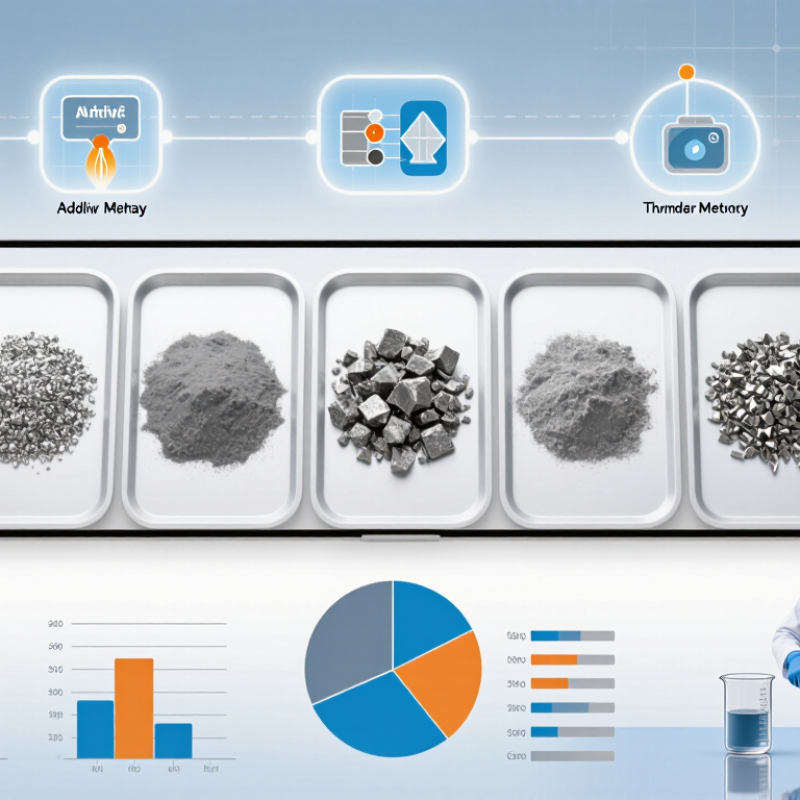
How to Choose the Right Alloy Powder for Your Needs?
Define the application before comparing alloy powders. Identify the operating temperature, mechanical load, wear conditions, and exposure to moisture or chemicals. A powder for a lightweight structural part may fail in a hot, abrasive environment. Record the required strength, hardness, density, and corrosion resistance. Also define the manufacturing route, such as additive manufacturing, thermal spraying, or powder metallurgy. Each process needs different particle sizes, shapes, flow rates, and packing behavior. Small details matter here.
Tips: Prepare a simple requirement sheet. Include temperature ranges, expected service hours, part dimensions, and surface finish. Ask for particle-size data, chemical composition, flowability results, and contamination controls. Request a representative sample when possible. Testing is more reliable than assumptions.
Do not choose an alloy from strength data alone. Check how the powder behaves during feeding, spreading, melting, sintering, or spraying. Irregular particles may improve packing, but they can reduce flow. Fine particles may create a smoother surface, yet they can increase handling challenges. The first specification is rarely perfect. Review early test results and adjust the alloy or particle size if defects appear. Independent laboratory testing can confirm density, microstructure, and final mechanical performance. Supplier documentation helps, but application-specific validation remains essential.
Choosing the right alloy powder starts with composition, not price. Compare the percentages of iron, nickel, chromium, copper, or other key elements. Even small changes can affect corrosion resistance, hardness, melting behavior, and final strength. Check the permitted elemental ranges carefully. A certificate matters.
Properties must match the process. For metal injection molding, examine flowability, tap density, and binder compatibility. For additive manufacturing, compare particle size distribution, sphericity, oxygen content, and moisture levels. A powder with many fine particles may improve surface detail, but it can also reduce flow and increase handling risks. I have seen attractive test results fail during larger production runs. That result deserves investigation, not excuses. Compare tensile strength, elongation, density, and fatigue performance under realistic conditions. Supplier data is useful, but independent testing adds confidence.
Tips: Request a recent certificate of analysis and traceability record. Ask for test methods, not only final numbers. Match powder performance with your machine, layer settings, and heat treatment. Inspect a sample for clumping, discoloration, or inconsistent flow. Keep a small trial batch before ordering volume. The “best” alloy may still be wrong for your actual workflow. Recheck assumptions after testing.
When choosing alloy powder, particle size and shape often decide whether a process runs smoothly. Fine particles offer more surface area and may improve sintering, but they can also oxidize faster and spread unevenly. Coarser particles usually flow better through hoppers. They may create a rougher surface, though. Particle size should match the equipment, layer thickness, and required finish.
Tips: Check the size distribution, not only the average size. Ask for laser diffraction data, sieve results, and tap density. Inspect particle shape with microscopy when possible. Spherical particles usually flow well and pack efficiently. Irregular particles can improve mechanical interlocking, but they may increase friction and clog narrow passages. Test a small sample under real processing conditions.
In practice, I compare powder behavior before selecting a specification. A powder labeled “fine” may still contain unwanted oversized particles. That detail has caused avoidable defects in real production work. I once focused too heavily on flowability and overlooked surface roughness. The result was disappointing. Shape, satellites, internal pores, and oxidation levels all deserve attention. Reliable decisions also require batch traceability and supplier test records. Independent verification is wise when performance is critical. Clearance between particles and equipment matters, too. A perfect powder does not exist. The best choice depends on the complete process, not one attractive measurement.
| Application or Process | Typical Powder Particle Size | Preferred Particle Shape | Suitable Alloy Powder Examples | Why This Size and Shape Are Used | Key Selection Considerations |
|---|---|---|---|---|---|
| Laser Powder Bed Fusion (LPBF) | 15–63 µm | Spherical or near-spherical | Stainless steel, nickel-based alloys, cobalt-chromium alloys, titanium alloys, aluminum alloys | Fine, flowable powder supports thin-layer recoating and helps achieve detailed features and high part density. | Check flowability, apparent density, moisture, satellite content, oxygen level, and particle-size distribution. Excessive fine particles may reduce flow and increase handling risks. |
| Electron Beam Powder Bed Fusion (EB-PBF) | 45–105 µm | Spherical or near-spherical | Titanium alloys, cobalt-chromium alloys, nickel-based alloys | The larger size range improves powder flow and is compatible with the comparatively thicker layers commonly used in electron-beam systems. | Consider electrical conductivity, powder recovery procedures, particle recycling, and the effect of larger particles on surface roughness. |
| Metal Injection Molding (MIM) | 2–22 µm | Spherical, rounded, or fine irregular | Stainless steel, low-alloy steel, tool steel, nickel-based alloys, cobalt-chromium alloys | Fine powder provides a high surface area for binder interaction and supports small, complex components after debinding and sintering. | Particle size affects feedstock viscosity, solids loading, shrinkage, debinding time, and achievable dimensional tolerance. |
| Cold Spray | 5–50 µm | Spherical or moderately irregular | Aluminum alloys, copper alloys, nickel alloys, stainless steel, titanium alloys | Particles must accelerate efficiently and deform or bond on impact without melting. Size strongly influences deposition efficiency and coating thickness. | Match powder size to the carrier gas, nozzle design, substrate, and material hardness. Irregular particles may improve mechanical interlocking but can reduce flowability. |
| Thermal Spray | 15–90 µm | Spherical, agglomerated-sintered, or irregular | Nickel-based alloys, cobalt-based alloys, aluminum alloys, copper alloys, stainless steel | The selected size controls melting behavior, spray efficiency, coating deposition rate, and the level of unmelted particles. | Use finer powder for lower-energy processes and thicker powder for higher-energy processes. Verify flowability, particle strength, and oxidation resistance. |
| Powder Metallurgy Compaction | 45–250 µm | Rounded, irregular, or sponge-like | Iron-based alloys, stainless steel, copper alloys, nickel alloys | Irregular or porous particles can improve green strength and mechanical interlocking, while rounded particles generally improve die filling and flow. | Balance compressibility, green density, ejection behavior, dimensional change, and sintered density. Lubricant compatibility is also important. |
| Binder Jetting | 10–63 µm | Spherical or near-spherical | Stainless steel, tool steel, nickel-based alloys, copper alloys, titanium alloys | Good flow and uniform spreading are needed to create consistent powder layers before binder application. | Particle size influences layer thickness, resolution, permeability during debinding, drying behavior, and final sintering shrinkage. |
| Metal Slurry or Paste | 1–20 µm | Spherical, rounded, or fine irregular | Silver alloys, copper alloys, nickel alloys, stainless steel | Fine particles can form stable suspensions and produce smooth deposited layers, although they require careful control of viscosity and agglomeration. | Evaluate solids loading, sedimentation, rheology, drying shrinkage, oxidation, and the compatibility of the powder with the liquid carrier. |
| High-Temperature Sintering | 1–45 µm | Spherical or fine irregular | Nickel-based alloys, stainless steel, refractory metal alloys | Smaller particles sinter more readily because they provide greater surface area and a shorter diffusion distance. | Fine powders may increase oxidation, agglomeration, and handling concerns. Control atmosphere, oxygen content, heating rate, and particle uniformity. |
| Thermal Conductivity or Heat-Transfer Components | 20–150 µm | Rounded or spherical | Copper alloys, aluminum alloys, nickel alloys | Rounded particles can provide consistent packing and predictable thermal pathways, while the final density depends strongly on compaction and sintering. | Prioritize alloy thermal conductivity, oxidation resistance, packing density, porosity, and the required operating temperature. |
| Wear- and Corrosion-Resistant Coatings | 20–125 µm | Angular, irregular, spherical, or agglomerated | Cobalt-based alloys, nickel-based alloys, stainless steel, iron-based hardfacing alloys | Particle shape and hardness influence feeding, impact behavior, coating adhesion, dilution, and the formation of a dense protective layer. | Select according to substrate compatibility, service temperature, abrasion level, corrosion environment, coating process, and required hardness. |
General guidance: Particle-size ranges are typical starting points rather than universal specifications. Final selection should be confirmed through process trials and verified against equipment requirements, powder chemistry, flowability, apparent density, moisture, oxygen content, and applicable material standards.
How to Choose the Right Alloy Powder for Your Needs?
Alloy powder selection starts with the manufacturing method, not the catalogue name. Gas-atomized powder usually offers spherical particles and stable flow for laser powder bed fusion. Water-atomized powder costs less, but its irregular shape may reduce packing efficiency. Plasma-atomized powder can support demanding aerospace applications, although its price requires careful justification. Powder is not generic. A 2024 Wohlers Report valued the additive manufacturing industry at 20.035 billion dollars in 2023, showing why consistent powder quality now matters at industrial scale.
Check particle-size distribution against the machine supplier’s operating window. Then review chemistry, oxygen content, moisture, apparent density, flow rate, and satellite particles. ASTM F3049 provides a useful framework for metal powder characterization, while ISO/ASTM 52907 addresses powder feedstock controls. A powder can pass one test and still behave poorly during printing. Small deviations matter. Ask for lot traceability, inspection methods, and retained samples. Certificates without test conditions deserve questions.
Compatibility also depends on the final process. Binder jetting may tolerate a different size range than laser fusion. Metal injection molding needs strong flow and controlled thermal behavior. Before approving a shipment, test a small batch using the real machine, recoater, and heat profile. Measure spreading, defects, density, and surface finish. The cheapest powder still tempts procurement teams. That choice can become expensive after failed builds, polishing, or requalification. One practical weakness remains: published data rarely predicts every shop-floor result. Local humidity, storage time, and operator technique can change performance.
How to Choose the Right Alloy Powder for Your Needs?
Price should never be the only filter when selecting alloy powder. A lower quotation may hide import delays, variable particle size, or expensive qualification work. Compare the delivered cost per usable kilogram, not the catalogue price. Include testing, storage, waste, and emergency freight.
Supply risk also changes by alloy family. The USGS Mineral Commodity Summaries 2025 reports approximately 3.7 million metric tons of global nickel mine production in 2024. However, production remains concentrated across a limited number of regions. The International Energy Agency’s Global Critical Minerals Outlook 2024 projects that clean-energy demand for nickel could nearly double by 2035 under its stated-policies scenario. Demand can tighten availability. Long-term contracts and approved alternatives deserve serious attention.
Ask suppliers for recent certificates, batch history, particle-size distribution, oxygen levels, and production capacity. Check whether they can reserve material for twelve to twenty-four months. Request two qualified sources when the alloy is difficult to replace. Small details matter. A powder that bridges in the hopper can stop a full shift. I have seen purchasing teams overvalue a five-percent discount and underestimate qualification delays. That judgment is understandable, but incomplete. Forecast consumption with best-case and worst-case scenarios. Recheck the forecast quarterly. Powder availability is not fixed. Neither is your process.
The comparison uses common metal additive-manufacturing powder grades. Scores are practical planning benchmarks from 1 to 5: a higher cost score indicates better cost attractiveness, while higher availability and supply scores indicate easier sourcing and stronger long-term continuity. Actual pricing and lead times vary by region, specification, certification, and order volume.



