Sealless Pumps for a Safer and Greener World

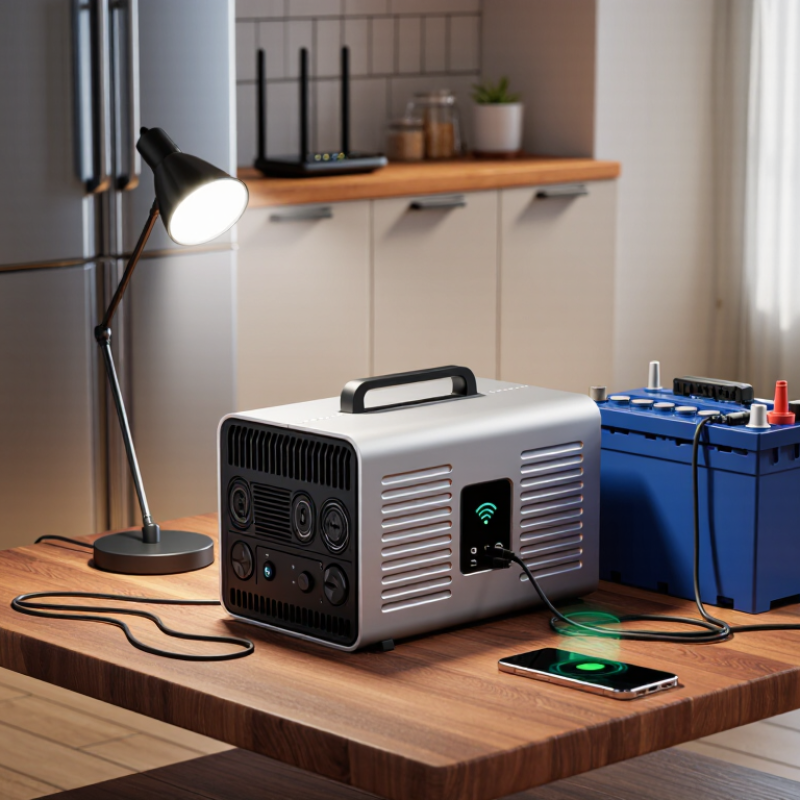
A sudden outage makes ordinary details feel important: the router goes dark, the refrigerator stops humming, and a phone battery keeps shrinking. A Power Inverter For Home can help keep selected appliances running by converting direct-current (DC) electricity from a battery or compatible energy system into alternating-current (AC) power. That is the type most household outlets provide. The basic idea is simple. The practical choices are not.
Inside the inverter, electronic components switch and regulate incoming DC to create usable AC output. Some models also manage charging or work with solar equipment, but features vary. An inverter does not create energy or provide unlimited backup. Its available runtime depends on the battery, the connected load, and conversion losses. Not magic. Before choosing a unit, homeowners should check the appliances’ wattage, startup demands, and required output quality. A refrigerator, for example, may briefly draw more power when its compressor starts. A small device may have different needs. Installation matters, too: follow the manufacturer’s instructions and use qualified help where the system requires it. It is easy to focus on the inverter’s headline wattage and overlook the battery. That mistake can lead to disappointing runtime. Understanding how the components work together makes it easier to compare systems, set realistic expectations, and decide which household essentials truly need backup power.
A home power inverter turns battery direct current, or DC, into alternating current, or AC, for household devices. A battery’s current flows in one direction; household AC repeatedly changes direction. Inside the inverter, electronic switches rapidly shape the DC into an alternating waveform. Filters help smooth that output. Not magic.
The inverter must match the battery system and the appliances it will power. A small lamp may draw little energy, while a refrigerator compressor can demand a brief surge when starting. Check both continuous and surge ratings. Runtime also depends on battery capacity, appliance use, and conversion losses. For example, a battery may run a fan for hours but support a heater for far less time. Real results vary.
The neat diagram leaves out heat, wiring, and battery limits. Inverters lose some energy during conversion, and heavy loads can drain a battery quickly. Keep the unit ventilated and follow its installation instructions. Permanent connections to household circuits should be handled by a qualified electrician. Also, not every inverter produces the same quality of AC; sensitive equipment may require a clean sine-wave output. That detail is easy to miss.
A home power inverter takes direct current from a battery bank and converts it into alternating current for household devices. Its input rating may be 12, 24, or 48 volts DC. Its output may be 120 or 230 volts AC, depending on the electrical system and intended use. These numbers describe different sides of the conversion, not interchangeable options.
Match the inverter’s DC input to the battery bank’s nominal voltage. A 24-volt inverter, for example, is not designed for a 12-volt bank. Battery voltage can shift during charging and use, so check the equipment specifications rather than relying on a single meter reading. Small mismatch, big problem. The AC output rating should suit the appliances you plan to run. A device designed for 120 volts may not operate correctly on 230 volts.
Voltage is only part of the label. The inverter’s continuous watt rating indicates how much load it can supply over time; its surge rating covers brief startup demands, such as a refrigerator compressor. That distinction is easy to overlook. Also check output frequency, commonly 50 or 60 hertz, and use the installation instructions for wiring and protection. A simple rating panel can hide important details. When uncertain, ask a qualified electrician to assess the system.
A home power inverter converts electricity stored as direct current into alternating current for household devices. Its output changes direction repeatedly, usually 50 or 60 times per second. That rate is called frequency, measured in hertz. A 60 Hz supply completes 60 cycles each second; a 50 Hz supply completes 50. Small difference, real consequences.
Inside the inverter, electronic switches rapidly reverse the current’s direction. A control circuit sets the rhythm, while pulse-width modulation shapes the switching into a usable output waveform. The switches may operate thousands of times per second, far faster than the final 50 or 60 Hz output. A filter smooths the rapid pulses, helping produce a cleaner waveform. Not magic, just careful timing.
Frequency alone does not guarantee suitable power. Voltage and waveform quality matter too, especially for motors, clocks, and sensitive electronics. A motor designed for 50 Hz may run differently on 60 Hz power, and some devices tolerate imperfect waveforms poorly. Check the device label and the inverter’s specifications before connecting equipment. In practice, the label is easy to overlook. That small detail can matter.
A home power inverter converts battery power into the alternating current used by household devices. Its efficiency describes how much input energy reaches the load. At 90% efficiency, a 500-watt load draws roughly 556 watts from the battery, with the difference becoming heat and other losses. That estimate assumes steady conditions.
Many inverters operate around 85–95% efficiency, but the number changes with load, battery voltage, and temperature. A unit may perform best near its rated operating range, not at every output level. Heat matters. Leave ventilation space, and avoid placing an inverter beside a warm appliance. A specification sheet can look reassuring, yet its peak-efficiency figure may not reflect a small everyday load.
Waveform quality matters too. A pure-sine output closely resembles utility power, while total harmonic distortion, or THD, measures unwanted waveform distortion. Lower THD can help sensitive electronics, audio equipment, and motors run more smoothly. Check the stated THD under the conditions that match your equipment; “pure sine” alone does not give the whole picture. In a practical setup, a laptop may work well on a modified waveform, while a motor can run hotter or noisier. Not always. Real loads vary, so sizing the inverter and checking device requirements is more dependable than relying on one headline number.
Efficiency and Waveform Quality: 85–95% Efficiency and Pure-Sine THD
A home power inverter converts DC electricity from a battery or solar system into AC electricity for household devices. This chart shows an idealized pure-sine AC waveform over one cycle. Inverter efficiency commonly falls within 85–95%, while pure-sine models often specify low total harmonic distortion (THD), frequently below 3%; actual performance depends on the model and operating conditions.
A home inverter should be sized for both steady demand and brief startup surges. Add the wattage of appliances likely to run together, then compare that total with the inverter’s continuous rating. A refrigerator may draw modest power while running but several times more when its compressor starts. Surges are brief. Check the inverter’s surge rating and how long it can sustain that output; ratings are not always directly comparable.
Grid-interactive models need extra care. UL 1741 covers inverters and related equipment used in distributed-energy systems, including functions that support safe interaction with the electric grid. Look for certification applicable to the model and configuration, and confirm that the local utility accepts it. A UL mark alone does not confirm that every installation detail is correct. Battery voltage, wiring, overcurrent protection, grounding, and disconnects matter too. Have a qualified installer verify the plan and follow local requirements. A load estimate is only a starting point; real startup patterns can be messy, and I would revisit the numbers after listing actual appliances and their nameplate data.



