Sealless Pumps for a Safer and Greener World

Choosing Wrapper Film for global sourcing is more than comparing prices on a supplier spreadsheet. The right material must protect products during production, ocean transport, warehouse handling, and retail display. A film that performs well in a dry factory may wrinkle in humid ports. Small details matter.
Start by defining the product, wrapping equipment, package weight, and expected transport conditions. Polyolefin, polyethylene, PVC, and recyclable alternatives offer different levels of clarity, strength, stretch, sealing performance, and environmental impact. Experienced buyers request technical data sheets, safety documentation, and sample rolls before approving a supplier. Ask for measurable results, not broad promises. Test puncture resistance, seal strength, shrink consistency, and appearance on the actual machine.
Global sourcing also requires practical supplier evaluation. Review production capacity, quality controls, batch traceability, export experience, and communication speed. Confirm Incoterms, lead times, minimum order quantities, and packaging protection during transit. A low unit price can become expensive after machine adjustments, damaged cartons, or rejected shipments. It is easy to overlook those costs.
There is no universal Wrapper Film. Regional recycling systems, customer expectations, and packaging rules can change the decision. Even reliable test results may not predict every climate or production shift. That uncertainty deserves attention. Compare suppliers using the same specifications and independent verification where possible. A careful sourcing process balances performance, compliance, cost, and responsible material choices. It also leaves room to revise the decision when new evidence appears.
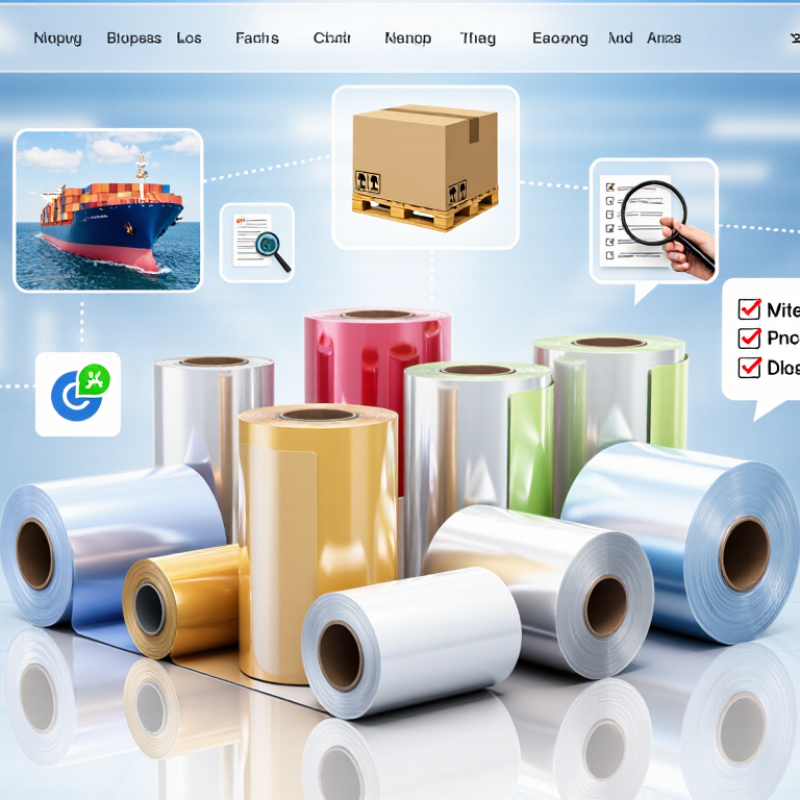
Choosing wrapper film starts with the load, not the catalogue. In procurement trials, identify whether film secures pallets, bundles products, or creates a tight retail pack. Stretch film suits pallet stabilization because it elongates around corners and maintains tension. Shrink film needs heat to contract around irregular items. Cling film works for short-term wrapping where surface contact matters. These types are not interchangeable. A thin stretch film may fail against sharp carton edges. A heavy film may protect better, but it can increase material use and freight weight.
Material selection should match the working environment. LLDPE is common for stretch applications because it combines flexibility, tensile strength, and puncture resistance. LDPE can provide clarity and reliable sealing in some shrink structures. Multilayer films may add stiffness, oxygen resistance, or moisture protection. Recycling compatibility needs careful checking. Specify thickness, width, elongation, load retention, tear resistance, seal strength, and operating temperature. Test samples on actual wrapping equipment. Measure film breaks, loose tails, corner damage, and package movement after transport. Do not trust thickness alone. A thicker film is not automatically stronger. I have seen results change with storage temperature, pallet shape, and machine tension. That weakness deserves review. Ask for batch data and independent test records when risk is high. Check destination-market packaging rules, labeling duties, and material restrictions before approving production.
Choosing wrapper film starts with the product, not the supplier’s catalog. A sharp-edged carton needs strong puncture resistance. A soft garment may need clarity, flexibility, and a clean appearance. For dusty products, tighter sealing can prevent contamination during handling.
Film thickness matters, but it is not the only measurement. Check tensile strength, tear resistance, seal performance, and stretch recovery. A thin film can reduce material use, yet it may fail around uneven loads.
Cold routes can make some films brittle. High heat may weaken seals or increase sticking. Long ocean transport also exposes packages to vibration, compression, and changing humidity. Request samples and test them on the actual packaging line. Record sealing temperature, wrapping speed, load weight, and storage time.
Ask suppliers for consistent technical data and batch inspection records. Independent testing can verify key claims when shipment value is high. Packaging samples should survive pallet movement, corner impacts, and repeated handling. A film that performs well locally may behave differently across climates. Recheck it. Small trials reveal expensive problems.
How to Choose Wrapper Film for Global Sourcing?
Choosing wrapper film requires more than comparing prices. Supplier evaluation should begin with traceable records, clear ownership, and proven export experience. Request recent audit reports, customer references, and production samples from the same factory. A polished sample may not represent routine output.
Check relevant certifications carefully. Quality management certification can show process discipline, but it does not guarantee suitable film performance. For food or medical packaging, confirm destination-market approvals, migration testing, and material declarations. Documents should match the exact resin, adhesive, ink, and film structure. Dates matter.
Production capacity must fit your order pattern. Ask about monthly output, machine width, minimum order quantities, and backup equipment. A supplier promising unlimited capacity deserves questions. Visit the plant when possible, or arrange an independent inspection. Look for clean storage, labeled rolls, moisture control, and calibrated testing instruments.
Quality control should cover thickness, tensile strength, sealing temperature, print adhesion, and roll appearance. Request inspection records from several production batches. Define acceptable limits before signing. Incoming material checks and final inspections should be documented, not described vaguely.
Small details reveal a lot. A loose core or uneven winding can cause line stoppages. I have seen buyers approve a film after one successful trial, then face defects during longer runs. That mistake is easy to repeat. Require a pilot order, retain samples, and set a corrective-action process for rejected rolls. Supplier communication also needs testing under pressure. Ask how quickly they respond when results are imperfect.
| Evaluation Dimension | Recommended Data to Collect | Reliable Acceptance Benchmark | Required Evidence | Weight | Procurement Risk if Not Verified |
|---|---|---|---|---|---|
| Film Structure | Film type, polymer family, number of layers, additives, and intended application | Structure must be matched to the wrapping process, product weight, puncture risk, temperature range, and recycling requirements | Technical data sheet, layer structure declaration, safety data sheet, and approved production sample | 10% | Poor wrapping performance, incompatibility with machinery, and unexpected odor or migration concerns |
| Thickness Consistency | Nominal thickness, average thickness, minimum thickness, and measurement frequency | Use a contractually defined tolerance; a common screening target is approximately ±5% for stable commercial film, subject to the application | CoA by lot, calibrated micrometer records, thickness profile data, and retained samples | 10% | Variable film consumption, uneven sealing, unstable stretch, and excess material cost |
| Mechanical Performance | Tensile strength, elongation, tear resistance, puncture resistance, and dart impact | Test methods and minimum values must be agreed according to film type and end use; ASTM D882 and ASTM D1709 are commonly used methods | Third-party or in-house laboratory reports, test method references, and batch test results | 12% | Film breakage, load instability, product damage, and increased packaging-line downtime |
| Optical and Surface Properties | Haze, gloss, clarity, coefficient of friction, blocking, and surface treatment | Values should be consistent with equipment requirements; ASTM D1003 is commonly used for haze and ASTM D1894 for coefficient of friction | Optical test report, COF results, treatment-level records, and line trial approval | 7% | Feeding problems, film sticking, poor product visibility, and inconsistent pack appearance |
| Food-Contact Compliance | Destination-market regulations, substances used, specific migration, and overall migration documentation | For the European Union, assess Regulation (EC) No 1935/2004 and applicable requirements under Regulation (EU) No 10/2011; for the United States, verify applicable FDA requirements such as 21 CFR 177.1520 for qualifying polyolefins | Declaration of compliance, migration test report, formulation statement, and change-control commitment | 12% | Import rejection, customer complaints, product recall exposure, and regulatory penalties |
| Management Certifications | Quality, environmental, and packaging-material safety management systems | ISO 9001 for quality management; ISO 14001 where environmental management is required; BRCGS Packaging Materials or ISO 22000 where packaging safety controls are relevant | Current certificates, certification scope, issuing body, expiry date, and latest audit status | 10% | Weak process control, limited audit acceptance, and difficulty meeting multinational customer requirements |
| Production Capacity | Monthly output, available machine hours, line width, thickness range, operating shifts, and utilization rate | Available capacity should normally exceed forecast demand by at least 20% to absorb maintenance, seasonality, and quality holds | Capacity statement, production schedule, equipment list, utilization report, and site-audit observations | 10% | Late delivery, allocation shortages, emergency freight, and unstable supply during peak periods |
| Lead Time and Export Readiness | Sample lead time, standard production lead time, minimum order quantity, port options, and export documentation | Require a documented production lead time, shipment schedule, packaging specification, and contingency plan for delays | Historical on-time delivery data, sample purchase order, packing list template, and logistics plan | 8% | Production interruptions, customs delays, unplanned inventory, and higher landed cost |
| Quality Control System | Incoming-material inspection, in-process checks, final inspection, nonconformance handling, and traceability | Each production lot should be traceable to raw materials, machine, date, operator, test results, and release decision | Inspection plan, control charts, calibration records, lot-release procedure, CAPA records, and traceability exercise | 12% | Defects may reach customers without effective containment or root-cause correction |
| Complaint and Corrective Action | Complaint response time, root-cause analysis method, corrective-action closure, and replacement policy | Written acknowledgement within 1 business day, containment plan within 3 business days, and formal corrective-action report within an agreed period | Anonymized complaint log, CAPA examples, escalation matrix, and service-level agreement | 5% | Repeated defects, slow recovery, unclear accountability, and avoidable customer disruption |
| Recyclability and Sustainability | Polymer compatibility, recycled content, downgauging potential, energy data, and end-of-life guidance | Prefer clearly declared material structures and documented claims; do not treat “recyclable” or “green” statements as verified without supporting evidence | Material declaration, recycled-content evidence, environmental data, supplier policy, and applicable certification documents | 4% | Greenwashing allegations, non-compliant claims, and reduced acceptance in sustainability-focused markets |
| Total Evaluation Weight | 100% | Use documented evidence before awarding a final supplier score | |||
How to Choose Wrapper Film for Global Sourcing?
Choosing wrapper film globally requires more than comparing the quoted price per roll. In sourcing projects, I have seen a low factory price become expensive after freight, insurance, duties, inspection, and local delivery. Build a landed-cost sheet for every supplier. Include film weight, roll length, thickness tolerance, packaging waste, and expected usage per pallet. Small differences matter at scale. They add up quickly.
Trade terms can change the real offer. Under EXW, the buyer manages export handling and inland transport. FOB usually gives clearer control over ocean freight, while CIF may simplify booking but reduce cost visibility. DDP can appear convenient, yet confirm who handles duties, customs, and final delivery. Ask for written assumptions. Verbal promises create disputes.
Lead time also affects working capital. A supplier offering a shorter production schedule may reduce safety stock, but only if capacity is proven. Request production samples, test puncture resistance, and record delivery performance. Consider seasonal port congestion, currency movement, damaged rolls, and sudden material shortages. A risk-adjusted price is more useful than the cheapest quotation. I once underestimated storage fees during a delayed shipment. That mistake changed the comparison completely. Perfect forecasts are rare. Leave room for uncertainty.
Compare total sourcing costs, trade terms, lead times, and risks
The chart uses a normalized planning benchmark for a comparable wrapper-film specification, with the domestic sourcing baseline set at 100. Overseas sourcing may offer a lower landed-cost index, but it typically involves longer replenishment cycles and higher exposure to freight disruption, customs delays, currency changes, and quality claims. Incoterms should be selected carefully: EXW and FCA leave more transport responsibility with the buyer, while DDP transfers more logistics and import responsibility to the seller. Actual figures vary by film grade, order volume, origin, destination, duty rate, and contract terms.
How to Choose Wrapper Film for Global Sourcing?
A wrapper film sample must prove more than appearance. In practice, a clear roll can fail when humidity changes or sealing jaws run faster. Check thickness, tensile strength, puncture resistance, coefficient of friction, and seal-initiation temperature. Test at the buyer’s actual machine speed. Use samples from at least three production lots. One successful trial is not enough.
Keep records.
A useful validation sheet should show film width, roll length, core size, winding direction, seal strength, and permitted tolerances. Test printed or coated film after storage, not only when freshly delivered. ASTM-based methods can improve repeatability, but laboratory results cannot replace a line trial. This is where many sourcing teams become overconfident. The sample looked right. The process was not ready.
International order control needs equal discipline. The UNCTAD Review of Maritime Transport 2023 states that maritime shipping carries over 80% of world trade by volume. Delays can therefore affect production weeks before arrival. Confirm Incoterms, document requirements, inspection timing, pallet standards, and a realistic safety stock. The World Bank’s Logistics Performance Index 2023 also evaluates customs, infrastructure, and shipment reliability, showing why delivery performance differs sharply between trade routes. Divide large orders into staged shipments when cash flow allows. Add written approval for material changes, even minor gauge reductions. That extra approval may feel slow, but an untested change can create waste, rejected rolls, and missed delivery windows.



