Sealless Pumps for a Safer and Greener World

Choosing the right Steel Pipe Machinery Accessories can shape production quality, line stability, and maintenance costs. A guide roller that sits slightly out of alignment may leave marks on a pipe surface. A poorly matched cutting blade can create rough ends and extra finishing work. These details seem small. They are not.
The right choice depends on the pipe material, diameter range, wall thickness, production speed, and machine model. Check the accessory’s dimensions and mounting points against the equipment manual, then confirm its material and operating limits with the supplier. For example, a forming line handling thick-walled steel pipe may need more wear-resistant rollers than a line producing lighter tubes. Heat, vibration, and coolant exposure also affect service life. Specifications help, but actual operating conditions matter just as much.
Reliable suppliers should provide clear drawings, material information, tolerances, and practical guidance on installation and replacement. Ask how the accessory performs under conditions similar to yours, and review maintenance intervals rather than relying on a low purchase price alone. If possible, inspect a sample or test fit before ordering multiple units. Even experienced teams can overlook a small compatibility issue. I have seen selection discussions focus on price while neglecting setup time, which can distort the real cost. This guide explains what to check, which questions to ask, and how to compare options with care. There is no single accessory that suits every line. A measured decision is usually the safer one.
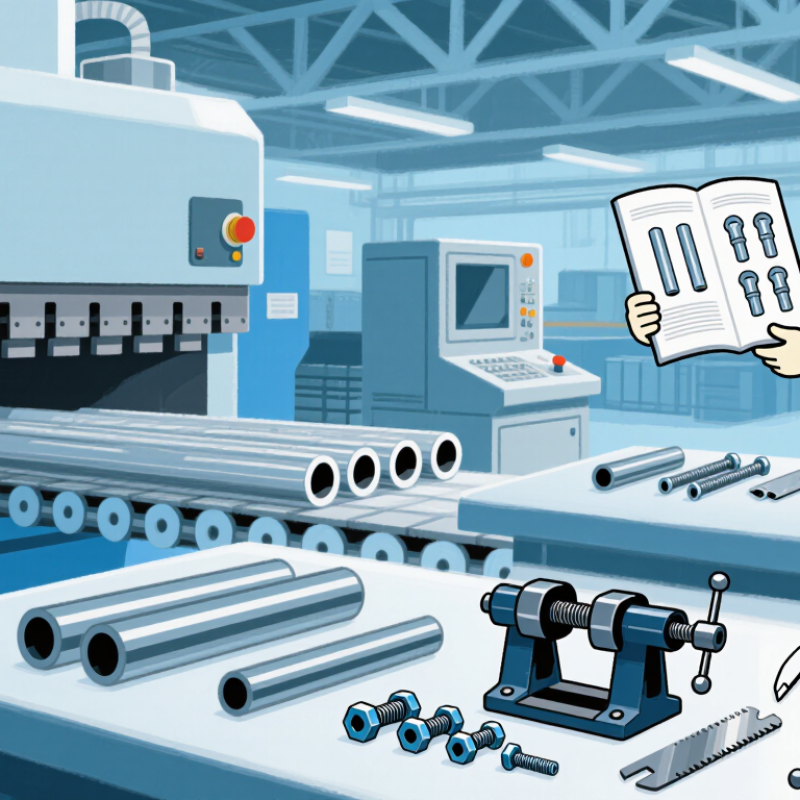
Before choosing steel pipe machinery accessories, define the work they must handle. Record the pipe diameter range, wall thicknesses, steel grades, and target output per shift. A line making thin-wall tubes needs different guide settings and cutting performance from one processing heavy sections. Frequent size changes also make quick, repeatable adjustments valuable. Write down actual changeover times, not just the target. Production plans are often optimistic.
Then check operating conditions at the machine. Note shift length, vibration, coolant exposure, metal dust, and ambient temperature near the equipment. These details affect wear, lubrication intervals, and how easily operators can inspect components. Measure mounting dimensions and confirm shaft, connection, and clearance requirements against the machine drawings. A small mismatch can cause setup delays. Check, too, whether replacement parts are accessible without removing nearby guards or assemblies. Ask maintenance staff which components fail or drift most often; their notes may reveal problems missing from formal records. I have seen specifications look complete while overlooking routine cleaning access. That is an uncomfortable gap, but worth checking before purchase. Keep a sample production record and confirm uncertain measurements on the line before finalizing the accessory choice.
Match each accessory to the machine’s operation, not just its name. A forming roll must suit the pipe diameter, wall thickness, and required profile. A sizing guide needs to fit the machine’s mounting points and adjustment range. Check the equipment manual, shaft dimensions, and operating limits before ordering. A small mismatch can cause poor alignment, uneven wear, or repeated setup work.
Consider the pipe material and production conditions, too. Harder grades may wear cutting tools faster, while high production speeds can increase heat and vibration. Confirm that clamps, blades, guides, and rollers can handle the expected load. Ask the supplier for dimensional drawings or measurable specifications, then compare them with the machine. Fit matters. A trial run with sample pipe can reveal chatter or drift that measurements alone miss. I have seen teams overlook clearance around a guide; it seemed minor, but slowed adjustments later.
Tips: Record pipe sizes, machine model, connection dimensions, and working speed before selecting parts. Measure twice. Inspect contact surfaces after installation, then check the first pipes for scratches, ovality, and consistent dimensions. If results differ from expectations, revisit the setup rather than assuming the accessory is defective.
Compare Accessory Types, Materials, and Specifications
Steel pipe machinery accessories serve different jobs. Forming rollers shape the strip, guide rollers keep it aligned, and cutting blades determine edge quality. Bearings and seals support smooth operation, while sensors help monitor position or temperature. Match each part to its station and production task. Fit matters most. A roller that looks close may still cause uneven tracking.
Material choice depends on contact, heat, load, and wear. Hardened tool steel can suit cutting edges or heavily loaded rollers. Alloy steel may offer a practical balance of strength and durability. Stainless steel can help where corrosion resistance matters, though it may not be the best choice for every wear surface. Polyurethane guides can reduce marking on finished pipe. Measure twice. Real conditions can differ from a catalog description.
Check dimensions, shaft or bore size, mounting method, hardness, and allowable operating speed. Confirm tolerances against the machine manual or a verified sample, not memory. Also ask about lubrication needs and replacement intervals. A few tenths of a millimeter can affect alignment. I have seen accessory selection treated as a simple price comparison; that is often too narrow. Still, exact service life is hard to predict without knowing material grade, setup, and maintenance habits. Keep those uncertainties visible when comparing specifications.
Steel pipe machinery accessories should be assessed against the actual job, not appearance alone. Check material grade, dimensional tolerance, load rating, temperature range, and duty cycle against the machine’s operating data. A coupling that fits at room temperature may loosen under vibration or repeated heat cycles. Fit matters. Ask for inspection records and test results, then compare them with the accessory’s stated specifications. A polished finish is not proof of reliable performance.
Safety deserves the same scrutiny. The U.S. Bureau of Labor Statistics reported 2.8 recordable injury and illness cases per 100 full-time workers in manufacturing in 2023; this figure does not identify equipment as the cause, but it underlines the need for careful risk checks. Apply ISO 12100’s risk-assessment approach: identify pinch points, ejected parts, sharp edges, and maintenance hazards. Guarding and safe access should remain practical after installation, not merely look adequate on a drawing.
Performance checks can reveal costly weaknesses. The U.S. Department of Energy’s Improving Compressed Air System Performance sourcebook notes that leaks can waste 20–30 percent of compressed air in many plants. For pneumatic clamps or actuators, inspect seals, fittings, and pressure stability under load. Record vibration, cycle time, and temperature during a trial run. One awkward detail: the first test may pass, while wear appears weeks later. Schedule a follow-up inspection.
When choosing steel pipe machinery accessories, look beyond the purchase price. Check how often each part needs inspection, lubrication, alignment, or replacement. A guide roller that wears quickly can mark a pipe surface and slow a shift. Ask for service intervals, compatible dimensions, and clear installation instructions. Record the time required for routine work, not just the parts cost.
Tips: Keep a worn part beside its replacement during inspection. Compare shaft diameter, bearing fit, and contact surface. Confirm stock levels and typical lead times in writing. Small details matter.
Availability affects production planning. A low-cost accessory is less attractive if a damaged coupling leaves a line idle for several days. Compare local stock, replenishment time, shipping charges, and whether interchangeable parts meet the machine’s tolerances. Estimate total cost over a realistic service period: purchase, installation labor, maintenance, downtime, and replacement. The longest-lasting option is not always best; verify performance under your speed, material, and operating conditions. Supplier data helps, but shop-floor records are better. One estimate may still be wrong, especially when duty cycles change.
| Accessory | Typical Maintenance Needs | Availability Considerations | Main Total-Cost Drivers | Practical Buying Check |
|---|---|---|---|---|
| Forming and sizing rollers | Inspect surfaces and alignment regularly; clean off scale and debris. Regrind or replace when wear affects dimensions or surface finish. | Standard sizes may be easier to source. Profile-specific rollers can require machining and longer lead times. | Initial machining, regrinding, changeover labor, storage, and production losses caused by worn or mismatched tooling. | Confirm material, profile, dimensions, hardness requirements, and whether drawings or samples are available for repeat orders. |
| Slitting and cutoff blades | Check edge condition, runout, and mounting. Sharpen or replace when burrs, poor cut quality, or excess load appear. | Common blade formats are often more readily available; custom diameters, materials, or tolerances may need special ordering. | Blade price, sharpening frequency, scrap from poor cuts, setup time, and the cost of keeping replacement blades on hand. | Check dimensions, blade material, edge specification, compatible arbor, and the availability of sharpening services. |
| Bearings and bearing units | Follow the specified lubrication method and inspect for heat, noise, vibration, contamination, and looseness. Replacement timing depends on operating conditions. | Standard dimensions are generally easier to source than unusual housing or shaft arrangements. Verify exact fit before ordering. | Lubrication and inspection labor, seal condition, replacement frequency, and downtime if a bearing failure damages nearby components. | Match the bearing designation, load and speed requirements, clearance, seals, and housing dimensions. |
| Hydraulic hoses and fittings | Inspect for leaks, abrasion, cracking, corrosion, and damaged fittings. Replace damaged assemblies; use the specified pressure rating and routing. | Common hose sizes and fittings may be available locally; unusual lengths, end connections, or pressure specifications can limit immediate supply. | Hose and fitting replacement, fluid loss, cleanup, preventive inspection, and downtime from leaks or pressure loss. | Record length, inside diameter, end connections, pressure rating, fluid compatibility, and operating temperature. |
| Seals and O-rings | Check for leakage, hardening, cuts, swelling, and wear during inspections or planned disassembly. Use compatible materials and correct installation practices. | Common sizes are often straightforward to stock; custom profiles and less common materials may require special procurement. | Low unit cost can be outweighed by labor, fluid loss, contamination, and repeat disassembly if the size or material is incorrect. | Verify dimensions, material, fluid and temperature compatibility, and the correct gland or groove specification. |
| Sensors and limit switches | Keep sensing surfaces clean; check mounting, cable condition, alignment, and signal operation. Replace units that are damaged or unreliable. | Availability depends on sensing type, connector, output, and mounting style. Matching the electrical interface is essential. | Purchase and setup, troubleshooting labor, false stops, missed detections, and the effect of control interruptions on production. | Confirm sensing range, output type, supply voltage, connector, environmental rating, and compatibility with the control system. |
| Welding electrodes and consumables | Inspect contact surfaces and feed components; keep consumables clean and dry where required. Replace worn parts when weld stability or quality declines. | Availability depends on the welding process, material, dimensions, and required specification. Check local supply and replenishment arrangements. | Consumable usage, changeover time, weld rework, scrap, and production interruptions caused by inconsistent supply or performance. | Match the consumable to the welding process, tube material, equipment settings, and documented quality requirements. |
Planning note: Maintenance frequency and lead time vary with machine design, operating hours, material, workload, and supplier stock. Use the equipment manual and operating data to set inspection intervals. Compare total cost over the expected service period, including purchase, maintenance, replacement, inventory, and downtime—not purchase price alone.



