Sealless Pumps for a Safer and Greener World

Choosing the right pressure pump can be daunting. With so many options available, it's crucial to consider your specific needs. Bob Jensen, a renowned expert in fluid dynamics, once stated, "The right pressure pump can transform your workflow and boost efficiency."
When selecting a pressure pump, assess your intended application. Will it be for agricultural use, industrial systems, or private plumbing? Each scenario requires different specifications. A pump that works well in one area may not function effectively in another. This mismatch can lead to unnecessary expenses and energy waste.
Pay attention to performance metrics, such as flow rate and pressure rating. A mismatch in these areas can lead to dissatisfaction. Remember that size matters, too. An oversized pump can waste energy, while an undersized model may fail to meet your needs. Reflection on your requirements is essential. Selecting the ideal pressure pump can feel overwhelming. Yet, with the right information, you can find a solution that genuinely meets your needs.
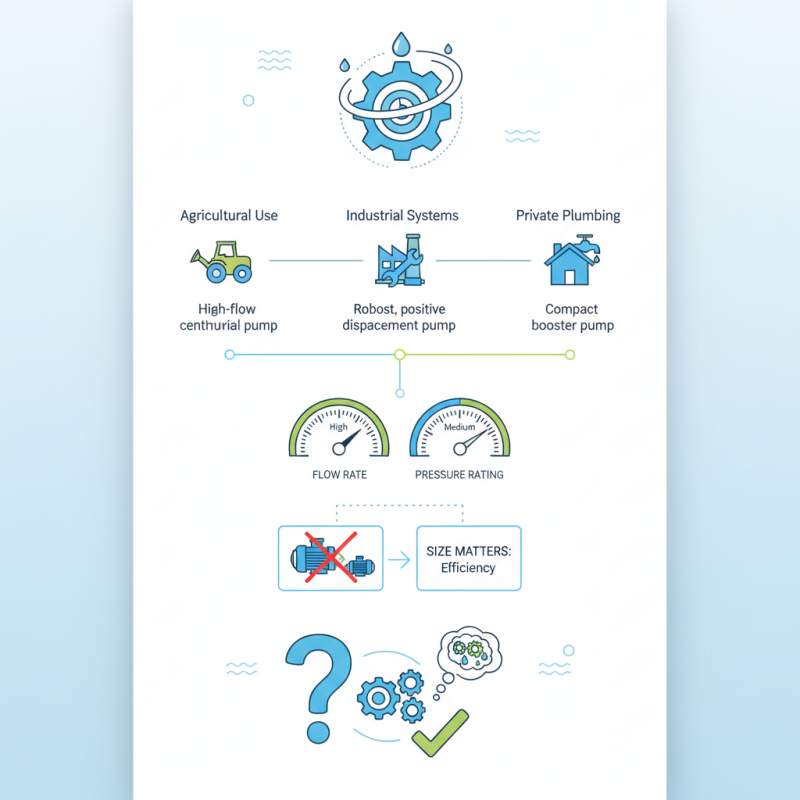
When selecting a pressure pump, understanding the types is crucial. Centrifugal pumps are common for moving large volumes of water. They are efficient but may struggle with high-pressure demands. In contrast, positive displacement pumps can handle higher pressures. They are ideal for applications needing consistent flow rates.
According to a recent industry report, centrifugal pumps account for about 70% of the market share. However, in specialized tasks, positive displacement pumps show superior performance. For instance, they are often used in industries like food processing and pharmaceuticals. This highlights the importance of matching pump type to application.
Many users make a common mistake: choosing a pump based solely on cost. A cheaper option might lead to inefficiency and higher operating costs in the long run. Evaluating the specific requirements of your application is essential. This reflective approach can save time and resources.
When selecting a pressure pump, it's crucial to assess your flow rate and pressure requirements. These factors determine the pump's efficiency in meeting your specific needs. An operational report by the American Water Works Association indicates that many systems rely on optimal flow rates, often between 10 to 50 gallons per minute for residential applications. Underestimating these needs can lead to poor performance.
Tips: Calculate your peak usage. This will guide you in choosing the right model.
Consider your system's pressure requirements too. A typical home might need pressure between 40 to 60 psi. However, commercial applications may demand up to 100 psi or more. It's essential to match your pump's capabilities with your actual needs. Remember, oversizing a pump can lead to unwanted energy costs.
Tips: Regularly monitor your system's performance. This can help you identify inefficiencies early.
By understanding the relationship between flow rate and pressure, you can choose a pump that truly fits your situation. Take time to analyze your requirements carefully. Each choice impacts your system's overall efficiency and performance.
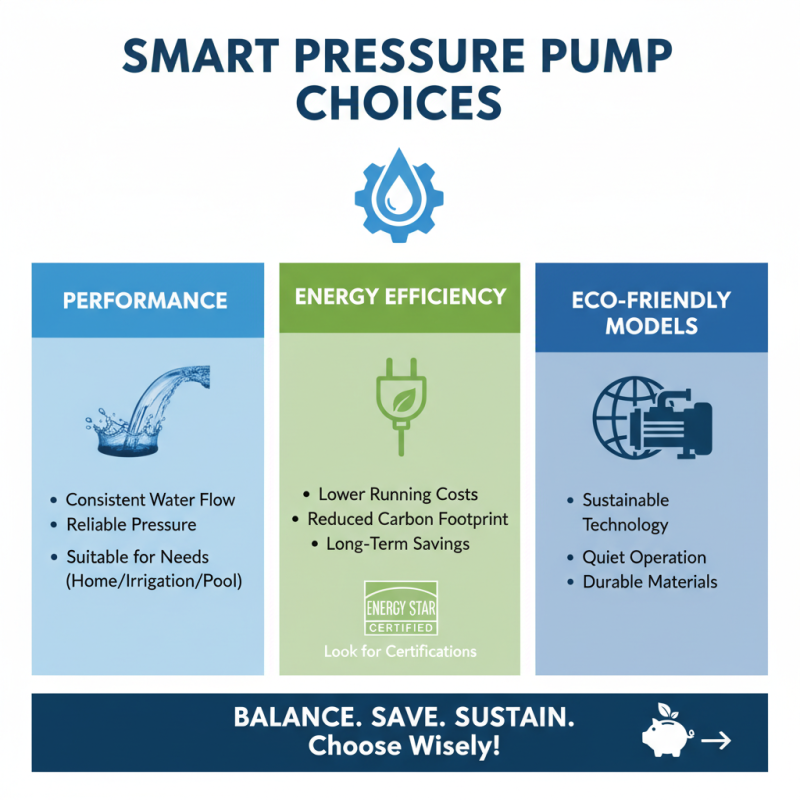
Choosing the right pressure pump often means balancing performance and energy efficiency. Eco-friendly models have gained attention. They lower energy costs and reduce environmental impact. An energy-efficient pump can save you money over time. Look for Energy Star ratings or similar certifications.
Tips: Check user reviews on the energy consumption of specific models. This can give a clearer picture of performance.
Consider the pump's application. A high-efficiency model may not be necessary for small gardens. Focus on your actual needs. Evaluate if the increase in price for energy efficiency pays off in the long run.
Additionally, keep in mind that maintenance plays a role in energy efficiency. Clean filters and regularly inspect the pump. Often overlooked, these steps ensure the pump operates at its best. Frequent checks can prevent inefficiencies that inflate costs.
Choosing the right pressure pump involves careful consideration of several key features.
Material is crucial.
Pumps often use stainless steel or thermoplastic.
Stainless steel offers durability but can be heavier.
Thermoplastic is lighter, yet may not withstand high temperatures.
Reports indicate that 70% of pump failures relate to material choice.
This underscores the importance of selecting the right material for specific conditions.
Size also plays a pivotal role in pump selection.
A pump that is too large may waste energy, while an undersized pump can lead to inefficiency.
The required flow rate and pressure should guide your decision. Industry studies show that selecting the proper size can improve efficiency by up to 30%.
Maintenance cannot be overlooked.
Regular checks can prolong the life of your pump.
Some users neglect this aspect, leading to costly repairs. Reports suggest that timely maintenance can reduce unexpected breakdowns by 60%.
Users must balance their immediate needs with future reliability.
Understanding these factors is essential in making an informed choice.
When budgeting for a pressure pump, it's essential to start with a clear understanding of average costs. Pressure pumps can vary widely in price. Basic models might start around a few hundred dollars. However, high-end options are often priced in the thousands. It's important to consider your actual needs. A pump that's too powerful or complex can lead to unnecessary expenses.
Think about long-term investments as well. Lower upfront costs might seem attractive, but they can lead to more expenses later. Cheaper pumps often have a shorter lifespan. As a result, you may need to replace them more frequently. Investing in a reliable model saves money over time. Additionally, consider installation costs and maintenance needs.
Assessing your specific requirements is key. A small home garden requires a different pump than a commercial setup. It can be tempting to go for what looks good on paper. Yet, understanding water flow, pressure needs, and even energy consumption is crucial. An informed choice will ultimately save time and money in the long run. Think carefully about your expectations and how they align with real-world use.
| Pump Type | Average Cost ($) | Power (HP) | Expected Lifespan (Years) | Maintenance Costs (Yearly $) |
|---|---|---|---|---|
| Submersible Pump | 200 - 800 | 0.5 - 2 | 5 - 15 | 50 - 200 |
| Jet Pump | 150 - 600 | 0.5 - 2 | 5 - 10 | 30 - 150 |
| Centrifugal Pump | 300 - 1000 | 1 - 5 | 10 - 20 | 100 - 300 |
| Positive Displacement Pump | 500 - 1500 | 1 - 10 | 15 - 25 | 200 - 500 |