Sealless Pumps for a Safer and Greener World

Rice harvesting leaves little room for guesswork. A machine must cut, thresh, and clean grain efficiently while working through changing field conditions. The scale is substantial: FAOSTAT recorded about 776 million tonnes of paddy rice production worldwide in 2022. USDA’s Production, Supply and Distribution database also tracks global rice output, trade, and stocks. These reports show why harvest decisions matter, but they cannot tell a farmer which machine will perform best in a specific field.
Choosing Rice Harvesting Equipment starts with practical conditions: field size, soil firmness, crop height, lodging, and expected moisture at harvest. A small plot with narrow bunds may favor a compact walk-behind harvester; larger, flatter fields can justify a combine with greater capacity. Check header width, grain-loss performance, fuel use, service access, and the availability of replacement parts. Ask dealers for field demonstrations and measurable loss checks, not only brochure figures. Small details matter.
Total ownership cost deserves equal attention. Include transport, operator training, maintenance, downtime, and resale value alongside the purchase price. Local mechanics can often identify weak service networks before a breakdown does. There is no universal winner. A high-capacity machine may look efficient on paper yet struggle in soft, irregular paddies. That trade-off deserves reflection. This guide compares the factors that help match equipment to crop, land, and budget—without assuming that the newest or largest machine is automatically the best choice.
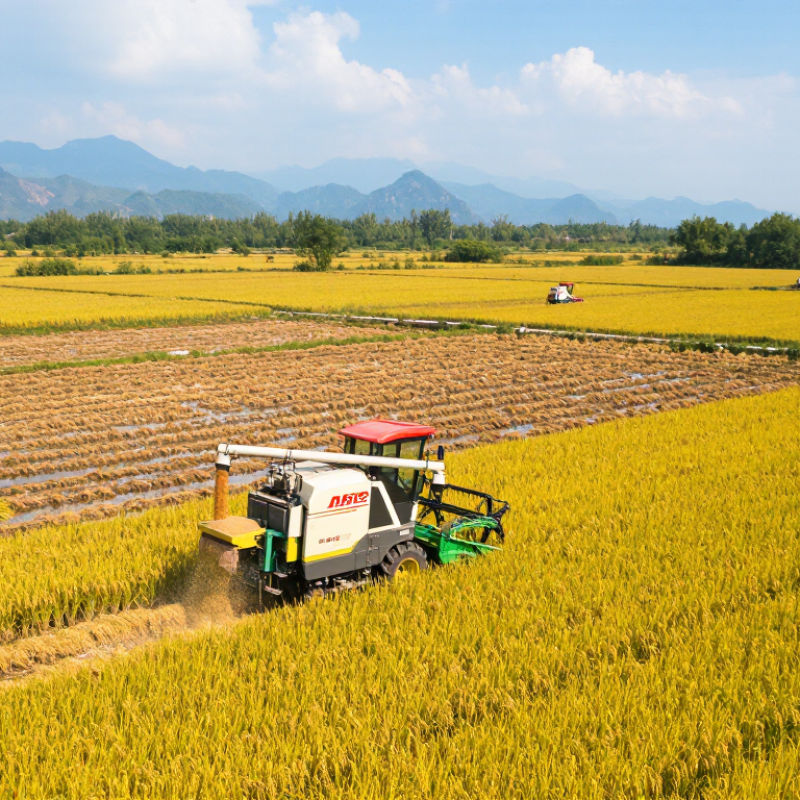
Choosing rice harvesting equipment starts with checking whether the crop is ready, not simply counting acres. IRRI’s 20–25% grain-moisture guideline offers a useful harvest window for many rice crops. Measure grain from several parts of the field; moisture can vary between sunny edges and damp, shaded patches. Check several spots. Use a moisture meter suited to grain and follow its instructions, since a single sample can mislead.
At moisture levels near this range, compare equipment by field access, crop lodging, and how gently it handles the panicles. Grain harvested too wet may need more drying and careful handling, while delaying harvest as grain dries can increase shattering and breakage risks. Conditions vary with variety and weather, so the guideline is not a switch that makes every field ready at once. A handful of panicles may look dry while the lower crop remains damp. That is easy to miss. Recheck readings as harvest approaches, and leave room for imperfect measurements when planning machine capacity and drying time.
How to Choose the Best Rice Harvesting Equipment
A reaper cuts standing rice but leaves threshing for a separate machine or crew. It suits small plots, narrow bunds, and fields where a large machine cannot turn easily. On soft ground, check wheel sinkage before committing; one muddy pass can leave ruts and delay work. Simple is useful, but not effortless.
A reaper-binder cuts and ties stalks into sheaves, making bundles easier to handle and dry before threshing. It can fit farms that need orderly sheaves but lack immediate threshing capacity. Lodged or tangled rice may feed poorly, though. The trade-off depends on crop condition and how quickly workers can collect bundles.
A combine cuts, threshes, and cleans in one pass, often reducing handling on broad, level fields with firm access. It needs enough turning space and reasonably even crop maturity; wet soil or lodged stalks can slow operation and increase grain loss. IRRI’s Rice Knowledge Bank recommends harvest when 80–85% of grains are straw-colored, usually at 20–25% grain moisture. That is a useful field check, not a guarantee: varieties and weather shift the window. Walk several spots, inspect grain moisture, and match the machine to the weakest part of the field. A machine that fits the field matters more than its headline capacity.
| Comparison factor | Reaper | Reaper-binder | Combine harvester |
|---|---|---|---|
| Main job | Cuts standing rice and lays the crop in rows or windrows for later collection and threshing. | Cuts the rice, gathers it, and ties it into sheaves for collection and subsequent threshing. | Cuts the crop and threshes and separates grain in one harvesting pass. |
| Best suited to | Farms that can manage separate drying, gathering, and threshing operations. | Operations that prefer tied sheaves for handling, transport, drying, or traditional threshing workflows. | Farms seeking a more integrated harvest, with suitable access, field layout, and grain-handling capacity. |
| Field conditions | Can be useful on smaller or irregular plots where a full-size combine is difficult to maneuver; performance depends on crop lodging and ground conditions. | Often practical on small or fragmented fields, provided the crop can be cut and gathered consistently by the machine. | Works best where field access and turning space suit the machine. Soft, saturated soil can limit trafficability and increase the risk of rutting or soil compaction. |
| Crop handling after cutting | Cut crop remains in the field as a row or windrow and must be collected and threshed separately. | Sheaves must be collected and then dried or threshed according to the farm’s handling system. | Grain is collected during harvesting; straw and other crop residue are discharged or managed separately. |
| Labor and workflow | Requires additional operations and coordination after cutting, so labor and equipment are needed later in the harvest process. | Reduces the need to gather loose cut crop, but still requires handling sheaves and a separate threshing step. | Combines several harvesting steps, but still requires grain transport, unloading, and post-harvest drying or storage as needed. |
| Field capacity | Generally suited to smaller-scale cutting; total harvest time also depends on how quickly the crop can be collected and threshed. | Generally suited to small or moderate operations; actual output depends on crop density, field shape, and sheaf handling. | Can harvest and thresh a large area efficiently when field size, crop conditions, machine capacity, and grain logistics are well matched. |
| Wet or uneven fields | A smaller, lighter machine may be easier to use in some settings, but traction and cutting quality can still be affected by wet ground or lodged rice. | Suitability depends on machine weight, traction, and the firmness and layout of the field; wet conditions can disrupt operation. | Assess soil bearing capacity, water management, machine configuration, and field access. Tracked or low-ground-pressure options may help in some conditions but do not eliminate soil risks. |
| Key limitations | Does not thresh or clean grain; additional handling steps can extend the harvest workflow. | Does not usually thresh or clean grain; tying and handling can be affected by crop condition and machine setup. | Higher purchase and operating costs are common considerations; large machines may be unsuitable for narrow access, small plots, or very soft ground. |
| A practical choice when… | You want a straightforward cutting operation and already have a workable plan for collecting and threshing the crop. | You need cut rice bundled into sheaves and have labor or equipment available for later handling and threshing. | You have enough field access and suitable ground conditions, and want to combine cutting, threshing, and grain separation in one pass. |
Note: These are general comparisons. Actual field capacity, suitability, and crop losses vary with machine design, rice variety, crop maturity and moisture, lodging, field size, soil firmness, and operator settings. Follow the equipment manufacturer’s operating guidance and local agronomic recommendations.
Choosing rice harvesting equipment starts with the acres you can realistically cut each day, not the machine’s advertised maximum. Estimate field capacity using local yield, field shape, and expected grain moisture. A large combine may cover more ground, but narrow levees, soft patches, and short turns can slow it down. Measure a representative field if possible. Rough estimates can mislead.
Next, match capacity to the harvest window and available labor. If rain is forecast or the crop is ripening unevenly, a slower machine may leave too much rice standing. But a bigger combine also needs a trained operator, timely unloading, and enough grain-hauling capacity. Otherwise, it waits at the field edge. That gets expensive. Count the hours needed for refueling, routine checks, and moving between fields, too.
Use recent harvest records to compare acres completed per day under similar conditions. Ask operators what caused delays last season; clogged straw, wet ground, or distant trucks may matter more than theoretical capacity. I once underestimated travel time between scattered fields. The schedule looked neat on paper, and then fell apart by noon. Keep some spare capacity, but avoid buying for a rare peak day if labor and hauling cannot support it.
Match combine capacity to acreage, labor, and the harvest window.
Estimated capacity assumes a 4 km/h working speed, 65% field efficiency, and 10 operating hours per day for five days. These are planning estimates, not equipment specifications; field conditions, crop yield, unloading time, and transport logistics affect actual output. Choose a capacity that fits your acreage and available harvest days, and plan for an operator plus adequate grain-unloading and transport support.
How to Choose the Best Rice Harvesting Equipment
Check threshing and cleaning settings to protect grain quality
A good harvester should let you adjust drum speed, concave clearance, fan speed, and sieve openings. These settings work together: aggressive threshing can crack kernels, while weak airflow leaves straw and chaff in the grain. The International Rice Research Institute’s Rice Knowledge Bank places ideal rice harvest moisture around 20–25%, with drying to about 14% for safer storage. That range matters when setting the machine; damp, tough panicles may need different threshing than dry, brittle ones. Check a small sample before committing to a full field. Look for broken grains, unthreshed kernels, and grain carried out with the chaff. Small changes matter.
Cleaning is a balance, not a one-time adjustment. If the fan is too strong, sound kernels may blow out with light debris. If it is too weak, the grain tank collects more foreign material. FAO’s 2019 report, The State of Food and Agriculture, estimated that 14% of food was lost between harvest and retail globally; the figure covers all food types, but highlights why careful post-harvest handling matters. No single setting fits every field. I would recheck after a change in crop moisture or straw load, even if the previous field looked fine.
Tips: Start with the operator manual’s baseline. Harvest a short strip, inspect the tank sample and residue, then adjust one control at a time. Listen closely. Record the settings and crop conditions; imperfect notes are still better than relying on memory.
When choosing rice harvesting equipment, plan the dryer around the crop’s peak arrival rate, not an average day. A fast harvester can quickly overwhelm a small drying system. Wet paddy waiting in a warm, crowded trailer may heat unevenly and lose quality. Ask how much grain the dryer can handle under your expected harvest conditions, and leave room for delays, rain, or a second field coming in.
For safe storage, aim for about 14% moisture on a wet basis, then verify it with a calibrated meter. One reading is not enough. Check samples from different parts of the load, and recheck after grain has cooled and rested; moisture can vary within a batch. Drying too quickly may create fissures, while grain that stays too wet can spoil in storage. That trade-off deserves attention. I would rather allow a little extra drying time than trust a hurried estimate. The right target can also depend on storage duration, temperature, and local guidance, so confirm conditions before filling bins.



