Sealless Pumps for a Safer and Greener World

Industrial centrifugal pumps are critical components in many sectors, affecting efficiency and cost. According to a recent report by the Global Pump Market Research Group, the demand for industrial centrifugal pumps is projected to grow by 8% annually. This growth highlights the importance of selecting the right pumps for specific applications.
Experts emphasize the consideration of several factors when choosing these pumps. Dr. John H. McKinley, a senior engineer at PumpTech Solutions, states, "Choosing the right industrial centrifugal pump can increase productivity and save costs." His insights underline the necessity of understanding operational needs, fluid characteristics, and system requirements. Each detail can significantly impact performance.
However, many industries often overlook key aspects. For instance, inadequate assessment of pump materials or energy efficiency can lead to operational failures. Companies may find themselves facing higher maintenance costs or reduced output. Realizing these imperfections often comes too late. Thus, making informed choices regarding industrial centrifugal pumps is essential for long-term success.
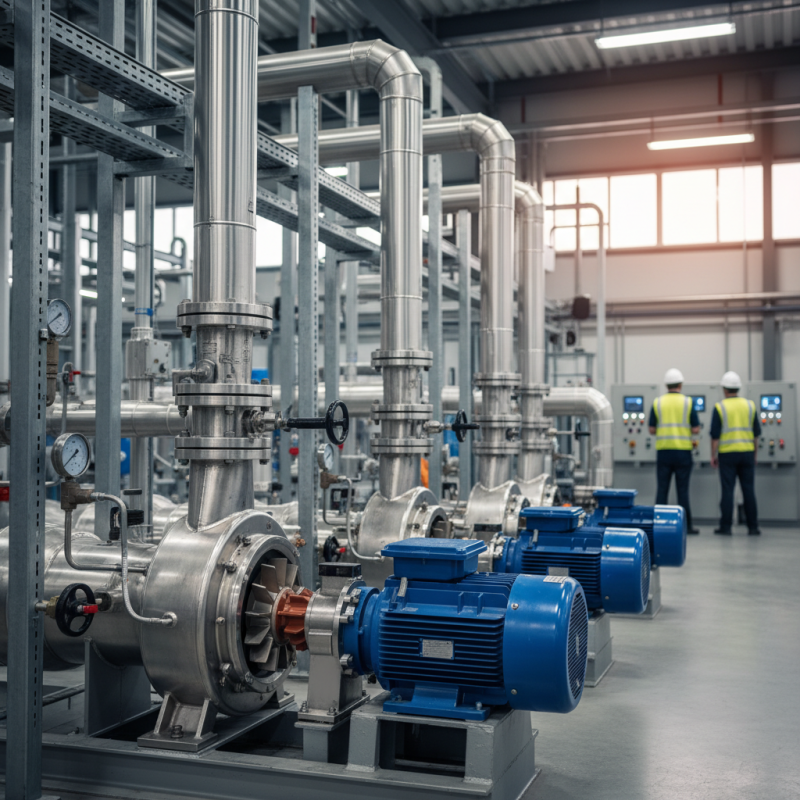
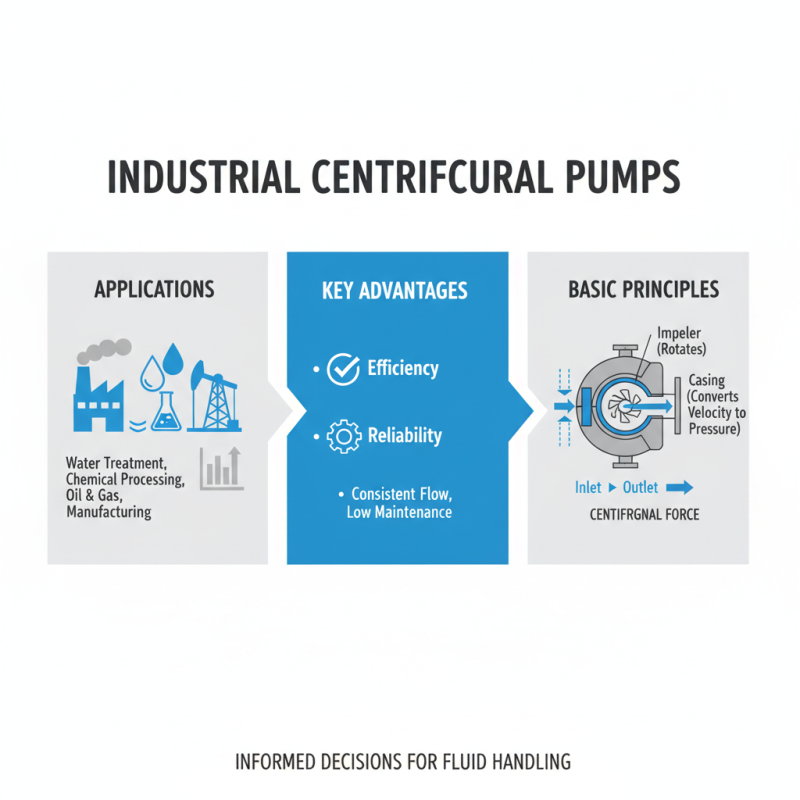
Industrial centrifugal pumps are widely used in various applications. They are known for their efficiency and reliability. Understanding the basic principles of how these pumps operate is crucial for making informed decisions.
Centrifugal pumps work by converting rotational energy into fluid movement. The impeller spins and pushes the fluid outward. This process creates a low-pressure area at the pump inlet. As a result, liquid flows into the pump. It's essential to choose a pump that suits your specific needs.
**Tips:** Consider the fluid's properties. Different materials require different pumps. If the fluid is corrosive, select materials that withstand it. Always review the flow rate and pressure requirements. Ensure the pump can handle the system's demands.
While choosing, be aware of size constraints. A pump too large can waste energy. Conversely, a pump that's too small may not provide adequate flow. Monitor operational costs over time. They can impact your budget significantly, sometimes exceeding initial investments.
Choosing the right industrial centrifugal pump involves careful consideration of several key factors. Begin by evaluating the fluid characteristics. What are the properties of the liquid? Is it corrosive or abrasive? Understanding viscosity and temperature is vital. Different fluids require different materials and designs. Ignoring these can lead to equipment failure.
Next, consider the flow rate and pressure requirements. Calculate the necessary flow for your application. Too little flow can cause issues; too much might lead to wasted energy. Be mindful of NPSH, or Net Positive Suction Head. Insufficient NPSH can cause cavitation, which damages pumps over time. It’s important to get this right.
Lastly, installation space shouldn't be overlooked. The pump must fit in the designated area. Ensure easy maintenance access too. Sometimes, the best-suited pump does not fit well. This could lead to issues down the line. Taking these factors into account can prevent unforeseen challenges in the future. Always be prepared to reassess your choices as needs evolve.
Industrial centrifugal pumps are versatile tools crucial in various sectors. They efficiently move fluids in operations like water treatment, chemical processing, and HVAC systems. These pumps are designed to handle different viscosities and flow rates. Proper selection depends on the specific application needs.
Water treatment facilities rely heavily on these pumps. They help circulate water, ensuring purification and distribution. In the chemical industry, these pumps transport corrosive substances. Users must consider the materials used in pump construction to avoid damage.
Tip: Understand the fluid characteristics before choosing a pump.
Pumps also play a significant role in food processing. They manage the transportation of liquids, from water to various food-grade substances. This requires pumps to adhere to strict hygiene standards. However, operators might overlook maintenance, which can lead to inefficiencies.
Tip: Regular maintenance checks can prevent costly breakdowns.
In HVAC systems, centrifugal pumps help circulate heated or cooled water. They need to be paired correctly with other elements, like valves and controls, to achieve optimal performance. A mismatch can lead to energy waste and system failure.
Tip: Make sure to match pump capacity to system demands.
Choosing the right industrial centrifugal pump requires careful evaluation of its performance specifications. This includes flow rate, head, and efficiency. Each project demands specific requirements, which shapes your selection process. Understanding pump curves is vital. They illustrate the relationship between flow and head. Knowing how these variables interact can significantly impact system performance.
Tip: Always analyze the application needs before selecting a pump. Are the fluids abrasive or corrosive? Will solids be present? These aspects can drastically influence the durability and efficiency of the selected pump.
It’s also essential to consider power requirements and installation conditions. Not all pumps fit into every space. Some might need more room for maintenance. A compact design could seem appealing but may limit performance. Reflect on how the pump will operate in real-life scenarios rather than theoretical ones.
Tip: Consult with experts or colleagues who have experience with similar applications. They may reveal insights that manuals often overlook. Be prepared for trial and error. Each project can present unexpected challenges, demanding flexibility.
| Pump Type | Flow Rate (GPM) | Head (ft) | Material | Efficiency (%) | Power (HP) |
|---|---|---|---|---|---|
| End Suction Pump | 100 | 50 | Cast Iron | 85 | 10 |
| Multi-Stage Pump | 150 | 200 | Stainless Steel | 90 | 25 |
| Vertical Turbine Pump | 200 | 150 | Bronze | 87 | 20 |
| API Pump | 120 | 100 | Carbon Steel | 92 | 15 |
| Submersible Pump | 80 | 40 | Non-Metallic | 88 | 5 |
Centrifugal pumps are widely used in various industries. Their efficiency greatly hinges on proper maintenance and operation. Regular inspections can prevent costly breakdowns. According to industry reports, maintenance can reduce operational costs by up to 30%. Skipping routine checks often leads to pump failure, a situation that many businesses face.
Operators should monitor key performance indicators. For instance, checking the pump's vibration levels can indicate potential issues. Excessive noise or heat can signal failure. A well-known report states that 60% of pump failures stem from inadequate maintenance practices. Furthermore, proper alignment and installation are crucial. Small misalignments can lead to significant wear over time. This is an often overlooked aspect of pump operation.
Most operators are aware of the need for maintenance. Yet, many still fail to implement adequate practices. Training employees on proper procedures is vital. Lack of knowledge can lead to operational inefficiencies. According to research, up to 25% of centrifugal pump operations experience performance issues due to human error. Emphasizing ongoing training could address this gap effectively.
The following chart illustrates the operational efficiency of different types of industrial centrifugal pumps based on their maintenance requirements. The efficiency percentage is calculated based on performance after regular maintenance intervals.