Sealless Pumps for a Safer and Greener World

Choosing the right high temperature pump is crucial for many industrial applications. According to a report by Research and Markets, the high temperature pump market is expected to grow significantly by 2025. In sectors like petrochemical and power generation, specific requirements arise for handling extreme temperatures.
Expert John W. Avery, a leading engineer in pump technology, emphasizes, "Selecting the correct high temperature pump can enhance operational efficiency and reduce costs." His insights underline the importance of understanding your unique needs. High temperature pumps operate under challenging conditions. This makes precise selection necessary to ensure reliability.
Manufacturers often offer various options. However, not all are suitable for every application. Factors such as fluid characteristics and temperature limits must be evaluated carefully. The wrong choice can lead to inefficiency and costly downtimes. Knowing the right specifications can prevent these pitfalls. Reflecting on your needs and the right pump can significantly impact your operations.
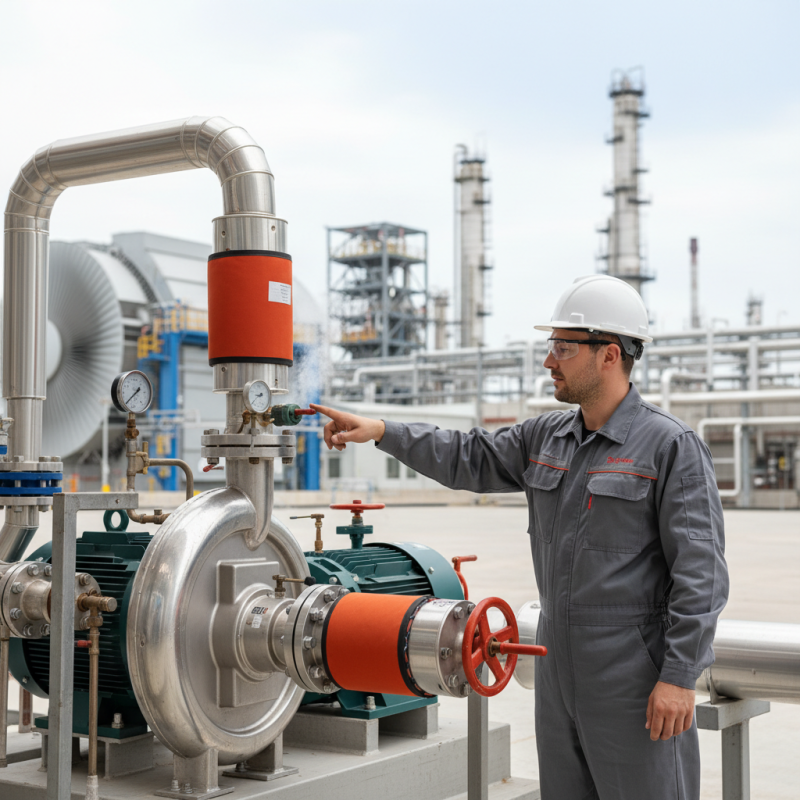
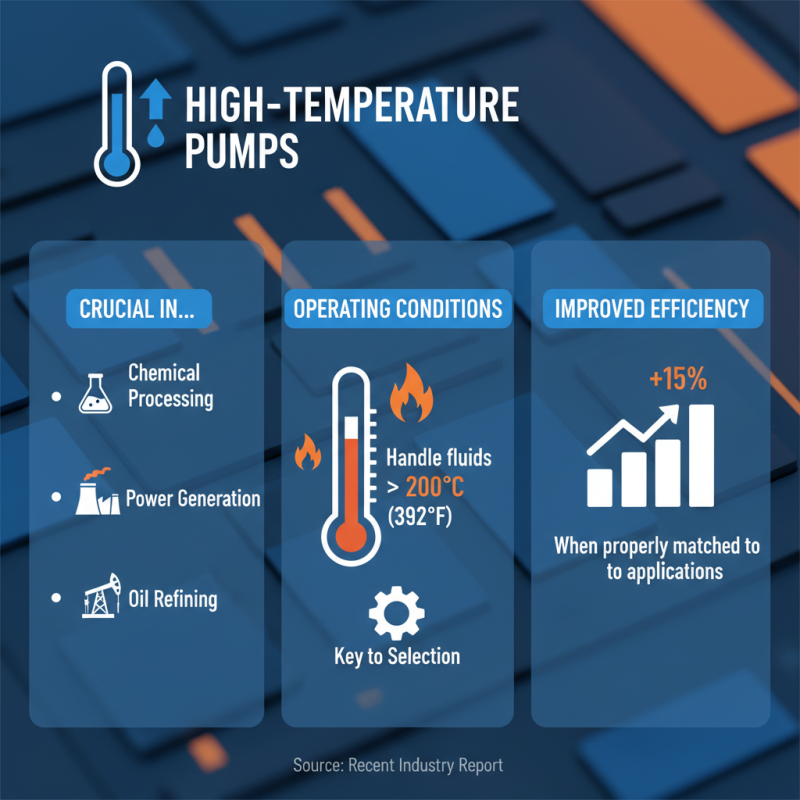
High temperature pumps are crucial in various industries such as chemical processing, power generation, and oil refining. These pumps handle fluids at elevated temperatures, often exceeding 200°C (392°F). Understanding how they work is key to selecting the right one for your needs. According to a recent industry report, high temperature pumps can improve efficiency by 15% when properly matched to their applications.
Applications for high temperature pumps are diverse. They are commonly used in heating, cooling, and chemical transfer processes. Materials used in their construction must withstand heat and pressure. This often includes specialized alloys or graphite. For instance, pumps designed for geothermal applications operate at high temperatures and require robust seals. Failure in selection can lead to operational failures. Always consider the material compatibility and thermal limits when choosing.
Data shows that improper pump selection can lead to increased maintenance costs. A staggering 30% of high temperature pump failures result from misapplication. Awareness of the specific application needs and potential hazards is essential. It may be wise to consult with experts during the selection process to avoid costly mistakes.
When selecting a high temperature pump, several key factors must be considered. The pump material is essential. It should withstand corrosive elements and high temperatures. Common materials include stainless steel and certain ceramics. Be aware that some materials may not suit specific fluids. This can lead to premature pump failure.
Next, consider the flow rate and pressure requirements. Knowing the exact specifications needed for your application is crucial. If your needs change, it might be necessary to rethink your selection. Many buyers overlook this aspect and later face performance issues.
Energy efficiency is another point to reflect on. A high temperature pump can consume a lot of energy. Assessing operational costs and energy use can save money. Investing in efficiency now may lead to lower bills later. Recognizing every detail ensures you make a wise choice.
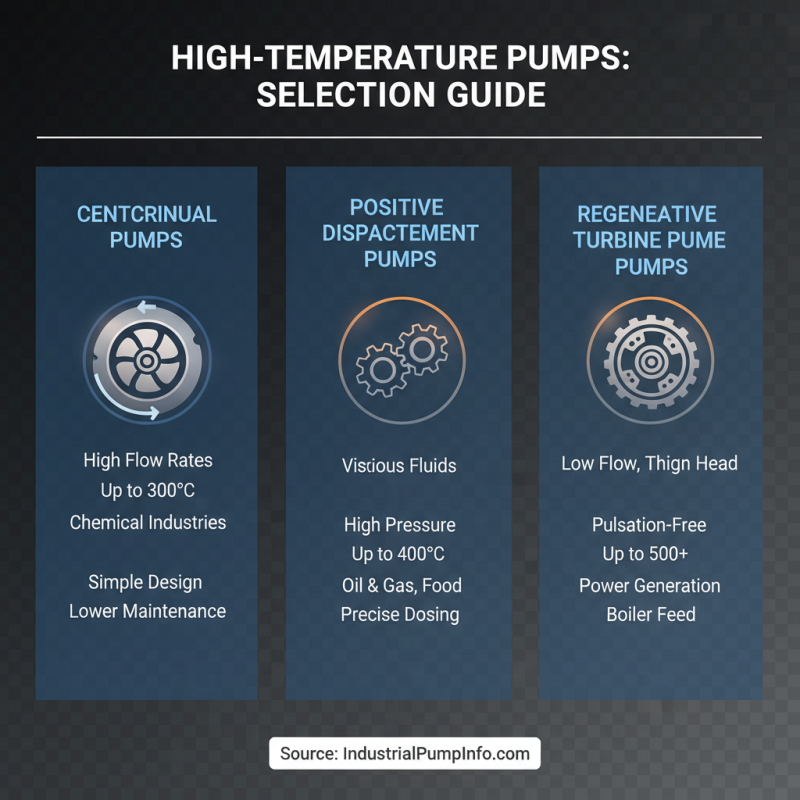
When selecting a high temperature pump, it's crucial to understand the types available. Various designs cater to different applications, each with distinct features. Centrifugal pumps, for instance, are designed for high flow rates. They operate efficiently at temperatures up to 300°C. This makes them suitable for processes in chemical industries. Their simplicity in design leads to lower maintenance.
Another option is positive displacement pumps, known for their reliability. These pumps excel in situations requiring consistent flow, even under varying pressure. They can handle temperatures exceeding 350°C. Their ability to provide precise flow rates is beneficial in industries like oil and gas. Data from recent studies indicate that over 40% of industries prefer positive displacement pumps for heavy-duty applications.
Understanding the limitations of each type is essential. For instance, centrifugal pumps can experience reduced efficiency at high viscosities. Similarly, positive displacement pumps may struggle with some abrasive fluids. Making an informed choice requires balancing performance and application needs. Focus on operational efficiency, maintenance demands, and the specific conditions of your system.
When selecting a high temperature pump, evaluating performance and efficiency metrics is crucial. Begin by understanding the intended application and required temperature range. Pumps operate differently under high temperatures, affecting their efficiency. Check the service life data. A pump designed for high temperatures should ideally last longer under stress.
Consider flow rate and pressure ratings. These metrics indicate how well a pump can handle extreme conditions. Low flow rates may lead to overheating, while excessive pressure might cause damage. Think about the material composition, too. Certain materials may falter under high heat, so choose accordingly.
Don't overlook maintenance needs. Some pumps demand regular checks and parts replacements. This can be a troublesome aspect for many users. Evaluate if you have the resources to maintain the pump effectively. Each choice comes with its own set of challenges, making it important to reflect on your specific needs and limitations.
High temperature pumps face unique challenges. Their maintenance is crucial for optimal performance. According to industry reports, about 30% of pump failures stem from improper maintenance practices. Regular inspection of seals and bearings is essential. Overheating can lead to catastrophic failures. Therefore, monitoring temperature thresholds is a must.
Longevity often depends on the materials used. Pumps exposed to high thermal loads require robust materials to resist degradation. For instance, ceramic or high-grade alloys are often recommended. Keeping an eye on fluid properties can also prevent issues. A pH level outside the recommended range can shorten the lifespan.
Misalignment poses another risk. It can wear down parts quickly. Operators should regularly check for alignment issues. An overlooked pump can cost thousands in repairs. Focusing on maintenance schedules can improve reliability and efficiency. Each step taken is a step towards a longer lifespan for high temperature pumps.
| Parameter | Considerations | Recommendations |
|---|---|---|
| Temperature Range | Identify the maximum operating temperature required. | Choose pumps rated for at least 10% above the maximum temperature. |
| Fluid Type | Consider the chemical composition and viscosity of the fluid. | Select materials compatible with the fluid to avoid corrosion. |
| Flow Rate | Determine the required flow rate for your application. | Choose a pump that can handle the peak flow rate needed. |
| Pump Material | Assess the material properties needed for high temperature operations. | Look for high-grade stainless steels or specialized alloys. |
| Maintenance Schedule | Understand the maintenance requirements for longevity. | Implement a routine maintenance plan to check seals and bearings. |
| Operating Environment | Consider ambient temperature, humidity, and exposure to elements. | Use protective enclosures where necessary to enhance durability. |