Sealless Pumps for a Safer and Greener World

Choosing a Double Eccentic valve in 2026 requires more than comparing catalog prices. The decision affects shutoff reliability, torque demand, maintenance time, and plant safety. A valve may look suitable on paper, yet struggle with abrasive slurry, thermal cycling, or unstable pressure.
Market data shows why selection deserves closer attention. Grand View Research valued the global industrial valves market at approximately USD 77.5 billion in 2023. It forecasts continued growth through 2030, supported by water treatment, energy, chemical processing, and infrastructure investment. Mordor Intelligence also reports strong demand for automated industrial valves between 2024 and 2029. These figures indicate a growing market, not automatic product quality. That distinction matters.
Béla G. Lipták, a respected process-control author, wrote, “The control valve is the final control element in a control loop.” His statement remains useful when evaluating a Double Eccentic design. The valve must match the actuator, control signal, pipeline, and operating medium. Check the disc profile, seat material, pressure class, flow direction, and available torque. Do not ignore installation space. A large actuator can turn a compact piping plan into an expensive redesign.
The best choice begins with real operating evidence. Record pressure, temperature, cycle frequency, and fluid composition. Ask for verified test data, not attractive brochures. Even careful engineers can overvalue initial cost. That mistake deserves reflection. A cheaper valve may demand earlier repairs, longer shutdowns, and higher lifetime expense. This guide explains the practical criteria for choosing a reliable Double Eccentic valve in 2026.
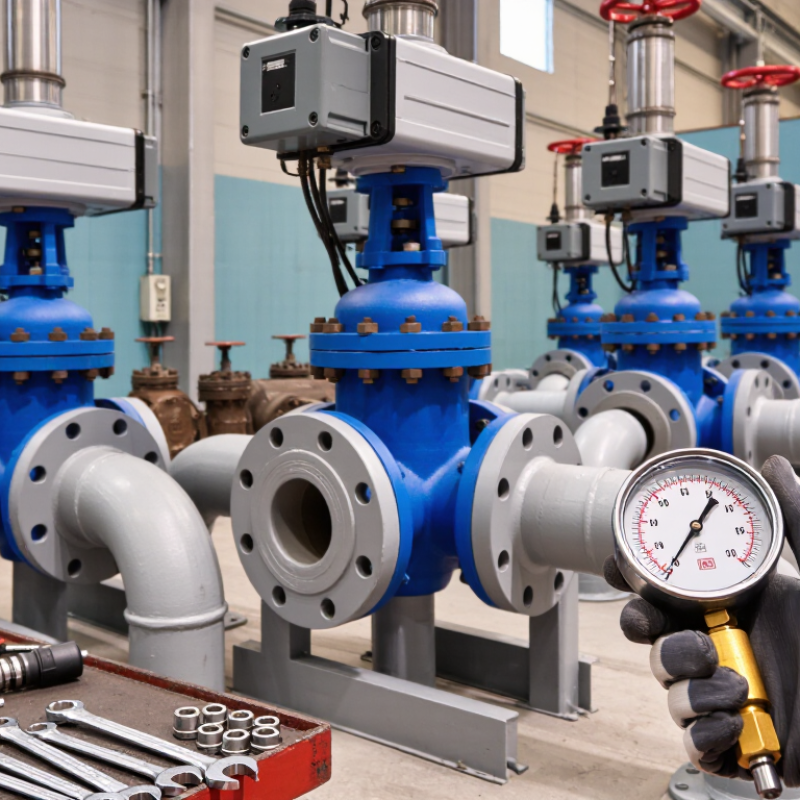
How to Choose a Double Eccentric Valve in 2026?
A double eccentric valve has a shaft offset from the disc center and the valve body center. This geometry creates a cam-like movement during opening. The disc quickly moves away from the seat, reducing rubbing, wear, and operating torque. During closure, it returns smoothly and compresses the seat for tight shutoff. It is not friction-free. Poor alignment, dirty media, or incorrect seat materials can still cause leakage.
Demand for reliable flow control is rising. The 2024 Industrial Valves Market report by MarketsandMarkets projects growth from about 78.4 billion dollars in 2023 to 97.5 billion dollars by 2028. That forecast is useful, but not a buying argument.
UN-Water’s 2024 World Water Development Report also reports that agriculture uses roughly 70% of global freshwater withdrawals. Water, wastewater, power, and process piping need different valve decisions.
Check pressure, temperature, flow direction, fluid solids, and cycling frequency before selecting the eccentric design. Review API 609 and ISO 10631 requirements.
Tips: Choose a resilient or metal seat based on temperature and leakage class. Match the actuator for the real breakaway torque, not only the average torque. Leave space for disc clearance. A field check may reveal the original specification was too optimistic.
Selecting a double eccentric valve begins with the fluid, not the pipe size. Water, seawater, gas, slurry, and hydrocarbons impose different sealing demands. Record solids content, viscosity, corrosion potential, and flow velocity. A clean-looking medium can still contain abrasive particles.
Pressure needs more than a normal operating value. Capture startup pressure, pump shutoff pressure, surge, vacuum, and differential pressure across the disc. API 598 specifies shell testing at 1.5 times the rated pressure and seat testing at 1.1 times, under defined conditions. ASME B16.34 pressure-temperature tables also show that allowable pressure decreases as temperature rises. Check both sides. Reverse pressure may change sealing performance.
Temperature affects the body, shaft, seat, and actuator together. ISO 15848-1 provides fugitive-emission classifications for valves, but its test conditions should not replace process-specific assessment. For hot oil, steam, or cryogenic service, compare the actual temperature range with seat-material limits and thermal cycling data. I would not trust a catalog temperature alone. It may describe a short test, not years of movement. Specify the minimum and maximum temperature, pressure class, shutoff direction, leakage requirement, and expected cycles. A final torque margin is wise, although an oversized margin can hide poor selection.
How to Choose a Double Eccentric Valve in 2026?
Selecting a double eccentric valve starts with the operating duty, not the pipe diameter alone. Check flow rate, pressure, temperature, and the required pressure drop. A valve that is too small may create excessive velocity and noise. An oversized valve can operate near its seat, reducing control accuracy. I always compare the calculated Cv with the manufacturer’s tested data. Field conditions are rarely perfect.
Material selection must match the fluid and environment. Carbon steel may suit clean water systems, while stainless steel offers better resistance in many corrosive services. For seawater, chemicals, or abrasive media, review corrosion tables and actual concentration levels. Do not rely on fluid names alone. Temperature changes can alter corrosion behavior. The body, shaft, disc, and fasteners also need compatible materials.
Seat design affects leakage, torque, service life, and maintenance. Resilient seats often provide reliable shutoff for moderate temperatures and clean fluids. Metal seats may be preferable for high temperatures, abrasive particles, or demanding cycling. Confirm the seat’s pressure and temperature limits. A soft seat is not automatically the better choice. Sometimes the first selection looks efficient but fails after repeated operation. Recheck torque, actuator margin, installation orientation, and maintenance access before approval. Small details matter.
Choosing a double eccentric valve requires more than comparing pressure ratings. Start with actuation. Electric actuators suit accurate modulation and remote control. Pneumatic actuators respond quickly, but they need clean, stable air. Check the required torque at maximum differential pressure, not only the nominal value. Include a safety margin based on media, temperature, and cycle frequency. Fail-open or fail-closed action also matters during power or air loss. Small details matter.
Installation conditions can change valve performance. Confirm flange alignment before tightening bolts. Even a few millimeters of pipe stress may affect disc movement. Measure the clearance inside the pipe, especially near elbows, reducers, and weld seams. The actuator needs enough space for removal and manual operation. Check shaft orientation and access height before delivery. A tidy drawing can still hide a practical problem.
Maintenance planning should influence the purchase. Ask how often seat inspection is expected and whether seals can be replaced without removing the body. Record torque readings, leakage results, and operating cycles during commissioning. Keep critical spare seals, bearings, and actuator parts available. Service quality also depends on clear manuals, responsive technical support, and trained local technicians. I have seen projects focus heavily on purchase price, then struggle with unavailable spares. That lesson is easy to overlook. When comparing suppliers, request test records, material certificates, service response times, and realistic maintenance procedures. A valve that is simple to service usually costs less over its working life.
Choosing a double eccentric valve in 2026 requires more than comparing purchase prices. Start with the service conditions: medium, pressure, temperature, flow direction, and cycling frequency. For water applications, review EN 593 or AWWA C504 requirements. API 609 may suit selected industrial services. ISO 5208 leakage testing also deserves attention. Standards are not interchangeable.
During commissioning, I would verify shaft retention, disc clearance, and actuator torque at both pressure extremes. A reliable valve should prevent uncontrolled stem movement and provide visible position feedback. For hazardous or high-temperature duties, ask for documented fire-safe, fugitive-emission, or functional safety testing. These features can increase the initial quotation, but a failed isolation valve may cost far more through downtime. Sometimes, engineers specify safety features without matching them to the actual risk. That deserves review.
Grand View Research estimated the global industrial valves market at about USD 76.7 billion in 2023, with continued growth through 2030. The U.S. Department of Energy notes that pumping systems can represent 25% to 50% of industrial electricity use, so disc alignment and low operating torque affect lifecycle costs. Compare purchase price, installation, actuator power, inspection, spare parts, and expected service life. Request test certificates and a written cost model. The cheapest option may still be expensive.



