Sealless Pumps for a Safer and Greener World

Choosing a tyre pyrolysis plant requires more than comparing online quotations. The real Tyre Pyrolysis Plant Price depends on capacity, reactor design, automation, emission-control equipment, installation, and after-sales support. A plant processing five tons daily may look affordable, yet its final cost can rise after shipping, electrical work, site preparation, and operator training.
Li Wei, an experienced tyre-recycling equipment consultant, explains, “The lowest quotation is rarely the lowest investment; stable operation determines the real cost.” This practical view matters. Buyers should request itemized offers, not vague package prices. Ask whether the quotation includes feeding systems, condensers, oil tanks, carbon-black handling, safety devices, and commissioning support. Small omissions can become expensive later.
Look closely at the details.
A serious price guide should compare equipment quality and operating performance. It should examine fuel consumption, expected oil yield, maintenance intervals, labor requirements, and warranty terms. Factory visits, verified project references, and independent technical inspections can provide stronger evidence than promotional photographs. However, even experienced buyers may misjudge local installation costs. That is worth admitting.
Prices also vary by region and project scale. A continuous plant usually requires higher initial investment, but it may reduce labor costs during steady production. Batch equipment can offer a simpler starting point, although downtime and manual handling may affect profitability. Environmental compliance must remain central. Proper gas treatment, sealed systems, temperature monitoring, and safe storage are essential design considerations.
This China Top 10 Tyre Pyrolysis Plant Price Guide introduces realistic cost factors, supplier evaluation methods, and questions buyers should ask before signing a contract. Figures are indicative, not promises. Verify every number.
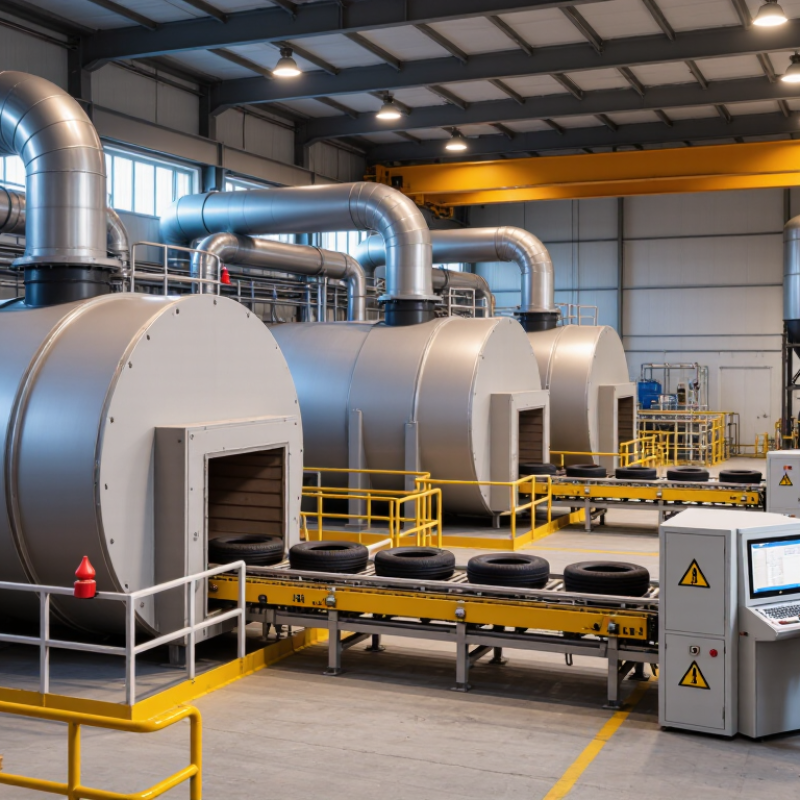
China tyre pyrolysis plants are commonly offered in batch, semi-continuous, and continuous designs. Typical rated capacities range from 5 to 20 tonnes per day. Batch units often suit smaller sites and flexible feedstock. Semi-continuous systems reduce cooling downtime. Continuous lines target steadier industrial production.
Capacity is not throughput. A 10 t/day label may assume dry, uniformly cut tyres and long operating hours. Real output can fall with wet feedstock, mixed tyre sizes, or planned maintenance.
The European Tyre and Rubber Manufacturers’ Association reports roughly 3.5 million tonnes of end-of-life tyres arise annually in Europe. This scale explains the growing interest in controlled recovery systems.
However, capacity figures are not fully standardized across suppliers. Price comparisons should include reactors, condensers, gas cleaning, cooling, steel separation, installation, and testing.
Tips:
Ask for a guaranteed feedstock basis, operating schedule, fuel consumption, and product yield. Request recent third-party test records. Check emission controls against the destination country’s requirements. Small is not simple. A lower purchase price can hide higher labor, utility, and maintenance costs. In practical assessments, a 5 t/day plant may be easier to manage, while a 20 t/day plant needs stronger logistics and storage. The International Energy Agency emphasizes efficient resource use and emissions control in waste-related systems, but project results still depend on design quality and daily operation. One quote rarely shows the complete cost.
When comparing tyre pyrolysis plant prices in China, output data deserves close attention. A typical process may produce 40–50% oil, 30–35% carbon black, and 10–15% steel by weight. The remaining fraction includes combustible gas, moisture, and process losses. These figures are practical ranges, not guaranteed results. Feedstock condition, tyre composition, reactor temperature, and operating time can change them.
A plant processing 10 tonnes of tyres may recover about 4–5 tonnes of oil. It may also produce 3–3.5 tonnes of carbon black and 1–1.5 tonnes of steel. These materials need separate handling systems, storage space, and quality checks. Therefore, a low purchase price does not always mean a lower total investment. Compare reactor capacity, heating design, condenser efficiency, emission controls, automation, installation, and after-sales technical support. Some quotations exclude important equipment. That can create budget pressure later.
China’s plant prices usually follow three tiers: capacity, automation, and emission-control depth. A small batch unit processing 5–10 tonnes daily may cost approximately USD 80,000–180,000. It often requires more manual loading, monitoring, and residue handling. Operating costs can rise when labor availability changes.
Mid-capacity plants handling 15–30 tonnes daily commonly range from USD 180,000–400,000. Automated feeding, temperature recording, oil-gas separation, and safer discharge systems increase the investment. A larger continuous plant may exceed USD 500,000, especially with feed preparation and multiple processing lines. Capacity claims need careful verification.
Emission control can change the quotation substantially. Basic systems may include condensers, sealed gas lines, dust removal, and emergency protection. Higher-tier configurations may add multi-stage scrubbing, advanced filtration, continuous monitoring, and enclosed storage. These features support cleaner operation, but they do not replace local permits or professional installation.
Request itemized quotations. Check whether civil works, installation, testing, spare parts, and operator training are included. Ask for recent operating records, not only laboratory data. Energy use and actual daily output may differ from brochure figures. This is where buyers often underestimate risk. A lower purchase price can become expensive if controls, maintenance, or compliance support are incomplete.
China Top 10 Tyre Pyrolysis Plant Price Guide
Quoted Price Scope: Reactor, Condenser, Feeding System, and Safety Equipment
A China tyre pyrolysis plant quote often ranges from USD 120,000 to USD 420,000 for a small or mid-sized line. The reactor usually takes 45% to 60% of the equipment budget. Its price depends on daily capacity, steel thickness, heating method, sealing design, and automation level. A 10-ton-per-day reactor may cost approximately USD 55,000–160,000. Batch designs are cheaper, but labor requirements can be higher.
The condenser system commonly adds USD 18,000–65,000. Cooling area, oil separation stages, and water circulation strongly affect this figure. A practical quotation should specify outlet temperature, pipe diameter, and expected oil recovery. Technical reviews in Resources, Conservation & Recycling report typical tyre outputs of about 35%–45% oil, 30%–40% char, and 10%–15% steel. Actual yields vary with tyre composition.
Feeding systems may cost USD 8,000–35,000, depending on shredding, conveyor length, and automatic loading. Safety equipment adds roughly USD 12,000–55,000. This should include pressure relief devices, gas detection, flame protection, emergency shutdowns, and electrical controls. The Global Waste Management Outlook 2024 stresses stronger process control for waste-treatment facilities. Some quotations still omit these items. That is a warning sign. Installation, civil works, testing, taxes, and emission-control upgrades may remain outside the quoted price. A low headline price can become expensive after commissioning.
Indicative equipment-only price ranges for tyre pyrolysis plants with capacities from 5 to 100 tonnes per day. The quoted scope includes the reactor, condenser, feeding system, and core safety equipment. Prices are shown in USD and exclude land, civil works, installation, freight, taxes, utilities, and after-sales services.
China Top 10 Tyre Pyrolysis Plant Price Guide: Lifecycle Cost Analysis
Comparing ten tyre pyrolysis plant quotations requires more than checking the purchase price. A lower quotation may exclude installation, insulation, feedstock preparation, or emission-control equipment. Ask for a complete scope of supply. Confirm capacity under real operating conditions, not only the advertised batch size. A 10-ton plant may process less when tyres contain steel, moisture, or mixed rubber.
Energy consumption directly affects operating cost. Record electricity and fuel use per tonne during a trial run. Labor needs depend on automation, shift patterns, and material handling. Two operators may manage one system, but additional workers could be needed for shredding, loading, cooling, and oil storage. Small delays become expensive.
Yield also needs careful verification. Oil output can vary with tyre composition, reactor temperature, and condensation efficiency. Request mass-balance data from comparable installations. Maintenance usually includes seals, bearings, burners, conveyors, and filters. Keep spare parts locally where possible. Downtime hurts more than expected. I have seen payback models fail because they ignored cleaning days and unstable feedstock prices. Calculate payback using conservative oil prices, realistic working days, labor, energy, maintenance, financing, and disposal costs. Then test a pessimistic case. A spreadsheet can look precise while its assumptions remain weak.
| Rank | Plant Configuration | Nominal Capacity (t/day) | Indicative Equipment Price (USD) | Installed Project Cost (USD) | Energy Consumption (kWh/t) | Operators per Shift (people) | Pyrolysis Oil Yield (% of feed) | Steel Yield (% of feed) | Carbon Yield (% of feed) | Annual Maintenance (% of installed cost) | Estimated Simple Payback (years) |
|---|---|---|---|---|---|---|---|---|---|---|---|
| 1 | Batch retort, entry scale | 5 | $180,000–$260,000 | $300,000–$430,000 | 110–140 | 3 | 42–46% | 12–15% | 30–35% | 5–7% | 3.4 |
| 2 | Batch retort, standard scale | 10 | $300,000–$420,000 | $500,000–$680,000 | 95–125 | 4 | 43–47% | 12–15% | 29–34% | 5–7% | 2.8 |
| 3 | Batch retort with semi-automatic feeding | 15 | $430,000–$600,000 | $720,000–$950,000 | 85–115 | 5 | 44–48% | 12–15% | 28–33% | 5–6% | 2.5 |
| 4 | Continuous screw-reactor line | 20 | $650,000–$880,000 | $1,050,000–$1,380,000 | 75–100 | 6 | 45–49% | 12–15% | 27–32% | 4–6% | 2.2 |
| 5 | Continuous line with integrated oil condensation | 25 | $820,000–$1,100,000 | $1,320,000–$1,700,000 | 70–95 | 7 | 45–50% | 12–15% | 26–31% | 4–6% | 2.0 |
| 6 | Two-line continuous plant | 30 | $980,000–$1,320,000 | $1,580,000–$2,050,000 | 68–90 | 8 | 45–50% | 12–15% | 26–31% | 4–6% | 1.9 |
| 7 | Continuous plant with carbon processing | 35 | $1,150,000–$1,520,000 | $1,850,000–$2,400,000 | 65–88 | 9 | 45–50% | 12–15% | 26–31% | 5–7% | 2.1 |
| 8 | High-throughput continuous line | 40 | $1,350,000–$1,800,000 | $2,150,000–$2,800,000 | 62–85 | 10 | 46–50% | 12–15% | 25–30% | 4–6% | 1.8 |
| 9 | Large continuous plant with automated handling | 50 | $1,650,000–$2,200,000 | $2,650,000–$3,450,000 | 60–82 | 11 | 46–51% | 12–15% | 25–30% | 4–6% | 1.7 |
| 10 | Industrial multi-line continuous plant | 60 | $2,000,000–$2,700,000 | $3,200,000–$4,300,000 | 58–80 | 13 | 46–51% | 12–15% | 25–30% | 4–6% | 1.6 |



