Sealless Pumps for a Safer and Greener World

China’s wood-processing industry has developed a broad and competitive manufacturing base. This growth makes China a major sourcing destination for the Wood Cutting Chain Saw market. However, factory size alone does not prove product reliability.
This guide examines China’s top 10 Wood Cutting Chain Saw manufacturers through practical purchasing criteria. These criteria include engine performance, guide-bar compatibility, chain quality, vibration control, fuel efficiency, safety design, production capacity, and after-sales support. We also consider factory experience, export records, quality-management systems, and customization capability. Small details matter. A stable trigger, balanced handle, and clear maintenance instructions can change daily working comfort.
John Ball, Ph.D., a recognized chainsaw-safety educator, states, “The best safety device is a well-trained operator.” His point remains essential when comparing professional and consumer models. Even an advanced saw requires correct chain tension, protective equipment, and regular inspection. A powerful engine cannot compensate for poor training.
The manufacturers featured here may serve forestry companies, landscaping contractors, agricultural users, and distributors. Some specialize in gasoline-powered saws, while others focus on electric or battery-operated equipment. Their strengths are not identical. One may offer stronger export support, while another may provide better private-label flexibility or more consistent component sourcing.
This ranking is useful, but it is not flawless. Supplier data can change, and public information may remain incomplete. Buyers should request test reports, warranty terms, sample units, and current certifications before making a final decision. The real winner is not always the largest factory. It is the manufacturer that delivers dependable cutting performance under demanding field conditions.
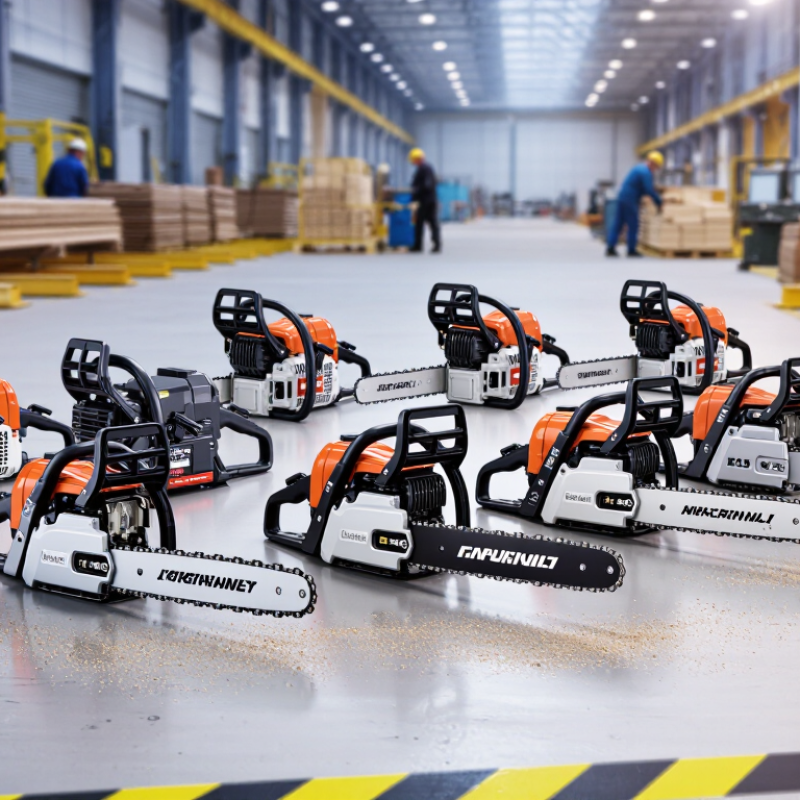
China’s wood-cutting chainsaw manufacturing landscape combines large industrial zones with specialized component suppliers. Many factories produce engines, guide bars, chains, handles, and safety controls within connected regional networks. This structure can shorten procurement time and support flexible production volumes. From factory assessments, reliable suppliers usually show clear testing records, trained assembly teams, and traceable material sources. A polished showroom is not enough. Production discipline matters more.
Tips: Ask for cutting tests using different wood densities. Check vibration, chain braking, oil delivery, and starting performance. Request maintenance instructions in clear English. Compare sample results with batch records. Small gaps can become costly problems.
Manufacturers increasingly use automated machining and digital inspection for critical parts. These tools improve consistency, but they do not replace skilled workers. Human checks still catch loose fittings, uneven welds, and poor packaging. Export-focused factories often adapt designs for climate, fuel, and user habits. Buyers should verify documentation, spare-part availability, and after-sales response before placing large orders. Some factories promise too much during early discussions. That deserves careful reflection. A dependable partnership grows through repeatable evidence, not confident language. Safety features should remain central, especially chain brakes, protective guards, and stable rear handles.
A credible ranking should measure more than factory size or export volume. China’s top manufacturers should be assessed through verified production capacity, engine performance, cutting efficiency, safety testing, and service coverage. The FAO’s Global Forest Resources Assessment 2020 reports that forests cover 4.06 billion hectares worldwide. This scale demands reliable tools, not attractive specifications alone.
I recommend a weighted evaluation: product durability, 25%; safety compliance, 20%; cutting performance, 20%; quality control, 15%; after-sales support, 10%; and environmental design, 10%. Testing should include cold starts, chain-brake response, vibration, fuel efficiency, and continuous cutting under load. ISO 11681-1 provides a useful safety reference for portable chain-saws. Independent laboratory records should rank higher than promotional claims. Some factory data remains self-reported. That weakness deserves attention.
Tips: Request test reports, warranty terms, spare-parts lists, and production photos. Check whether vibration figures come from controlled testing. A low price can hide inconsistent machining or weak dealer support. Field experience also matters. A saw that starts easily after months of storage may outperform a stronger model on paper. Sustainability should include fuel consumption, recyclable packaging, and repairable components. Rankings should be reviewed annually, because supplier quality can change faster than published catalogs.
China’s top 10 wood-cutting chainsaw manufacturers show different strengths in engineering, production, and field support. One specializes in compact saws for orchard pruning, with balanced handles and simple chain adjustment. Another focuses on professional forestry models, using reinforced crankcases and vibration-control systems. A third serves contractors with high-torque saws designed for thick hardwood logs.
Several manufacturers stand out for engine testing. Their technicians check cold starts, idle stability, oil delivery, and chain-brake response before shipment. One production group emphasizes lightweight magnesium housings, while another develops battery-powered saws for quieter work near residential areas.
Two factories concentrate on private-label manufacturing, offering flexible bar lengths, packaging, and spare-parts programs. Their quality can vary between production batches, so inspection records matter.
The remaining manufacturers often compete through practical details. One provides improved air filters for dusty cutting conditions. Another tests automatic oilers against different chain temperatures. A smaller factory produces entry-level saws with accessible controls, though its after-sales network may be limited. That weakness deserves attention. Factory visits, sample testing, and verification of safety documentation remain essential. A reliable supplier should explain maintenance intervals, replacement-chain specifications, and warranty handling clearly. In real workshops, small issues appear: a stiff starter rope, uneven oil flow, or a loose fastener. Good manufacturers respond with evidence, not promises. Safety depends on trained operators, correct protective equipment, and regular inspection.
China Top 10 Wood Cutting Chainsaw Manufacturers
Key Products, Technologies, and Manufacturing Capabilities
China’s leading wood cutting chainsaw manufacturers produce petrol, battery-powered, and electric models for forestry, landscaping, and farm work. Their product ranges commonly include compact saws for pruning and heavier units for log cutting. Different guide bar lengths support different working conditions.
Engine development remains important. Many factories use aluminum crankcases, anti-vibration handles, automatic chain lubrication, and adjustable carburetors. Battery models increasingly feature brushless motors, thermal protection, and removable lithium battery packs. Some manufacturers also develop low-kickback chains and improved chain brakes for safer operation.
Production capability often depends on process control. CNC machining creates accurate cylinder and clutch components. Automated welding improves frame consistency. Heat treatment strengthens drive sprockets and guide bar rails. Assembly lines usually include torque checks, idle-speed testing, chain-brake tests, and noise measurements. Export-oriented factories may follow recognized quality systems and maintain traceable batch records.
Details matter.
From practical factory visits, packaging quality can differ greatly from internal performance. A clean assembly line does not always guarantee long service life. Some suppliers still need better testing for cold starts, dust exposure, and extended vibration. Buyers should inspect sample units, review inspection records, and compare spare-parts availability before placing large orders. Transparent communication about fuel consumption, battery endurance, and maintenance intervals is more reliable than impressive catalog language.
Comparing Chinese chainsaw suppliers requires more than checking unit prices. Grand View Research estimated the global chainsaw market at about USD 4.5 billion in 2023. That growth increases supplier choices, but also creates uneven quality. Request factory audit records, production photos, and recent test reports. Confirm whether the supplier controls machining, assembly, and final inspection internally. A low quotation may hide weaker materials or limited support.
Test samples under realistic conditions. Check cold starting, chain-brake response, oil-feed consistency, vibration, and cutting speed. Measure fuel use after repeated cuts, not one demonstration. For battery models, record runtime, charging temperature, and battery cycle claims. The International Organization for Standardization identifies ISO 9001 as a quality-management framework, but certification alone cannot prove product performance. Ask for traceable batch numbers and inspection records.
Parts availability matters more than polished catalogs. Request prices and delivery times for chains, bars, sprockets, carburetors, batteries, and switches. The European Commission’s Safety Gate reports regularly show that machinery risks often involve missing safeguards, instructions, or conformity information. Verify applicable market documents before ordering. I would also compare warranty handling through a small trial order. That step feels slower. It often reveals communication gaps, unclear responsibility, and inconsistent packaging. A supplier may pass an audit yet still disappoint after shipment. Supplier comparison should remain practical, documented, and slightly skeptical.



