Sealless Pumps for a Safer and Greener World

China’s Industrial Rigging sector supports construction, shipbuilding, energy, ports, and factory automation. Its products include wire-rope slings, chain slings, spreader beams, shackles, hoists, and lifting clamps. Demand is growing, but quality differences remain visible in small details: stamped working-load limits, heat-treated hooks, traceable certificates, and clean welds.
Grand View Research estimates that the global material-handling equipment market reached approximately USD 212.7 billion in 2022. Allied Market Research also projects continued growth in the global lifting-equipment market through 2030. These figures describe wider equipment categories, not Industrial Rigging alone. That distinction matters. Market numbers can look precise while hiding uneven product definitions. The International Labour Organization continues to emphasize competent planning, equipment inspection, and worker training for lifting operations.
Mike Parnell, a recognized lifting and rigging safety educator, has repeatedly stressed a practical principle: “The weakest link controls the lift.” It is a short warning. A polished catalog cannot replace engineering review, load-angle calculation, or inspection records. This China Top 10 Industrial Rigging Manufacturers guide therefore considers more than production volume. It examines manufacturing experience, testing capability, material traceability, international certifications, customization, after-sales support, and field reputation. Factory photographs help, but they are not proof. Real reliability appears in documented tensile tests, consistent batch markings, responsive technical teams, and equipment that performs under harsh dust, salt, and repeated loading. Some rankings may remain debatable. That is unavoidable. Buyers should verify current certificates and working-load limits before selecting any supplier.
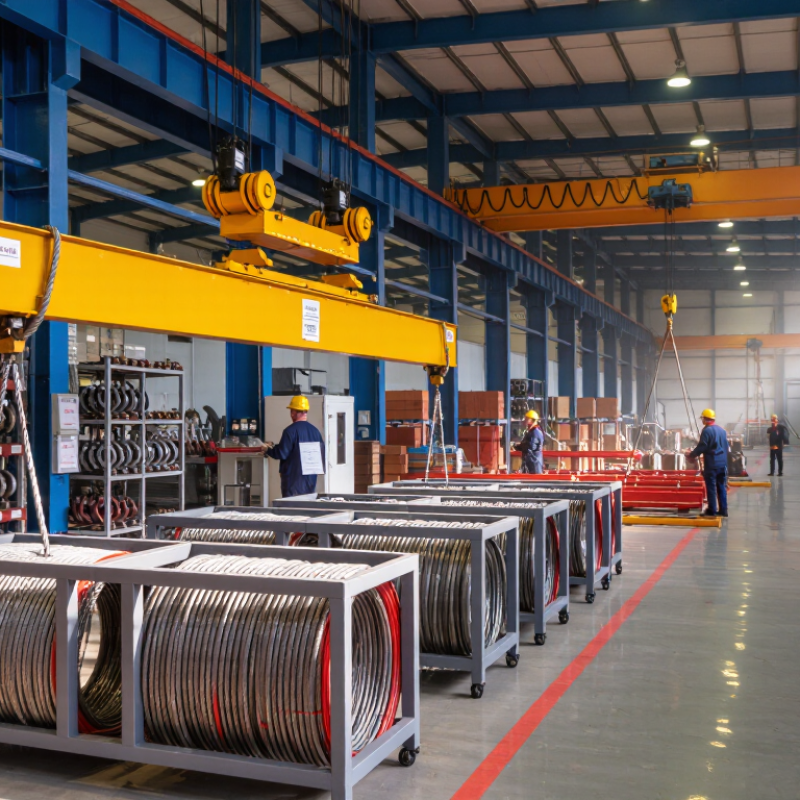
Industrial rigging manufacturers in China design and produce equipment that moves, supports, and secures heavy loads. Their products include wire-rope slings, chain slings, webbing slings, shackles, hooks, and lifting beams. These manufacturers serve construction, ports, shipyards, energy projects, and factory maintenance. According to UNIDO’s International Yearbook of Industrial Statistics 2024, China generated about 31% of global manufacturing value added in 2023. This scale gives Chinese producers broad engineering capacity and strong supply-chain access. However, production volume does not automatically prove safety or reliability.
A responsible manufacturer manages more than fabrication. It should verify materials, calculate working load limits, conduct proof testing, and provide traceable inspection records. ISO 17025 supports competent testing laboratories, while ISO 4309 offers inspection guidance for wire ropes. A top-ten evaluation should examine certification scope, test equipment, failure-control procedures, export experience, and after-sales support. Price still matters. It should not become the only decision factor. No ranking is perfect, because site conditions, load angles, temperature, and operator training can change equipment performance.
Tips: Ask for material certificates, test reports, and clear working load limit markings. Check whether inspection records match the product serial number. Request realistic samples or factory evidence before placing a large order. Also, review local lifting rules with a qualified engineer. A catalogue can look convincing, but field conditions often expose the weak points.
Industrial rigging manufacturers in China design and produce certified equipment used to lift, suspend, position, and secure heavy loads. The chart compares common rigging categories by a representative working load limit (WLL). Actual capacity depends on configuration, material, angle, inspection status, and applicable standards.
Reference values are typical industry ranges represented by a single illustrative capacity and are not a manufacturer ranking or a lifting recommendation. Always verify the marked WLL and certification before use.
China’s industrial rigging manufacturers supply wire rope slings, chain slings, webbing slings, shackles, hooks, lifting clamps, and spreader beams. Many also provide electric hoists, manual hoists, pulley blocks, and load-positioning equipment. Grand View Research valued the global material handling equipment market at approximately USD 212.7 billion in 2023. This demand supports China’s wide production network and export capability.
The strongest suppliers usually offer more than hardware. Their services include lifting-plan support, product selection, custom fabrication, proof-load testing, inspection records, and replacement advice. Some factories provide serialized tags, certificates, and traceability files for each assembly. China produced about 1,019.1 million tonnes of crude steel in 2023, according to the World Steel Association. That industrial base helps manufacturers source steel components at scale, although material origin still requires verification.
Quality differences remain significant. A low-priced sling may look acceptable but lack consistent stitching, heat treatment, or test documentation. I would check working load limits, safety factors, batch records, and inspection intervals before purchasing. Not every catalog tells the full story. On-site training and periodic visual inspections are equally important, especially around sharp edges, saltwater, vibration, and repeated lifting cycles. Reliable manufacturers normally combine standardized products with engineering support, packaging control, and responsive after-sales service.
Evaluating China’s top industrial rigging manufacturers requires more than comparing prices. A serious review starts with traceability, testing, and field experience. The 2024 Grand View Research report valued the global material handling equipment market at over USD 200 billion, showing strong demand but also intense supplier competition. That pressure can encourage attractive shortcuts.
Ask for batch-level material certificates, heat numbers, and proof-load records. Check whether shackles, wire-rope slings, and lifting chains carry clear working load limits. Those markings should remain readable after surface treatment. Request independent laboratory reports using ISO/IEC 17025-accredited facilities. Factory audits should examine calibration records, welding controls, corrosion protection, and rejected components. Photos are useful. They are not evidence alone.
ISO’s latest survey records more than one million ISO 9001 certificates worldwide, but certification does not guarantee safe rigging. It only shows a management system exists. Review the actual procedures behind it. Compare test methods with EN, ASME, or other required standards, then confirm local acceptance requirements. Ask how the manufacturer investigates failures and handles recalls. A supplier unable to explain one rejected batch is a warning sign.
Do not judge by catalog thickness alone. Speak with engineers who have inspected products in ports, steel plants, or construction sites. Check lead times, spare-part support, packaging, and document accuracy. One weakness matters. A polished factory tour can still hide inconsistent finishing, and even experienced buyers sometimes trust paperwork too quickly.
| Evaluation Dimension | Weight | Objective Data to Collect | Verification Standard or Evidence | Recommended Scoring Rule |
|---|---|---|---|---|
| Product Safety and Rated Capacity | 18% | Working Load Limit (WLL), safety factor, product type, size range, temperature limits, and lifting configuration. | Product labels, technical drawings, user instructions, load charts, and test reports showing WLL and applicable lifting angles. | 5 = complete and consistent data for all major products; 1 = unclear or unsupported ratings. |
| Testing and Certification | 15% | Proof-load testing, breaking-load testing, dimensional inspection, fatigue testing where applicable, and certificate availability. | Batch-specific test reports; calibrated equipment records; laboratory competence supported by ISO/IEC 17025 accreditation where applicable. | 5 = independent or accredited testing with batch traceability; 1 = only general promotional claims. |
| Material and Batch Traceability | 12% | Raw-material grade, heat or batch number, supplier records, production date, inspection status, and certificate linkage. | Material certificates, barcode or serial-number system, incoming inspection records, and retained production documentation. | 5 = product-to-material traceability is demonstrable; 1 = no verifiable traceability system. |
| Standards Coverage | 10% | Applicable standards for web slings, roundslings, wire-rope slings, chain slings, shackles, hooks, and other lifting accessories. | Evidence of design and testing against relevant requirements such as ASME B30.9, ASME B30.26, EN 1492, EN 818, EN 13414, or ISO 2408, as applicable to the product. | 5 = standards are clearly identified by product; 1 = generic or conflicting references. |
| Product Range and Engineering Capability | 10% | Available product categories, capacity range, component options, lifting configurations, drawings, and engineering support. | Current product catalogue, CAD or dimensional drawings, design calculations, sample-development procedure, and application guidance. | 5 = broad, documented range with engineering support; 1 = limited catalogue with no technical development capability. |
| Quality Management System | 8% | Quality-control structure, inspection points, nonconformance handling, corrective actions, calibration management, and internal audits. | Valid ISO 9001 certificate, quality manual, inspection plan, calibration records, and recent corrective-action examples. | 5 = certified system supported by operating records; 1 = certificate or process evidence unavailable. |
| Manufacturing and Capacity Reliability | 7% | Production equipment, monthly capacity, process capability, outsourcing ratio, maintenance program, and capacity during peak demand. | Factory audit, equipment list, production-flow records, capacity statement, maintenance logs, and representative delivery history. | 5 = capacity is documented and resilient; 1 = capacity depends mainly on unverifiable subcontracting. |
| Customization and Packaging Control | 8% | Custom dimensions, end fittings, coatings, labels, packaging, private documentation, inspection plans, and sample approval process. | Approved drawings, first-article inspection records, packaging specifications, label proofs, and documented engineering-change control. | 5 = controlled customization with formal approval; 1 = customization is informal or undocumented. |
| Export and Regulatory Readiness | 5% | Export documentation, packaging compliance, country-specific markings, multilingual instructions, customs support, and insurance documents. | Commercial invoices, packing lists, certificates of origin, test certificates, shipping records, and destination-market documentation. | 5 = complete documentation for the target market; 1 = repeated documentation gaps. |
| Delivery, Service, and After-Sales Support | 7% | Quotation response time, sample lead time, production lead time, on-time delivery rate, warranty terms, complaint response, and spare-part support. | Written service-level commitments, order-history data, warranty policy, complaint records, and reference checks from comparable projects. | 5 = measurable service performance with clear escalation; 1 = no defined service commitments. |
| Total Evaluation Score | 100% | Weighted score = Σ (criterion score ÷ 5 × criterion weight). | Rank only manufacturers that pass mandatory safety, testing, documentation, and traceability checks. | Suggested shortlist threshold: 70/100, subject to buyer risk requirements. |
China Top 10 Industrial Rigging Manufacturers
China’s top ten industrial rigging manufacturers cover different lifting needs rather than one identical market. Some specialize in wire rope slings for ports, steel plants, and construction sites. Others focus on alloy chain slings, webbing slings, shackles, hoists, or spreader beams. Their strongest products usually reflect their factory equipment, testing capacity, and practical experience with heavy loads.
Reliable manufacturers provide traceable materials, rated load charts, and documented proof testing. Many operate cutting, forging, welding, and coating lines under controlled procedures. Experienced buyers should examine inspection records, batch numbers, and fatigue-test results instead of trusting polished catalogs. A good supplier also explains sling angles, edge protection, temperature limits, and storage conditions. Small details matter. A damaged corner can weaken synthetic webbing quickly.
The leading manufacturers often support custom lifting plans, export packaging, and technical guidance for demanding environments. Some offer compact manual hoists for maintenance teams, while others build large lifting assemblies for shipyards and energy projects. However, no ranking is perfect. A company may excel at shackles but perform poorly with textile products. Product certificates can also vary in depth and clarity. Buyers should request recent test samples, verify rated capacities, and compare after-sales response before placing large orders. Field confidence grows slowly. A low price alone proves very little.
China’s top ten industrial rigging manufacturers should be judged beyond production volume. The strongest suppliers align designs with ASME B30.9, EN 1492-1, and applicable ISO procedures. These standards address sling construction, marking, inspection, and safe working loads. The ISO Survey 2022 recorded more than 1.2 million ISO 9001 certificates worldwide. Certification matters, but paperwork alone cannot lift a load.
Factory experience becomes visible during quality control. Auditors should check incoming wire rope, alloy fittings, webbing density, stitching patterns, and heat-treatment records. Each batch should receive proof-load testing, dimensional checks, and permanent traceability. Clear test certificates should identify the lot, date, rated capacity, and inspection method. The International Labour Organization reported nearly 3 million work-related deaths annually in 2023. Rigging failures are not abstract risks. They can begin with one unreadable tag.
Global export capability also requires practical discipline. Reliable manufacturers maintain multilingual manuals, consistent packaging, export documentation, and stable container scheduling. The WTO reported global merchandise trade worth about 25.3 trillion dollars in 2022. That scale rewards suppliers who can repeat quality across borders. However, this ranking remains imperfect. Public factory data can be limited, and some certifications may not reflect current production. Buyers should request recent third-party reports, sample testing, and evidence from comparable shipments before approval.



