Sealless Pumps for a Safer and Greener World

Choosing the best China supplier for an Automatic Bag Feeding Machine requires more than comparing prices. A dependable supplier should understand your packaging material, bag dimensions, product speed, and factory conditions. These details affect feeding accuracy, machine stability, and long-term maintenance. In practical projects, a machine that handles flat pouches may not perform well with gusseted bags or slightly uneven film. The difference can appear during a busy production shift.
Experience matters here. Established manufacturers often provide test videos, sample trials, layout drawings, and clear technical specifications. Ask how the feeder detects bags, adjusts speed, prevents double feeding, and connects with filling or sealing equipment. Reliable suppliers should explain these points without hiding behind vague promises. They should also provide component brands, electrical standards, safety functions, and inspection procedures. Small details matter.
A serious evaluation should include factory communication and after-sales support. Can engineers respond quickly when a sensor fails? Are spare parts available? Is remote training included? These questions are less exciting than machine speed, but they protect your production schedule. Compliance documentation, operating instructions, and proper safety guarding should also be reviewed before purchase. A supplier may look impressive online, yet performance must be verified with your actual bags and products.
There is no universal best choice. Your line may need customization. Even experienced buyers can overlook humidity, bag thickness, or operator habits. Therefore, compare evidence, not slogans. A trustworthy Chinese supplier will welcome testing, admit limitations, and offer a realistic solution for stable, safe, and efficient packaging.
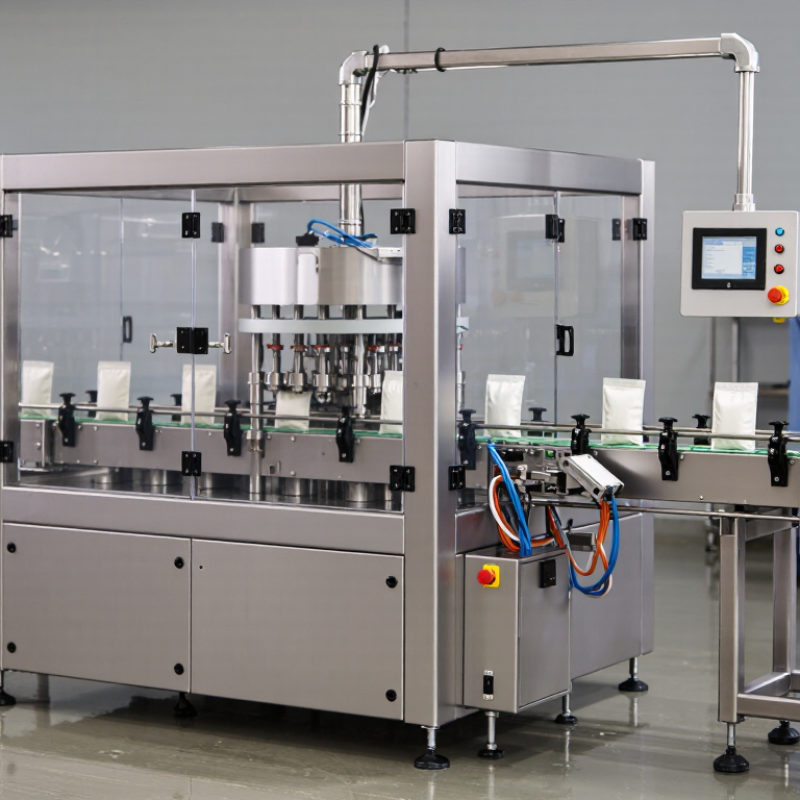
An automatic bag feeding machine stores, separates, and delivers empty bags to a filling or sealing line. It replaces manual bag placement with timed mechanical movement. A typical system uses a bag magazine, suction cups, grippers, sensors, and a transfer conveyor. It can handle premade pouches, flat bags, and some gusseted formats.
The machine usually picks one bag, opens it, and positions it for accurate filling. Sensors check bag presence and alignment before the next step. This reduces hand contact and helps maintain steady production. The International Federation of Robotics reported 541,302 industrial robots installed worldwide in 2023. Meanwhile, PMMI industry reports continue to identify labor availability and automation as major packaging concerns. These figures support automation, but they do not guarantee a perfect result. Dust, static electricity, weak bags, or uneven stacking can still cause stoppages. I have seen specifications look suitable on paper, yet fail during real production trials.
Tips: Test the actual bag material before ordering. Check bag thickness, opening size, surface coating, and stacking behavior. Ask for measured cycle speed, not only a marketing estimate. Confirm whether operators can adjust the feeder without special tools. A short factory trial may reveal more than a long brochure. Also review cleaning access, sensor replacement time, and spare-part availability. These details seem small. They often decide daily reliability.
An automatic bag feeding machine separates, opens, and positions empty bags for filling. Its operation begins with a magazine holding stacked bags. A vacuum cup or gripping arm takes one bag from the stack. Sensors check its position before the bag moves forward. Small timing errors can still occur.
The machine opens the bag using vacuum air, mechanical fingers, or both. A conveyor then carries it to the filling station. Clamps hold the bag steady while product enters through a controlled nozzle. After filling, the bag may pass to sealing or weighing equipment. In my experience, bag material, humidity, and stack alignment strongly affect feeding consistency. Thin bags can cling together. That problem is easy to underestimate.
Tips: Keep bags flat, clean, and correctly sized. Adjust vacuum pressure gradually, not aggressively. Check sensors and grippers during every shift. Operators should watch rejected bags and record the cause. A simple log often reveals patterns that automation hides. Test several bag samples before changing production speed. The machine may run smoothly during testing, yet behave differently after hours of continuous use.
China Best Automatic Bag Feeding Machine Supplier?
What Features Define a Reliable Chinese Supplier?
A reliable Chinese supplier should prove performance with your actual bags, not only polished videos. During machine evaluations, I check feeding speed, bag alignment, seal protection, and changeover time. Photos are not proof. Ask for evidence.
The supplier should explain servo control, sensor accuracy, hopper design, and emergency-stop functions in clear language. They should also provide drawings, electrical details, operating manuals, and maintenance schedules. Relevant certifications must match the destination market and machine configuration. A factory visit can reveal assembly quality, spare-parts storage, and testing procedures.
Request a sample run using different bag materials and sizes. Record rejected bags, feeding errors, noise, and recovery time after a fault. Reliable suppliers welcome these tests. They also offer operator training, remote support, and practical spare-parts advice. Response speed matters when production stops.
A low quotation deserves careful questioning. It may exclude installation, tooling, software adjustments, or future support. I once underestimated changeover difficulty because the trial used only one bag size. That mistake changed my evaluation checklist. A trustworthy supplier discusses limitations openly, gives realistic delivery dates, and accepts measurable contract requirements without making vague promises.
| Evaluation Dimension | Practical Benchmark | Why It Matters | Evidence to Request | Reliability Indicator |
|---|---|---|---|---|
| Bag Compatibility | The machine should state supported bag materials, dimensions, thickness ranges, zipper types, and filling applications instead of claiming universal compatibility. | Premade pouches differ in stiffness, friction, opening force, and sealing behavior. These variables directly affect feeding and opening stability. | A written bag specification sheet, sample-bag test report, and video showing the customer's actual pouch format. | Clear operating limits supported by testing. |
| Rated Output | Performance should be quoted as bags per minute under defined conditions, including bag size, product type, filling method, and required inspection steps. | A headline speed without operating conditions is not a meaningful comparison. Actual output is usually lower when product variability and quality checks are included. | A factory acceptance test protocol, cycle-time records, and a guaranteed minimum output for the agreed bag format. | Condition-based speed claim, not a maximum-only figure. |
| Feeding Accuracy | The feeding system should include controlled bag separation, position detection, and rejection of empty, double, misaligned, or incorrectly opened bags where required. | Reliable separation reduces stoppages, product loss, and downstream sealing defects. | I/O list, sensor layout, rejection logic, and test data for single-bag pickup and bag-position accuracy. | Traceable detection and rejection logic. |
| Construction Materials | Product-contact and exposed framework areas should be specified by material and finish. Stainless steel is commonly selected for hygienic or washdown environments. | Material selection affects corrosion resistance, cleanability, service life, and suitability for food or pharmaceutical production. | Material list, surface-finish information, weld-quality details, and product-contact component drawings. | Documented material traceability. |
| Control System | The system should provide a PLC-controlled sequence, operator interface, alarm history, recipe storage, safety interlocks, and adjustable parameters for different bag formats. | Good controls simplify changeovers, fault diagnosis, operator training, and integration with fillers, weighers, sealers, and inspection equipment. | Electrical schematic, software-function list, alarm list, backup procedure, and interface communication details. | Structured diagnostics and recoverable settings. |
| Safety Design | The machine should include guarding, emergency stops, access-door interlocks, suitable electrical protection, and a documented risk assessment for the intended market. | Safety controls protect operators and support compliance with applicable machinery and workplace requirements. | Risk-assessment file, safety-circuit diagram, declaration of conformity where applicable, and a completed safety-function test. | Safety functions tested and documented. |
| Hygienic Design | For food or pharmaceutical use, the design should minimize product traps, use accessible surfaces, protect bearings and drives, and define whether the machine supports dry cleaning or washdown. | Cleanable geometry and protected components reduce contamination risk and maintenance-related downtime. | Cleaning procedure, enclosure rating information, hygienic design drawings, and a list of approved cleaning agents. | Application-specific sanitation design. |
| Changeover Capability | Format change parts should be identified, accessible, and designed for repeatable adjustment. Tool-free or quick-adjustment features are useful where frequent changes are required. | Short, repeatable changeovers improve line availability and reduce setup errors. | Changeover checklist, recorded changeover time, adjustment drawings, and recipe-management demonstration. | Repeatable setup procedure with clear markings. |
| Integration Readiness | The supplier should define mechanical interfaces, electrical loads, communication signals, upstream and downstream handshakes, and line-speed coordination. | Most packaging failures occur at interfaces when signals, timing, or physical connections are not agreed early. | General arrangement drawing, utility schedule, I/O map, communication protocol, and line-integration plan. | Complete interface documentation. |
| Testing and Acceptance | Acceptance should use the buyer's approved bags and representative product, with agreed criteria for speed, feeding accuracy, rejects, alarms, safety, and continuous running. | Testing with real materials reveals issues that may not appear during an empty-machine demonstration. | Signed factory acceptance test and site acceptance test procedures, including measurement methods and pass/fail criteria. | Objective, pre-agreed acceptance criteria. |
| Documentation Package | A complete package should include operation, maintenance, electrical, pneumatic, spare-parts, troubleshooting, and safety documentation in the required language. | Accurate documentation reduces training time and speeds up maintenance and fault recovery. | Document index, sample manuals, final drawings, parts list, software backup, and revision-control records. | Complete, version-controlled records. |
| After-Sales Support | Support should cover remote troubleshooting, spare-parts identification, response procedures, operator training, and optional commissioning assistance. | Fast technical support limits downtime, especially when the equipment is installed in another country or time zone. | Service contact process, response-time commitment, spare-parts recommendation, training plan, and escalation procedure. | Defined support responsibilities. |
| Supplier Verification | The buyer should verify manufacturing capability, quality controls, technical personnel, export experience, and the supplier's ability to provide references without relying only on online claims. | Independent verification reduces commercial, technical, and delivery risks before the purchase order is issued. | Factory audit, live video inspection, production records, quality certificates, export documents, and reference checks. | Evidence-based qualification, not price-only selection. |
Note: The benchmarks above are general procurement criteria. Final requirements should be confirmed against the bag format, product characteristics, applicable local regulations, and the agreed factory and site acceptance tests.
Choosing a China-based automatic bag feeding machine supplier requires more than comparing prices. Machine quality starts with stable feeding, accurate positioning, and durable contact parts. Ask for production data from bags matching your size, material, and filling speed. A live test is more useful than polished videos.
Inspect the feeder frame, sensors, grippers, and control cabinet closely. Stainless steel surfaces should be even, clean, and free from sharp edges. Check whether operators can adjust bag width without complicated tools. Request records for feeding accuracy, cycle speed, rejected bags, and continuous running time. Small errors matter. A machine may perform well for ten minutes, then struggle after several hours.
Compatibility also depends on your complete packaging line. Confirm communication methods, installation space, power requirements, and conveyor height before signing. Service quality deserves equal attention. Reliable suppliers provide clear manuals, remote troubleshooting, spare-parts lists, and practical training. Ask how quickly technical staff respond across time zones. Do not accept vague promises. One weakness remains easy to miss: after-sales support may change when the project is completed. Put response times, warranty coverage, and replacement procedures in writing. A factory visit can reveal more than a sales presentation, although even a visit cannot remove every risk. Use sample bags, record test results, and let your operators challenge the machine.
Automatic bag feeding machines serve many industries that package pre-made bags at steady production rates. Food factories use them for rice, flour, grains, snacks, and frozen products. A machine can pick each bag, open it, and position it for accurate filling. Dust control matters here. Small particles can affect sensors and sealing quality.
Agricultural businesses use these systems for seeds, animal feed, and soil products. Feed plants often handle heavy bags, so frame strength and feeding stability become important. Chemical manufacturers may package approved powders, granules, and non-hazardous materials. Their lines usually require controlled dust management and carefully selected contact parts. Building material producers also use automatic feeding equipment for mortar, additives, and dry mixtures.
Pharmaceutical and personal care factories need cleaner designs and precise handling. Operators may require stainless-steel surfaces, easy cleaning, and detailed production records. Bag size changes can slow a line. That point is often underestimated. In my experience, successful equipment selection begins with real samples, not only catalog figures. Test bags under different humidity conditions. Check wrinkled edges, weak seals, and uneven filling. A machine may perform well during a short trial but struggle after hours of continuous operation. Suppliers should explain speed limits, maintenance access, safety controls, and replacement-part availability clearly. No machine fits every production line. Careful testing still prevents expensive surprises.



