Sealless Pumps for a Safer and Greener World

Choosing the best Heavy Lift Multirotor for global buyers is not simply a payload competition. A larger frame may carry more equipment, yet consume batteries quickly and demand complex transport support. Real performance appears at the worksite, where wind, dust, uneven ground, and limited charging access create pressure.
Raffaello D’Andrea, a leading robotics engineer and founder of Verity, describes a useful design principle: “Robots are machines that sense, think, and act.” This idea fits heavy-lift aircraft well. A dependable multirotor must sense changing conditions, think through flight demands, and act with controlled precision. Buyers should examine payload capacity, flight endurance, motor redundancy, battery safety, navigation accuracy, and maintenance access. Those details matter more than impressive advertising numbers.
Look beyond the brochure.
A 20-kilogram payload rating may assume calm weather, a new battery, and minimal reserve power. Real operators need safer margins. They also need clear documentation, trained support teams, replaceable components, and software that supports responsible operation under local aviation requirements. A machine designed for one region may perform poorly in another because of heat, altitude, humidity, or restricted airspace.
There is no universal winner. The best Heavy Lift Multirotor depends on the mission, operating environment, service network, and total ownership cost. Buyers may still make imperfect choices. Payload figures can distract from reliability, while low prices can hide expensive downtime. This guide compares practical capabilities, not just headline specifications, to help global users choose with greater confidence.
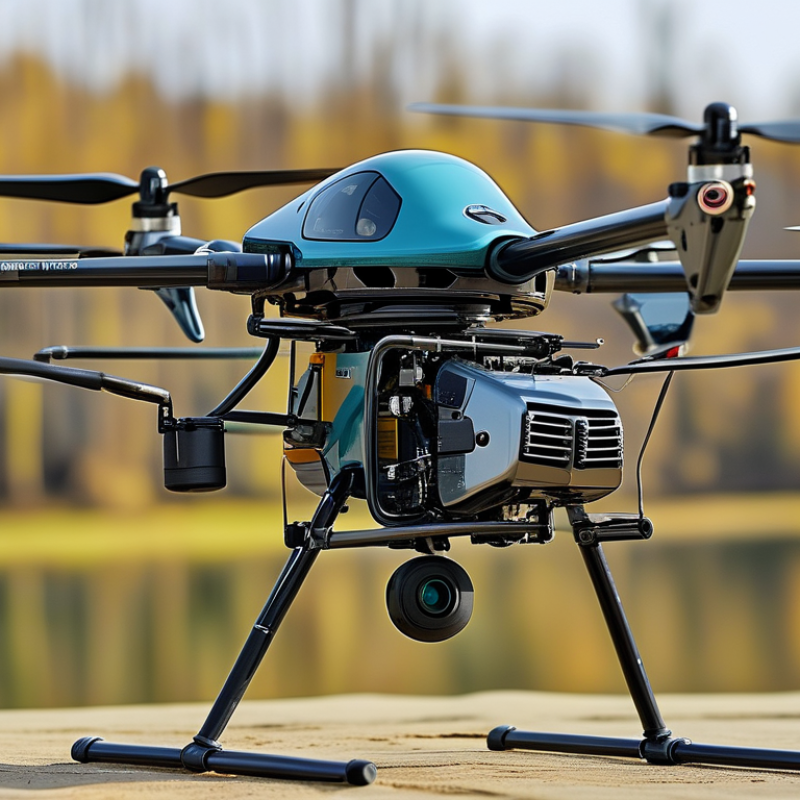
For global buyers, heavy-lift multirotors begin with payloads above 25 kg. A useful working structure separates them into three classes: 25–50 kg, 50–100 kg, and above 100 kg. These are practical engineering groups, not universal legal categories. The FAA’s Part 107 limit is 55 pounds, or about 24.95 kg, for total aircraft weight. EASA’s open-category framework also uses a 25 kg maximum takeoff mass threshold. Heavier aircraft usually require additional operational approval. Rules matter as much as motors.
Maximum takeoff weight, or MTOW, includes the frame, batteries, fuel cells, sensors, and payload. A 40 kg payload aircraft may therefore exceed 80 kg MTOW. Battery weight creeps upward quickly. The margin disappears. Drone Industry Insights’ 2024 market report estimated the commercial drone market at roughly 30.6 billion US dollars, with logistics and industrial operations among major growth areas. That demand does not make every heavy-lift design practical. Buyers should compare payload at the stated flight time, temperature, wind, and altitude. A specification measured at sea level can mislead. I would also question any payload claim without endurance data, redundancy details, and a documented MTOW approval path. Payload alone is an incomplete answer.
Heavy-lift multirotors are commonly evaluated by useful payload and maximum takeoff weight (MTOW). The ranges below represent practical industry classification bands for aircraft carrying more than 25 kg, rather than limits assigned to any specific manufacturer or brand. Actual capacity varies with battery size, flight time, altitude, weather, and regulatory requirements.
For heavy-lift multirotors, payload-to-MTOW ratio matters more than headline capacity. A 25-kilogram aircraft carrying 8 kilograms achieves a 32% ratio. That figure leaves room for batteries, sensors, landing gear, and operating reserves.
In field engineering, 30–40% often represents practical lift efficiency. Below 30%, the aircraft may carry mostly its own structure and batteries. Above 40%, endurance can fall sharply, especially in wind or cold conditions. A 2024 Drone Industry Insights report forecasts the commercial drone market to grow from about 30.6 billion US dollars in 2023 to approximately 55.8 billion by 2030. More buyers will compare usable payload, not marketing claims. The FAA’s small-unmanned-aircraft framework also uses a 55-pound weight boundary, showing why regulatory class and aircraft mass remain closely connected. These figures do not define global purchasing rules, but they provide useful reference points.
Tips: Calculate the ratio with the full operational weight. Include batteries, tools, liquid, and safety equipment. Test at 80% battery charge. Reality is less generous. Payload tables often assume calm air and new batteries. A better comparison uses measured flight time, hover current, wind performance, and landing stability. I would also request independent test records, because laboratory capacity can differ greatly from daily work.
For global buyers, heavy-lift multirotors should be judged by working endurance, not brochure numbers. A claimed 40-minute flight often assumes light payload, warm batteries, and calm air. In field testing, a practical target is 20–30 minutes with a useful load. We measure takeoff mass, payload, battery reserve, and landing voltage every time. Small details matter. A cold battery can reduce climb response before the pilot notices.
Wind resistance needs equal attention. A capable platform should hold position in steady 8–10 m/s wind without excessive tilt or rapid battery loss. Gusts are harder than steady wind. They can trigger repeated corrections and shorten the mission unexpectedly. Test flights should include crosswind legs, hovering, and controlled return-to-home practice. Keep safety margins. A drone that survives a gust may still produce poor imagery or unstable lifting.
I once trusted an endurance estimate made on a calm morning, then found the same aircraft landed several minutes earlier after a windy payload run. That mistake changed my evaluation sheet. Buyers should request test conditions, payload figures, reserve settings, and battery age. Independent logs are more useful than polished claims. Regional altitude, temperature, and service access also affect reliability. The best choice may not be the fastest aircraft; it may be the one that repeats a safe 25-minute mission without surprises.
What Is the Best Heavy Lift Multirotor for Global Buyers?
Compliance often decides the best aircraft before payload capacity does. In the United States, the FAA’s 25 kg threshold includes the aircraft, battery, payload, and other equipment at takeoff. This limit is not a universal permission slip. Operations above it may require different certification, approvals, or waivers. Registration, pilot qualifications, operating limits, and airspace checks still matter. A practical buyer should weigh the aircraft with its largest planned payload, not an empty frame.
European rules use a different structure. Under the EASA open category, aircraft generally remain within a 25 kg maximum takeoff mass. Operational limits also depend on distance, location, altitude, and the chosen subcategory. A heavier multirotor may enter the specific category, requiring a risk assessment and operational authorization. National authorities can add local conditions. The same payload plan may therefore work in one country and fail in another.
Remote ID deserves attention before delivery. Confirm that the aircraft supports the required broadcast method and that its firmware matches the operating region. Check signal behavior near buildings, industrial sites, and dense terrain. Small details become expensive later. I have seen weight calculations overlook protective cages, spare batteries, and sensors. That mistake is easy to repeat. A compliance file should include measured takeoff weight, maintenance records, pilot documents, and local operating procedures. For global buyers, the strongest choice is usually the platform with clear records, adaptable configuration, and support for regulatory changes.
Choosing the best heavy-lift multirotor starts with safety, not payload claims. The FAA’s 2024 Aerospace Forecast expects millions of commercial drones in operation by 2028. That growth increases pressure for measurable reliability. Look for redundant motors, monitored batteries, obstacle sensing, and documented flight-hour data. A parachute helps, but it does not replace disciplined maintenance. Field experience often exposes weak points that brochures hide.
IP protection also needs careful reading. Under IEC 60529, an IP65 enclosure resists dust and low-pressure water jets. It is not designed for immersion. Salt spray, mud, and condensation can still damage connectors. Test reports should state temperature, rain intensity, payload, and wind conditions.
Battery endurance deserves similar scrutiny. The IEA’s Global EV Outlook 2024 reported average lithium-ion pack prices near USD 139 per kWh in 2023. Drone packs may cost more because they prioritize discharge power, cooling, and cycle life. Published flight time can fall sharply in cold weather or near maximum payload.
Total cost includes batteries, chargers, software, training, insurance, transport cases, and scheduled inspections. A lower purchase price may become expensive after frequent battery replacement. Build a 24-month cost model using real mission hours. Include downtime. This is often missed.
The Drone Industry Insights 2024 market report highlights continuing enterprise adoption, but market growth does not guarantee every platform fits every operation. Request independent test records, spare-part lead times, and failure-rate evidence before buying. Test the aircraft in your actual weather, not only in a warehouse.



