Sealless Pumps for a Safer and Greener World

Choosing the best GRP Gel Coat Tiles Machinery in 2026 is not simply a matter of comparing production speeds. A suitable line must match the tile design, expected output, available floor space, and the team’s operating skills. Small differences matter: uneven gel-coat thickness can affect appearance, while poor mold temperature control may cause inconsistent results. Details matter.
This guide examines the machinery features buyers can verify, including dosing accuracy, mixing consistency, curing control, mold handling, and the ease of cleaning between production runs. It also considers practical evidence: sample tiles, equipment specifications, maintenance schedules, and clear service support. Ask suppliers how settings are monitored and what happens when a batch falls outside the target range. A fast machine is not always the most dependable choice.
The right comparison depends on the product and the factory. A line designed for steady, high-volume output may not suit a workshop making several tile profiles in short runs. That takes testing. Request a production trial using materials and molds similar to those planned for regular use, then inspect finished tiles for surface uniformity and dimensional consistency. No brochure can answer every question, and even a careful trial has limits. This article offers a practical framework for evaluating options, while encouraging buyers to confirm claims directly with manufacturers and qualified process specialists.
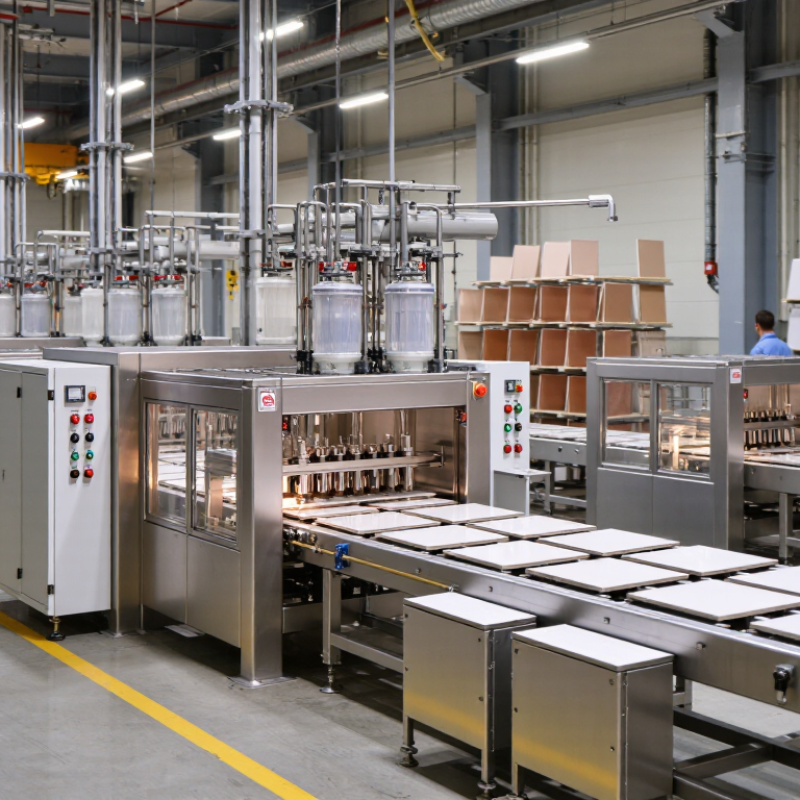
GRP gel coat tile machinery forms reinforced composite sheets into roofing tiles with a finished outer surface. A typical line meters gel coat, resin, and glass reinforcement, then presses the layers against a shaped mold. The exact layout varies. Some systems use continuous forming; others process tiles in batches.
At the coating stage, an applicator spreads gel coat across the mold or moving surface. Even coverage matters. Bare patches can affect appearance and protection. Feed rollers place glass fiber, while resin equipment wets the reinforcement. Molding rollers help remove trapped air and bring the layers together. A curing section then allows the composite to harden before demolding. Temperature and line speed need close attention.
The downstream equipment cuts tiles to length and trims uneven edges. Some lines also include cooling tables, surface checks, and stacking equipment. Operators should watch for bubbles, inconsistent thickness, and chipped corners. Small defects can signal a larger process issue. The machinery does much of the forming, but it cannot correct poor material handling on its own. That part is easy to underestimate. Routine cleaning and calibration help keep output consistent, though no setup stays perfect forever.
A GRP tile line starts with controlled material feeding. Rollers guide glass-fiber reinforcement into the forming area, where resin is applied and distributed. Even wet-out matters: dry patches can weaken a tile, while excess resin adds weight and cost. The gel-coat unit lays down the colored, weather-facing surface. Its thickness and consistency should be checked across the sheet, not just at the edges.
Forming rollers shape the layered material into a tile profile. Their alignment affects rib depth, sheet width, and surface finish. A curing section then gives the resin time and heat to harden. Temperature control is important; too much heat can cause defects, while too little may slow production. The exact settings depend on the resin system and line speed. There is no universal recipe.
At the end of the line, a synchronized cutter trims tiles to length. A control system links feeding, forming, curing, and cutting, helping operators keep dimensions consistent. Look for accessible guards, clear adjustment points, and readable fault alerts. They sound basic. They are not. During a machine trial, inspect several tiles from different parts of the run and measure their profile and length. One good sample is not enough. Equipment selection also depends on planned output, tile design, and available floor space; a faster line may be a poor fit if curing or handling becomes a bottleneck.
What Is the Best GRP Gel Coat Tiles Machinery in 2026?
How Gel Coat Tiles Are Manufactured
GRP gel coat tiles begin with a clean, release-treated mold or profiled forming surface. Operators apply gel coat evenly, watching for thin corners, dry spray, and trapped air. After it reaches the correct tack, they add fiberglass reinforcement and resin. Rollers press out air pockets. The laminate then cures under controlled conditions before demolding, trimming, and inspection. Small process changes matter.
For continuous production, a suitable line coordinates gel-coat application, reinforcement feeding, resin impregnation, forming, curing, and cutting. Choose machinery with adjustable coating control, stable material feed, accessible cleaning points, and reliable temperature monitoring. Grand View Research’s Fiberglass Market Size, Share & Trends Analysis Report estimated the global fiberglass market at USD 52.04 billion in 2023. That market context signals broad composite demand, not a guaranteed market for tiles. One awkward truth: faster output can multiply defects when curing or coating control is poor.
Tips: Check gel-coat thickness across the tile, especially at edges and ribs. Keep batch and cure records. Test finished tiles for surface flaws, dimensions, and bonding before changing line speed. A neat surface can still hide weak reinforcement.
A typical GRP tile production sequence, from mold preparation to finished-part inspection.
The bars show process order only—not processing time, machine performance, or a product ranking. Typical equipment includes a mold and release system, gel-coat spray equipment, resin and reinforcement lay-up tools, consolidation rollers, curing facilities, and trimming and inspection tools. The exact setup depends on the tile design and production method.
A strong evaluation starts with tile quality, not a machine’s headline speed. Check how evenly the system applies gel coat across the mold, including corners and edges. Then inspect finished tiles for pinholes, color variation, and surface marks. Ask for a trial using your own mold and materials. One sample is not enough. Compare several production cycles, since consistency matters more than a single polished result.
Review process controls for gel coat flow, resin and fiber delivery, mold temperature, and curing time. Clear readings and repeatable settings help operators spot drift before it creates a rejected batch. Also consider changeover time, cleaning access, spare-part availability, and energy use. A specification sheet can still flatter a machine. Some details only become clear during routine maintenance, so leave room for questions and independent checks.
Tips: Bring a checklist to the factory trial. Record cycle time, tile weight, visible defects, and cleanup time. Ask operators to run the equipment, not just a sales representative. Keep the notes; small differences can be easy to forget.
For GRP gel-coat tiles, the best machinery depends on tile size, surface detail, and order volume. JEC’s 2023 Global Composites Market Report estimated worldwide composites production at 12.7 million tonnes in 2022. That scale signals a mature industry, but it does not prescribe one machine for every tile workshop. Small runs? Keep it simple.
For custom shapes and modest batches, an open-mold line can combine a gel-coat spray gun, fiberglass application tools, and controlled curing. Operators can inspect corners and surface finish as they work. The trade-off is variation between shifts, especially if spray distance or coating thickness changes. For repeat orders, add metered gel-coat delivery and an indexed mold table before considering full automation. These upgrades improve consistency without building a line sized for demand that may never arrive.
High-volume production may justify automated spraying, conveyor handling, and multiple matched molds. Check the real bottleneck first: curing time, mold turnaround, or trimming often limits output more than spraying speed. Ask suppliers to run your actual tile geometry, resin system, and target cycle time. Record coating weight and reject rates during the trial. It is easy to overestimate automation savings; labor, maintenance, and mold cleaning still count.
| Production Need | Suitable Machine Setup | Typical Process | Main Advantages | Key Limitations | Best Fit |
|---|---|---|---|---|---|
| Small batches and frequent design changes | Open molds, manual gelcoat spray equipment, hand lay-up tools, and basic resin-mixing equipment | Apply gel coat to the mold, allow it to reach the required cure stage, place reinforcement, wet it out with resin, consolidate, cure, and demold. | Low equipment complexity; flexible for prototypes, custom colors, and varied tile profiles. | Labor-intensive; output and finish consistency depend heavily on operator skill and process control. | Start-ups, custom work, product development, and low-volume production. |
| Growing output with repeatable products | Open molds with a dedicated gelcoat spray booth, controlled resin dispensing, reinforcement cutting tools, and improved mold handling | Prepare reinforcement in repeatable kits, apply gel coat under controlled conditions, then laminate and cure in production molds. | Improves material handling and process repeatability without requiring a fully automated line. | Open-mold production still relies on manual lay-up and requires careful ventilation, housekeeping, and curing control. | Small-to-medium production runs with a stable range of tile designs. |
| Consistent dimensions and higher repeat production | Matched male-and-female molds with a hydraulic or mechanical clamping system, plus metered resin delivery and controlled curing arrangements | Place the gelcoat and reinforcement in the mold, close and clamp the tooling, allow the laminate to cure, then open and remove the part. | Matched tooling can help control part shape and thickness; clamping supports repeatable forming when the mold and process are properly designed. | Higher tooling and equipment investment; each tile profile generally needs compatible tooling, and cycle time depends on resin chemistry and part design. | Medium-to-large runs where product geometry is established and repeatability is important. |
| Reduced manual reinforcement placement | Chopped-strand spray-up equipment used with suitable molds, gelcoat application equipment, and resin delivery controls | Apply gel coat to the mold, then deposit chopped glass reinforcement and resin in controlled layers before consolidation and curing. | Can reduce some manual cutting and placement steps for suitable laminate designs. | Requires control of fiber distribution, laminate thickness, overspray, and workplace exposure; it is not suitable for every tile design or specification. | Products whose engineering requirements allow spray-up reinforcement and whose geometry suits the process. |
| Very high output of one established profile | Purpose-designed multi-mold or indexed production system with coordinated gelcoat application, material handling, curing, and demolding | Move molds through successive production stations, with each station performing a defined operation before the part is demolded. | Can reduce handling delays and improve workflow consistency when production volume and product design justify dedicated automation. | Requires substantial engineering, floor space, maintenance, and investment; changeovers can be difficult when profiles vary. | High-volume production of a stable tile design after process validation. |
| Choosing equipment for a new line | Start with production molds, gelcoat application, resin and reinforcement handling, ventilation, curing control, and inspection equipment; automate selected steps as demand grows | Set equipment capacity around the complete cycle, including mold preparation, gelcoat cure, lay-up, laminate cure, demolding, and finishing. | A staged investment can align equipment with validated demand and reveal bottlenecks before major automation purchases. | Equipment selection cannot be based on a single machine’s rated speed; resin system, tile geometry, mold count, staffing, and quality targets affect actual output. | Manufacturers comparing machinery options before specifying a production line. |



