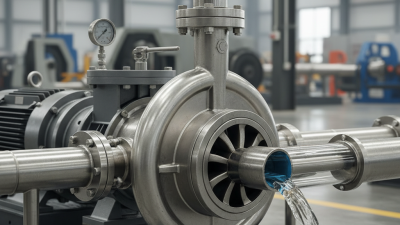
Sealless Pumps for a Safer and Greener World

China’s supplier base for centrifugal pumps is broad, and choosing a manufacturer is not as simple as comparing catalog prices. A polished product page may show stainless-steel impellers, close-coupled motors, and a neat performance curve. It cannot, by itself, confirm how consistently a factory controls casting quality or tests finished units. Those details matter when a pump must run through long shifts, handle abrasive water, or maintain pressure in a process line. Small differences can become costly. A lower purchase price may mean little if spare parts take weeks to arrive or the pump operates far from its best efficiency point.
This guide compares manufacturers using practical evidence: product range, application experience, quality systems, test facilities, export support, and clear technical documentation. Buyers should verify model-specific curves, materials, seal options, motor ratings, and service terms rather than rely on broad claims. Ask for test records and references from comparable installations. Good questions help. The word “best” still depends on the job. A supplier suited to municipal water service may not fit chemical transfer or high-head boiler feeding. Company size alone does not prove engineering strength, and a factory visit cannot replace independent checks. This comparison has limits. Conditions vary, and even careful research can miss a detail that matters on site. Treat the profiles as a starting point, then confirm specifications and support directly before making a purchase.
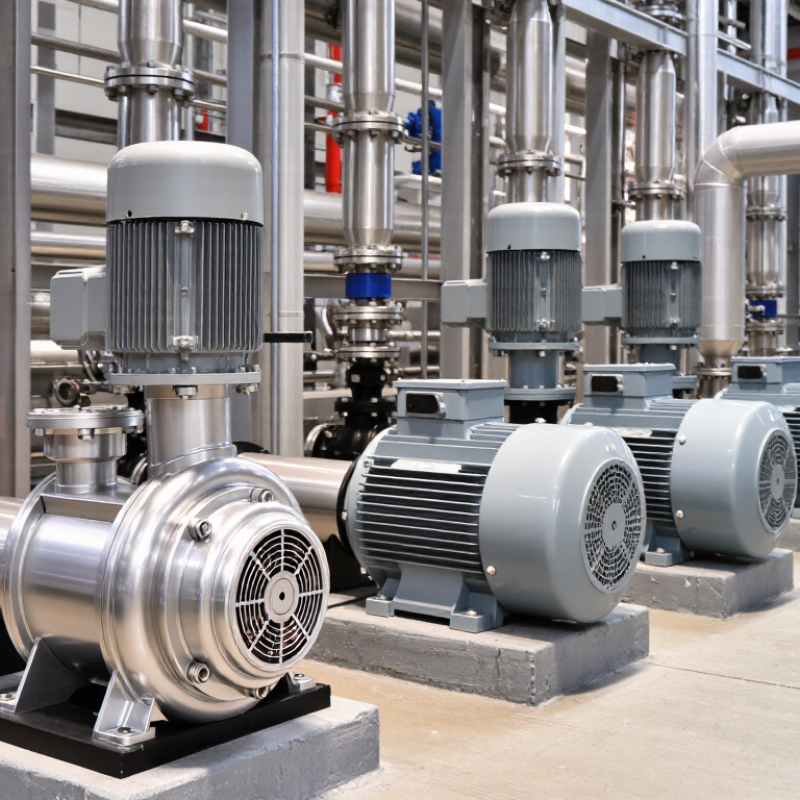
A centrifugal pump does not create water; it transfers energy to it. An electric motor spins the shaft, and the shaft turns the impeller inside the casing. Curved vanes guide liquid outward from the impeller eye, raising its velocity. That matters. Inside a volute or diffuser, some of this fast-moving flow slows and becomes pressure, producing head. Flow is the volume delivered over time; head describes energy per unit weight, often expressed as metres of liquid. These terms are related, but they are not interchangeable.
Higher impeller speed can increase flow and head, but the result depends on the pump and the piping system. Not always. Pipe friction, liquid viscosity, and suction conditions all affect operating performance. For example, a pump may move less water through a long, narrow line than through a short, wide one. Operators should compare the pump curve with the system’s requirements, rather than judge performance by motor speed alone. A reliable specification includes flow, head, liquid properties, and operating conditions. A clean textbook diagram makes the conversion look simple; real installations are less tidy, so measurements matter.
The chart shows theoretical values relative to a pump’s rated speed, assuming a constant impeller diameter and similar operating conditions. Under the pump affinity laws, flow varies approximately with speed, while head varies with the square of speed. Actual performance depends on the pump and system operating point.
Who Are the Best Centrifugal Pump Manufacturers in China?
How ISO 9906:2012 Grades 1–3 Compare Pump Acceptance Tests
When a centrifugal pump is acceptance-tested, the key question is whether measured performance matches the agreed duty point. ISO 9906:2012 defines acceptance grades for checking values such as flow, head, and power. Grade 1 applies the tightest tolerances; Grade 3 allows wider variation. The exact limits depend on the measured parameter and selected acceptance category, so the contract should name the grade before testing begins. Otherwise, two parties may read the same test sheet differently.
A proper test records operating conditions, not just a pass or fail. Technicians check flow, pressure, speed, and power using calibrated instruments, then compare results with the agreed curve. The standard also accounts for measurement uncertainty. Details matter. The U.S. Department of Energy’s 2006 Improving Pumping System Performance sourcebook estimates that pumping systems use nearly 20% of global electrical energy, and 25–50% of energy in some industrial operations. That makes efficiency verification more than paperwork, though a test at one duty point cannot describe every site condition. A clean test sheet is useful, but it does not replace checking how the pump will operate in the actual system.
| Assessment Dimension | ISO 9906:2012 Grade 1 | ISO 9906:2012 Grade 2 | ISO 9906:2012 Grade 3 | What Buyers Should Verify |
|---|---|---|---|---|
| Acceptance-test rigor | Most stringent of the three grade levels shown; appropriate when tighter acceptance requirements are specified. | Intermediate acceptance rigor for applications requiring a balance between test precision and practical requirements. | Less stringent than Grades 1 and 2; may suit applications with less demanding acceptance requirements. | State the required grade and applicable acceptance criteria in the purchase specification and contract. |
| Performance points | Acceptance is assessed against the specified contractual test requirements and guaranteed values. | Acceptance is assessed against the specified contractual test requirements and guaranteed values. | Acceptance is assessed against the specified contractual test requirements and guaranteed values. | Confirm the required flow, head, speed, impeller diameter, liquid properties, and test points before testing. |
| Flow and head | Use the applicable Grade 1 acceptance criteria in the standard for the agreed test conditions. | Use the applicable Grade 2 acceptance criteria in the standard for the agreed test conditions. | Use the applicable Grade 3 acceptance criteria in the standard for the agreed test conditions. | Request the test curve and recorded results, and check that the evaluated points match the contractual guarantee. |
| Power and efficiency | Assess against the applicable standard criteria and the performance guarantees agreed for the test. | Assess against the applicable standard criteria and the performance guarantees agreed for the test. | Assess against the applicable standard criteria and the performance guarantees agreed for the test. | Specify whether absorbed power and efficiency are guaranteed, and clarify the measurement and correction basis. |
| Test uncertainty and setup | Reliable results depend on suitable instrumentation, calibration, and a controlled test arrangement. | Reliable results depend on suitable instrumentation, calibration, and a controlled test arrangement. | Reliable results depend on suitable instrumentation, calibration, and a controlled test arrangement. | Review the test report for instrument details, calibration information, test conditions, and stated uncertainty where applicable. |
| Manufacturer evaluation | Assess whether the supplier can document testing to the agreed grade and provide traceable results. | Assess whether the supplier can document testing to the agreed grade and provide traceable results. | Assess whether the supplier can document testing to the agreed grade and provide traceable results. | Compare documented test capability, quality records, scope of supply, and compliance evidence rather than relying on an unverified ranking. |
Important: ISO 9906:2012 defines acceptance-test criteria; it does not rank pump manufacturers. The applicable tolerances depend on the selected acceptance grade and the relevant test conditions and parameters. Confirm the exact grade, guarantees, and acceptance rules in the contract.
Chinese centrifugal pump manufacturers differ less by headline claims than by the product ranges they can support. Many offer end-suction pumps for general water transfer, split-case models for higher flow, and multistage pumps for higher pressure. Inline designs can fit compact plant rooms, while slurry-duty units need impellers and casings suited to abrasive fluids. The details matter. A broad catalog does not mean every model is made in-house or tested to the same standard.
For buyers comparing suppliers, start with the operating point: flow, head, liquid temperature, and solids content. Then check casing materials, seal options, motor efficiency, and available performance curves. Ask whether the manufacturer can provide test records for the proposed model, not just a standard brochure. Some suppliers cover municipal water, irrigation, building services, and industrial processes; others focus on fewer applications. That distinction is easy to miss. A supplier may list many pump types, yet offer limited customization or spare-parts support. Requesting drawings and service details can reveal more than a product count.
When comparing centrifugal-pump manufacturers in China, request a tested performance curve for your actual duty point—not just a nameplate rating. Flow is the volume required; head is the energy needed to overcome elevation, friction, and pressure. A pump selected too far from its Best Efficiency Point (BEP) may waste energy, vibrate, or wear faster. Small details matter. The U.S. Department of Energy’s Improving Pumping System Performance sourcebook (2006) reports that system improvements can save 20–50% of pumping energy in suitable cases. That range is not a guarantee; operating conditions decide the result.
Check the curve against expected flow changes, pipe losses, and the full operating range. Then verify NPSH available at the pump inlet exceeds the manufacturer’s NPSH required, with an appropriate margin under ANSI/HI 9.6.1 guidance. Otherwise, low suction pressure can cause cavitation, often heard as a gravel-like rattle. Ask for test records under ISO 9906 and clarify how efficiency was measured. The International Energy Agency’s Energy Efficiency Market Report 2016 estimates electric motor systems use about 53% of global electricity, underscoring why operating efficiency matters. Still, a neat laboratory curve cannot capture every site condition. Recheck assumptions against the installed system.
When comparing centrifugal pump manufacturers in China, look beyond catalog curves and ask how performance was verified. GB/T 3216-2016 sets acceptance-test procedures for rotodynamic pumps, with grades that define accuracy and allowable deviations.
At the agreed duty point, technicians measure flow, head, rotational speed, and input power, then calculate efficiency. Results should be compared with guaranteed values under the selected grade, not with a curve from an unrelated setup. Small details matter. A calibrated pressure gauge, steady water temperature, and documented instrument uncertainty make the report more useful. Check that suction conditions and test speed follow the agreed method; otherwise, a precise-looking result can mislead. A passing test does not prove long-term reliability or suitability for every installation. That distinction is easy to miss.
Tips: Request the full test report, including the selected grade, duty point, readings, calibration records, and deviations. Ask whether the test was witnessed and whether the curve reflects the delivered pump. A neat report helps, but it cannot replace a careful review of your operating conditions.