Sealless Pumps for a Safer and Greener World

Choosing a Can Sealing Machine is not just a matter of line speed. A lid can look secure and still produce a weak seam. Buyers need to compare container compatibility, sealing consistency, changeover time, cleaning access, and local service. Small details matter: Can operators adjust the chuck without special tools? Are spare parts available across borders? These questions shape daily uptime.
Industry reports offer useful context, though they do not select a machine for you. PMMI’s 2024 State of the Industry report puts U.S. packaging machinery shipments at about $10.9 billion in 2023, reflecting the scale of investment in packaging equipment. Grand View Research estimated the global canned food market at roughly $100.9 billion in 2023. Those figures are broad market indicators, not direct forecasts for sealing-machine sales. Jim Pittas, PMMI’s president and CEO, has highlighted automation and workforce readiness as important industry priorities. For canning-line buyers, that perspective points to a practical test: choose equipment operators can run, maintain, and troubleshoot reliably.
This guide compares ten machines for global buyers, from compact systems to higher-output lines. We consider sealing performance, container range, operating demands, support, and value. Specifications vary by model and configuration, so confirm them with the manufacturer before purchasing. A polished brochure cannot show every maintenance challenge. That deserves a closer look.
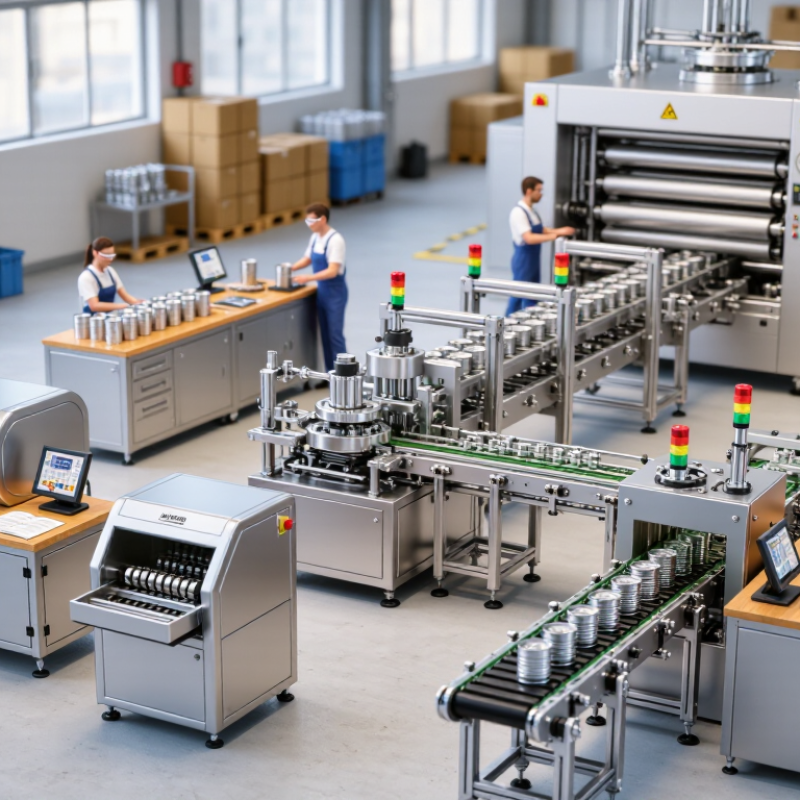
Can sealing machines close filled cans by joining the can body to its end. In a typical double-seam system, a chuck holds the lid while rollers shape its edges around the can flange. The resulting seam helps limit leakage and protect product quality during handling and storage. Small details matter. Operators check seam dimensions, lid placement, and can alignment, since slight setup drift can affect closure consistency. Depending on line volume, equipment may be manual, semi-automatic, or integrated with filling and conveying systems. More speed is not always better.
In packaging operations, the sealer often sits just after filling, where accurate timing helps prevent spills and product residue from entering the seam. Sensors and guards can support repeatable operation, while change parts accommodate different can diameters or heights. A practical evaluation should consider container material, production rate, cleaning access, adjustment time, and staff training. Trial runs with actual cans are useful; catalogue figures alone may not reveal awkward changeovers or vibration on a production floor. Even a well-set machine needs routine inspection. That takes time. It is easy to underestimate. Periodic seam inspections can help operators spot process changes before they lead to repeated rejects.
Can sealing machines vary by operating method, container material, and production speed. Manual seamers suit small batches, pilot runs, and workshops with frequent format changes. An operator positions each can and starts the sealing cycle. Output is modest, and consistency depends partly on careful setup. Small scale, real control.
Semi-automatic machines reduce repetitive work while keeping an operator involved. They are common in growing production rooms where batches are too large for hand cranking but do not justify a full line. Automatic inline or rotary machines feed, seal, and discharge cans with less intervention. Rotary systems can deliver higher throughput, while inline models may be easier to fit into a compact layout. Actual capacity depends on can size, lid supply, and changeover time—not just the advertised cycle rate.
Some machines are designed for specific packages, such as aluminum cans, tinplate cans, or particular diameters and heights. Vacuum or gas-flush configurations can remove air from the headspace before sealing, when the product and process require it. Buyers should check seam specifications, tooling options, cleaning access, and available utilities. Ask for a sample run with your own containers. Then inspect the seam. It sounds obvious, but that check is sometimes left until late. A machine that seals one format well may need new chucks or rollers for another.
| Machine Type | How It Seals | Typical Production Scale | Common Applications | Key Buying Considerations |
|---|---|---|---|---|
| Manual Can Seamer | An operator positions the can and lid, then operates the seaming mechanism by hand or lever. | Low-volume production, sampling, and occasional use. | Small food producers, pilot batches, workshops, and product testing. | Check operator effort, compatible can and lid dimensions, adjustment method, and access to replacement seaming rolls. |
| Tabletop Electric Can Seamer | An electric drive powers the seaming cycle; cans are generally loaded and removed by an operator. | Low to moderate production. | Small food and beverage businesses, laboratories, and short production runs. | Confirm the supported can materials and sizes, electrical supply, guarding, and whether change parts are needed for different formats. |
| Semi-Automatic Single-Head Seamer | The operator places each filled can and lid; the machine performs the seaming cycle. | Moderate production with regular operator involvement. | Growing businesses, contract packing, and production with frequent product changes. | Assess cycle control, changeover time, operator safety features, and compatibility with the upstream filling process. |
| Automatic Single-Head Seamer | Can handling and the seaming cycle are automated at one seaming head, typically as part of a production line. | Moderate to higher production, depending on format and line configuration. | Food, agricultural, and specialty-product lines requiring repeatable operation. | Review line speed, infeed and discharge arrangements, controls, cleaning access, and integration requirements. |
| Rotary Multi-Head Seamer | Multiple seaming heads operate around a rotating turret to process cans continuously. | Higher-volume production. | Large-scale food and beverage packaging lines. | Confirm the number of heads, rated speed for the intended can format, footprint, changeover needs, and service support. |
| Inline Continuous Seamer | Cans travel through a conveyor-fed seaming station, often with automated synchronization to the rest of the line. | Moderate to high production, depending on the machine design. | Facilities with continuous filling, conveying, and packing operations. | Check conveyor height and speed, spacing requirements, can stability, and compatibility with existing line controls. |
| Vacuum Can Seamer | The can is sealed under reduced pressure to limit the amount of air remaining in the package. | Low to high production, depending on whether the system is manual, semi-automatic, or automated. | Products where reduced oxygen exposure or a vacuum-packed presentation is required. | Verify vacuum performance for the product and can, chamber or evacuation arrangement, cycle time, and sealing validation needs. |
| Gas-Flushing Can Seamer | Air in the can is displaced with a selected gas, such as nitrogen, before the can is seamed. | Low to high production, depending on the gas-flushing and seaming configuration. | Products that use modified-atmosphere packaging, including some powders and snacks. | Consider gas supply and consumption, flushing method, product sensitivity, target residual oxygen, and quality-control procedures. |
| Beverage Can Seamer | Forms a double seam joining the can end to the can body; beverage systems are designed for the relevant can and end specifications. | Ranges from small-scale operation to high-speed beverage production. | Carbonated and non-carbonated drinks, craft beverages, and other canned liquids. | Match the seamer to the can body and end; evaluate seam inspection, line speed, product handling, and pressure-related requirements. |
| Large-Format or Specialty Can Seamer | Uses tooling and handling arrangements suited to oversized, unusual, or application-specific cans. | Usually selected for the product and format rather than maximum line speed. | Bulk foods, industrial products, specialty packaging, and non-standard can dimensions. | Provide the supplier with can drawings and samples; confirm tooling availability, handling method, and seam specifications before purchase. |
Note: These machine types can overlap—for example, a production seamer may also use vacuum or gas flushing. Actual throughput and format compatibility depend on the machine configuration, can dimensions, product, and line setup. Confirm requirements with the equipment supplier before purchasing.
Before purchasing a can sealing machine, confirm it fits your exact can diameters, heights, materials, and lid profiles. A small mismatch can cause leaks or uneven seams. Ask the supplier to test your own cans and lids, then request seam measurements and sample cans for inspection. Check how quickly operators can adjust the machine for another size. Frequent format changes can make a fast machine feel slow.
Tips: Compare sustained production speed, not just the advertised maximum. Ask what setup, staffing, and operating conditions that figure assumes. Keep test records.
Consider daily cleaning, guarding, noise, and access to wear parts. Confirm the machine’s power and air requirements match your facility. Ask about operator training, troubleshooting support, and spare-part delivery times in your region. These details affect downtime. A brief demonstration may not reveal problems during a full shift, so request a longer trial if possible. It is easy to focus too much on purchase price; installation, changeovers, and maintenance also shape the real cost. Check the written warranty and service terms, and make sure they describe what is actually covered.
Indicative production-speed ranges by machine type, shown in cans per minute.
These broad indicative ranges vary with can size, material, product, operator, and line configuration. Compare quoted speeds using your own can and product samples, and check changeover time, seal quality, and service requirements before purchasing.
For global buyers, the best can sealing machine is the one that matches the can, lid, product, and production rhythm—not simply the fastest model. A manual seamer suits pilot runs and small batches. Semi-automatic machines offer a practical middle ground, while automatic rotary systems fit steady, high-volume lines. Vacuum or gas-flush options may help protect sensitive products, but add controls and maintenance. Keep it simple where possible.
Check the seam, not just the speed. Ask suppliers for sample cans sealed with your actual materials, then inspect seam thickness, overlap, and consistency. Test changeovers between can sizes, too. A wrench-heavy adjustment process can slow a shift. Consider output per minute, power supply, guarding, spare-part access, operator training, and local service response. Importantly, confirm that the machine handles your target can diameter and height without improvised modifications.
The FAO’s 2023 report on food loss estimated that 13.2% of food was lost after harvest and before retail in 2021. That figure does not measure can sealing alone, but it underscores why packaging-line reliability matters. For cross-border purchases, request documented acceptance tests, clear electrical specifications, and a written maintenance schedule. One awkward point: published speed ratings may reflect ideal conditions. Run a real production trial before committing.
Choosing a can sealing machine starts with the can, not the advertised speed. Record the container’s material, diameter, height, and lid type. A machine suited to aluminum cans may not handle steel containers or multiple sizes without change parts. Small differences matter. Ask suppliers to run samples from your actual production batch, then inspect seams and check for leaks.
Next, compare the machine’s practical output with your daily target. A line filling 1,200 cans per hour may not need the fastest sealer available. Allow time for loading, changeovers, and occasional stoppages. Manual models can suit short runs and limited floor space; automatic systems may fit steady, higher-volume production. But speed claims can be optimistic. Test it first.
Also check the details that affect reliable operation: available floor space, power requirements, cleaning access, operator training, and spare-part support. If products change often, quick adjustments may matter more than peak output. Ask how long a format change takes and which tools are needed. A machine can look ideal in a specification sheet and still feel awkward beside a real filling line. A site trial may reveal that. Keep notes on setup time, seal quality, and rejected cans before making the final comparison.



