Sealless Pumps for a Safer and Greener World

Anti Static Pvc Flooring is a resilient surface designed to control electrostatic charge in sensitive environments. Unlike ordinary vinyl, it contains conductive or dissipative materials that guide static electricity toward a properly grounded system. It does not remove every electrical risk. That distinction matters. In electronics rooms, laboratories, healthcare areas, and clean manufacturing spaces, uncontrolled discharge can damage components or disturb delicate equipment. A well-designed floor helps reduce that possibility while offering a smooth, durable walking surface.
Its performance depends on more than the flooring sheet itself. Adhesive selection, copper grounding strips, subfloor preparation, humidity, and installation quality all influence electrical resistance. I have seen attractive floors fail practical testing because installers ignored moisture or left small gaps near seams. Details matter. Manufacturers typically provide resistance ranges and maintenance instructions, but site conditions still require professional evaluation. Testing should be completed after installation and repeated according to the facility’s risk assessment. Shoes, furniture, cleaning products, and dust can also change surface behavior over time. Even a technically compliant floor may perform poorly without routine inspection. That is an uncomfortable point, yet it improves reliability. When specifying Anti Static Pvc Flooring, buyers should review technical data, request documented test results, and confirm compatibility with grounding requirements. The best choice balances electrostatic control, wear resistance, hygiene, comfort, and long-term maintenance. It should support the whole safety system, not pretend to replace it.
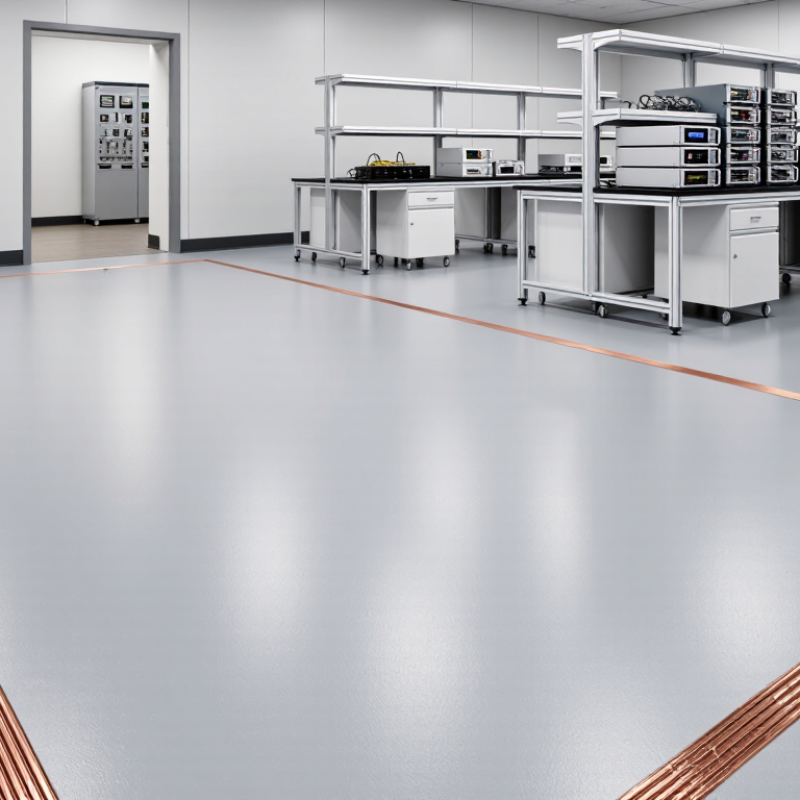
Anti-static PVC flooring is a resilient flooring system designed to control static electricity. Its core purpose is not to eliminate charge completely. It allows electrical charge to dissipate gradually through conductive layers, adhesive, grounding points, and suitable footwear.
IEC 61340-5-1:2024 commonly uses 1.0 × 10⁹ ohms as the maximum resistance for a person-footwear-flooring system in protected areas. This figure matters in electronics assembly, laboratories, cleanrooms, and server rooms. ASTM F150-22 provides a recognized method for measuring flooring resistance from the surface to ground. The result depends on the complete system, not the PVC sheet alone.
A proper installation needs copper grounding strips, tested joints, and documented resistance readings. Humidity also changes performance. Dust, wax, and worn footwear can interrupt the intended discharge path. A low resistance number alone does not prove protection. That assumption is easy, but incomplete. In practical inspections, maintenance records often reveal more than the product label. The floor may meet its specification while the grounding network remains poorly connected. Regular testing, clear cleaning procedures, and operator training therefore form part of the flooring’s real purpose. It is a control system beneath the user’s feet, not merely a gray decorative surface.
Anti-Static PVC Flooring: Material Structure and How Static Control Works
Anti-static PVC flooring is built to move electrical charges away from people and equipment. Its main layer contains PVC resin, stabilizers, plasticizers, and conductive additives. These materials create a controlled path through the flooring. A wear layer protects the surface from shoes, carts, and daily cleaning. Beneath it, a conductive backing can improve charge transfer. Some products also include carbon-based particles throughout the tile or sheet. The structure matters because surface conductivity alone may not provide stable protection.
Static control depends on installation as much as material design. Copper strips or conductive adhesives connect the floor to an approved grounding system. When a person walks across the surface, the charge travels through the floor and disperses safely. Moisture also affects performance. Very dry air can increase resistance and static buildup. The floor is not perfectly conductive, and that is intentional. Excessively fast discharge may harm sensitive components. However, test results can change after poor cleaning or uneven bonding. This is where practical inspection becomes important.
Tips: Check electrical resistance after installation and during maintenance. Keep the subfloor clean, dry, and level. Use cleaning products recommended for conductive PVC surfaces. Avoid waxes that leave insulating films. Wear compatible footwear, especially in electronics, laboratory, and controlled production areas. A qualified electrician should verify grounding connections. One overlooked seam can weaken the whole system. Humidity control helps, but it cannot replace proper installation.
Anti-static PVC flooring uses PVC layers with conductive additives and a controlled path to ground. The electrical resistance range determines how quickly electrostatic charges are safely dissipated.
Conductive flooring is typically classified below 1 × 10⁶ Ω, while dissipative flooring is commonly controlled from 1 × 10⁶ Ω to below 1 × 10⁹ Ω. A conductive backing, adhesive, grounding connection, and footwear or personnel grounding system work together to control static charge. Classification limits can vary by the applicable ESD standard and test method.
Reference framework: ANSI/ESD terminology and IEC 61340-5-1 resistance-control practices. Values shown are resistance bands, not brand or product data.
Anti static PVC flooring is designed to control electrostatic charge on the walking surface. It does not simply “remove” static electricity. Instead, its structure guides charge toward a grounding system. This distinction matters in electronics rooms, laboratories, clean production areas, and spaces with sensitive equipment.
The main types are static dissipative and conductive PVC flooring. Static dissipative flooring releases charge slowly and supports controlled protection around workstations. Conductive flooring provides a faster path to ground and is often selected for areas with stricter electrostatic control.
Homogeneous PVC is made through one consistent material layer, so wear does not quickly expose a different surface. Multilayer PVC may offer better visual flexibility, but its performance depends heavily on the quality of each layer.
Key performance characteristics include electrical resistance, grounding continuity, abrasion resistance, dimensional stability, and slip control. Resistance values should be checked against the project standard, because acceptable ranges can differ. A qualified installer should test the floor, adhesive, copper grounding network, and completed surface together. One weak connection can affect the entire system. Cleaners also matter. Some leave a film that changes electrical readings.
In daily use, the floor should feel stable under carts and chairs, not soft or lifting at the seams. Dust may be visible near joints. That detail deserves attention. Anti static flooring is not maintenance-free, and poor cleaning or missing footwear controls can reduce its practical effectiveness. Performance should be verified after installation, and periodically afterward.
Anti-static PVC flooring controls the movement of electrical charges across a walking surface. It does not eliminate electricity. Instead, it guides static charges toward a grounding system. The flooring usually contains conductive materials within its wear layer. A grounding network then completes the protection path. Without proper grounding, performance can become unreliable.
This flooring is common in data centers, electronics assembly rooms, and healthcare laboratories. It also suits clean production areas where static discharge may damage sensitive equipment. In these spaces, workers, carts, and equipment constantly contact the floor. A stable surface helps reduce sudden discharges and particle attraction.
Environmental control matters. Relative humidity between 40% and 60% often supports better static control, depending on the project specification. Very dry air can increase charge generation, especially during winter. Temperature changes may also affect adhesive curing and floor movement. Installers should prepare a clean, level, and dry subfloor. Subfloor moisture must be checked before installation. Routine resistance testing should use calibrated equipment and documented procedures.
Real sites are less predictable. A perfect specification cannot correct poor cleaning or damaged seams. Dust, wax, and unsuitable coatings may increase electrical resistance. That is where maintenance becomes important. Cleaning products should not leave insulating residues. Grounding points also need periodic inspection. In practice, I would verify the floor after installation and again during operation, because early results can create false confidence.
Anti-static PVC flooring helps control electrostatic charge in areas containing sensitive electronic equipment. Its performance depends on the complete flooring system, not the surface alone. The subfloor should be clean, dry, smooth, and structurally sound. Moisture testing matters. Trapped moisture can weaken adhesive bonds and create uneven seams.
Qualified installers should follow the manufacturer’s resistance range and grounding design. Copper grounding strips, conductive adhesive, and properly bonded joints may be required. Every connection should be tested with a calibrated meter before the area opens. Testing only one corner is not enough. That shortcut can hide poor conductivity elsewhere. Electrical work should be checked by a competent professional.
Maintenance should remove dust and grit before they scratch the surface. Use a neutral cleaner with a damp mop, then allow the floor to dry naturally. Avoid oily polishes, silicone products, and unapproved waxes. They may leave an insulating film and reduce static control. Heavy furniture should use suitable protective pads. Dragging equipment is risky.
Keep it simple. Inspect regularly.
Resistance testing should be repeated after repairs, flooding, major equipment changes, or deep cleaning. Footwear also affects performance, so staff may need approved conductive shoes. In practice, cleaning schedules are often too vague. Record products, dates, test readings, and damaged areas. Small records can prevent larger safety problems.



