Sealless Pumps for a Safer and Greener World

The rise of electric vehicles (EVs) has transformed the automotive industry. A significant factor behind this shift is the development of charging solutions, particularly the AC EV Charger. According to a report by the International Energy Agency, global electric car sales reached 6.6 million in 2021, reflecting a dramatic 108% increase from 2020. As more people transition to EVs, efficient charging infrastructure has become vital.
AC EV Chargers are notable for their accessibility and convenience. They provide a practical charging solution for daily usage, especially in residential settings. Industry analysis suggests that Level 2 AC Chargers can charge an EV battery to around 80% in just a few hours. This speed and convenience appeal to many owners, fostering wider adoption of electric vehicles.
However, there are limitations to consider. While AC EV Chargers are prevalent, they may not deliver the rapid charging speeds that some users expect. Additionally, not all charging stations are equipped with the necessary infrastructure. These challenges hinder the broader rollout of charging networks and require critical examination and innovation within the industry.
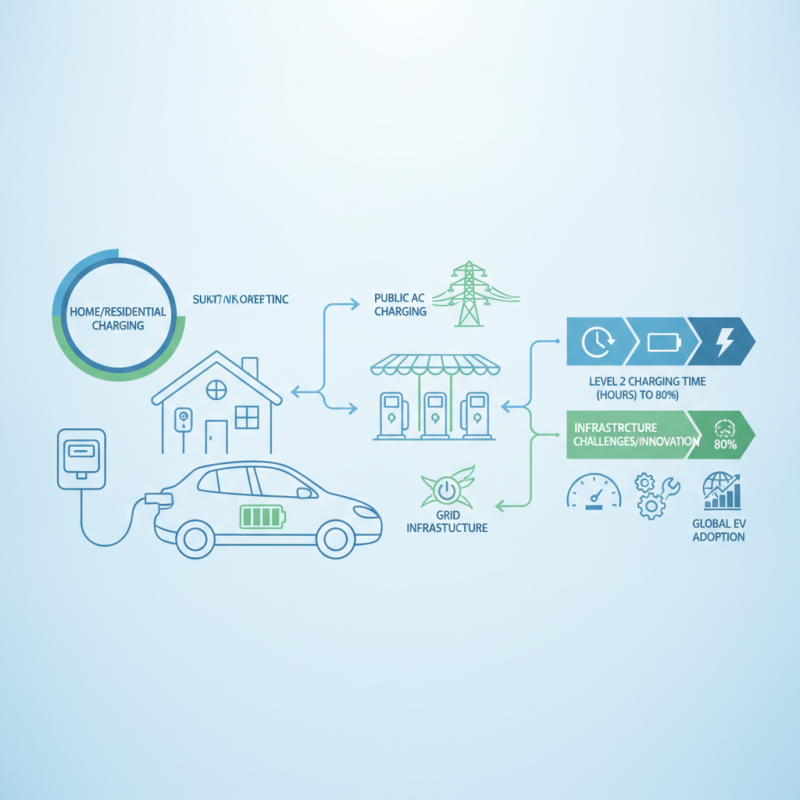
An AC EV charger, or alternating current electric vehicle charger, is crucial for recharging electric vehicles (EVs). Unlike DC chargers, which provide a quick power boost, AC chargers offer a more gradual charging process. This makes them suitable for home use and public charging stations.
AC EV chargers operate by converting the alternating current from the grid into the required voltage for the vehicle's battery management system. The charger communicates with the vehicle to ensure it receives the correct amount of power. Most electric vehicles are equipped to handle AC charging, enabling an effective and safe charging experience. However, charging times can vary significantly based on the charger and vehicle.
While AC chargers may not provide the fastest charge, they are reliable and efficient for daily use. Many users find themselves frustrated with longer charging times. Yet, it’s important to remember that this slower process can preserve battery health over time. Charging at home typically offers convenience, allowing users to plug in overnight without stress.
An AC EV charger consists of several key components that work together to power electric vehicles. The primary element is the charging unit, which converts standard AC power from the grid into a form that the vehicle's battery can accept. Reports indicate that Level 2 AC chargers typically deliver between 3.3 kW and 19.2 kW of power, offering a significant charging speed compared to standard wall outlets.
Another crucial component is the charging cable, which connects the charger to the car. These cables come with various connectors, including J1772 in North America and Type 2 in Europe. The quality of these cables is vital for ensuring safe and efficient charging. Moreover, the presence of a communication interface enables the charger to communicate with the vehicle. This interface ensures the charging process is optimized and prevents overcharging. However, issues can arise if the car's battery management system fails to communicate correctly.
Safety features are also paramount in an AC charger. They include built-in circuit breakers and ground fault detection to protect both the vehicle and the electrical grid. Industry reports highlight that improper installations remain a common issue, often leading to safety hazards. Understanding the complexities and potential pitfalls of AC EV charger components can enhance safety and charging efficiency.
The bar chart above illustrates the number of charging sessions for AC EV chargers across different locations, including residential, commercial, public, and workplace charging stations. The data reflects the growing adoption of electric vehicles and the role of charging infrastructure in supporting this trend.
AC EV chargers are essential for electric vehicle (EV) owners. They provide an efficient way to charge batteries using alternating current. Understanding how these chargers function is critical for maximizing their use.
AC EV chargers convert electricity from the grid. This process involves several components, including a power converter and charging cable. The power converter transforms high-voltage AC power into a usable form for your EV. Charging typically takes place overnight when electricity rates are lower.
AC EV chargers are becoming increasingly popular for their efficiency and ease of use. They offer several benefits that make them essential for electric vehicle (EV) owners. According to a report from the International Energy Agency (IEA), as of 2022, nearly 1.8 million public charging points are available globally, with AC chargers making up a significant portion. These chargers are designed for everyday use, making it simple to power up vehicles overnight or during extended stops.
One key advantage of AC EV chargers is their affordability. They are generally less expensive to install than their DC counterparts. A study conducted by the U.S. Department of Energy found that users can cut charging costs by 30% when opting for AC charging solutions. Additionally, they typically have a longer operational lifespan, which adds to their overall cost-effectiveness. However, they may not be the fastest option available. Charging times can vary widely, sometimes leaving users waiting longer than expected.
Another benefit is the increased accessibility of AC charging stations. They are often found in residential areas, workplaces, and even shopping centers. As EV adoption grows, the expanding network of AC chargers facilitates greater convenience for drivers. However, infrastructure development can be uneven, leading to gaps in availability in certain regions. As the industry evolves, ensuring widespread access to these charging stations will remain a challenge that needs addressing.
When installing an AC EV charger, proper placement is crucial. The charger should be easily accessible, near a power source, and away from obstructions. According to the U.S. Department of Energy, 80% of EV owners charge their vehicles at home. This fact highlights the importance of thoughtful installation. Choosing a licensed electrician can ensure that the wiring meets local codes and safety standards, providing peace of mind to EV owners.
Maintenance of AC EV chargers is often overlooked. Regular checks for wear and tear can prolong the charger’s lifespan. A report from the International Energy Agency states that user maintenance can increase efficiency by up to 25%. Simple tasks like inspecting cables and cleaning connectors can make a significant difference. Additionally, it is essential to keep software updated for optimal performance. Investing time in regular maintenance is necessary for improved reliability.
| Feature | Details |
|---|---|
| Type of Charger | AC Charger |
| Charging Power | 3.7 kW to 22 kW |
| Input Voltage | 230V or 400V |
| Connector Type | Type 1 (SAE J1772) / Type 2 (IEC 62196) |
| Installation Location | Home, Office, Public Charging Stations |
| Safety Standards | IEC 61851, UL 2202 |
| Maintenance Requirements | Regular checks for wear, software updates |
| Estimated Cost | $500 - $3000 |



