Sealless Pumps for a Safer and Greener World

Choosing an Anchor Drilling Machine is not simply a matter of comparing motor power. It is a ground-engagement decision. Soil density, rock strength, anchor diameter, drilling angle, access width, and dust control can change the correct specification. A compact rig may fit a narrow foundation site, while a heavier crawler machine may deliver better stability on fractured rock.
Industry data shows why this market deserves careful attention. Grand View Research reports that the global drilling equipment market is expanding with construction, mining, and infrastructure investment. The Business Research Company also identifies rising urban development and foundation work as important growth drivers. These reports do not measure every Anchor Drilling Machine directly, but they reveal stronger demand for productive, safer, and more adaptable drilling systems. Market forecasts can be useful. They are not a substitute for site evidence.
Karl Terzaghi, widely recognized as the father of modern soil mechanics, said, “The ground is not a simple material.” His warning remains practical today. A machine that performs well in dry soil may struggle when groundwater enters the bore. A powerful hydraulic system may still fail if the mast lacks rigidity. Small details matter: rod handling, compressor output, emergency controls, noise levels, and local service support. Sometimes, buyers overlook these points.
This 2026 buying guide examines performance, application fit, operating cost, safety features, and lifecycle value. It also questions several popular assumptions. The most expensive machine is not always the best choice. Real productivity begins with matching equipment to the ground.
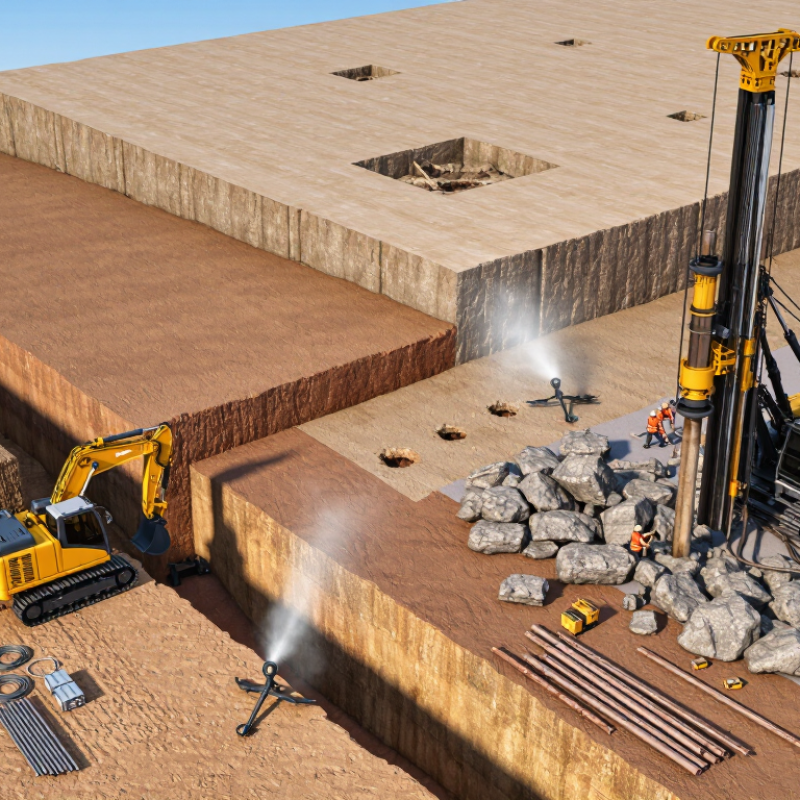
A 2026 anchor drilling machine should be judged against the work, not a brochure headline. For a practical baseline, specify hole diameters from 50 to 300 mm and drilling depths from 30 to 100 m. Small 50 mm holes suit lighter anchors and restricted access. Larger 300 mm holes need stronger torque, steadier feed pressure, and better spoil removal. Depth changes everything. A machine that reaches 100 m on paper may struggle in fractured rock, wet clay, or angled drilling.
Check rated torque, pullback force, mast rigidity, and hydraulic control together. Rod length matters because frequent connections slow production and increase handling risk. For 30–50 m work, a compact rig may be efficient. At 80–100 m, choose stable feed, reliable flushing, and enough power for casing in unstable ground. Water, foam, or air selection should match the formation and site controls. Record penetration rate, torque, pressure, and fuel use during trials. Numbers expose weak assumptions.
Ask for test drilling or verified logs from similar ground. Confirm whether the stated depth uses the target diameter, actual rods, and installed casing. This detail is often missed. I would inspect emergency stops, guards, hose routing, and operator visibility before purchase. A cheap machine can become expensive through downtime, bent rods, or poor alignment. The baseline is useful, but it is not universal. Soil variability may force a smaller diameter or shorter staged depth. Leave room to revise the specification after the first site trial.
2026 Best Anchor Drilling Machine Buying Guide
Rock UCS should guide your drilling method, but it should not decide alone. Confirm results with core testing, geological logs, and moisture observations before selecting equipment.
For rock below 20 MPa, rotary drilling with augers or open-hole tools is often efficient. A compact machine with adjustable torque can reduce wall damage in weathered formations. Soft rock may collapse around the borehole, especially after rain. Use temporary casing when the hole loses shape. Low pressure helps prevent over-drilling and unnecessary cuttings.
Rock between 20 and 100 MPa usually suits rotary-percussive drilling. Top-hammer systems can balance penetration speed, hole accuracy, and energy use. Choose a rig with stable feed pressure and enough torque for fractured zones. Dust control and water management matter here. A clean borehole improves grout bonding. That detail is easy to overlook.
Above 100 MPa, hard, abrasive rock demands stronger percussion and durable drill-string components. Down-the-hole drilling can deliver straighter holes in deep, competent formations. However, high air consumption may increase operating costs. Check compressor capacity, rod handling, and access space before purchase. UCS values can vary across one bench. I would not trust a single laboratory result. Abrasivity, joints, and hidden clay seams can change the correct choice. A machine that looks powerful on paper may still perform poorly underground.
Practical equipment-selection reference for ground anchors, soil nails, micropiles, and rock-bolt drilling
| Rock UCS Class | Typical Ground Description | Preferred Drilling Method | Suitable Machine Configuration | Typical Bit or Tool | Typical Hole Diameter | Flush Medium | Key Selection Priorities |
|---|---|---|---|---|---|---|---|
| Soft rock <20 MPa | Highly weathered rock, weak shale, marl, mudstone, chalk, weak sandstone, and heavily fractured formations | Rotary drilling; rotary drilling with casing where the borehole is unstable; auger drilling in mixed soil–soft-rock profiles | Compact crawler or truck-mounted rotary rig with adjustable rotation speed, moderate torque, and casing capability | Drag bit, tungsten-carbide insert bit, tricone roller bit, or soil/rock auger | Approximately 75–250 mm, depending on anchor tendon, grout cover, and casing requirements | Air, water, foam, or drilling mud; use low-pressure flushing where the formation is erodible | Low ground disturbance, borehole stability, precise angle control, and reliable cuttings removal without excessive washout |
| Medium-hard rock 20–100 MPa | Moderately strong sandstone, limestone, dolomite, marble, weathered granite, and interbedded rock | Down-the-hole (DTH) hammer drilling for long, straight holes; top-hammer drilling for shorter holes and restricted access; rotary-percussive drilling for variable ground | Crawler-mounted hydraulic rig with a high-pressure compressor, rotary head, feed beam, and optional casing advancement system | Button bit for DTH or top hammer; casing shoe and pilot bit for overburden or broken zones | Approximately 90–300 mm for common anchors, soil nails, and micropile pilot holes | Compressed air is common for DTH; water or foam may be added for dust control, borehole cleaning, or unstable formations | Compressor capacity, pullback force, feed stroke, rod handling, torque reserve, dust suppression, and performance in fractured rock |
| Hard to very hard rock >100 MPa | Fresh granite, basalt, quartzite, high-strength gneiss, dense volcanic rock, and competent massive formations | High-energy DTH or top-hammer percussive drilling; rotary-percussive drilling with casing systems for fractured hard rock; wireline coring where geological verification is required | Heavy-duty crawler rig with high-impact-energy hammer, rigid feed beam, high-pressure compressor, robust rod carousel, and strong dust-control system | Large-diameter carbide button bit, high-strength DTH bit, casing-system pilot bit, or diamond core bit for investigation holes | Approximately 90–350 mm; larger diameters may require staged drilling or specialized casing systems | High-volume compressed air for DTH; water injection or mist for dust suppression and heat management where permitted | Impact energy, compressor pressure and volume, feed force, torque control, rod fatigue resistance, bit life, vibration, and operator safety |
| Drilling Method | Best-Fit Ground | Main Advantages | Main Limitations | Important Machine Checks |
|---|---|---|---|---|
| Rotary | Soil, weak rock, claystone, marl, and soft fractured formations | Low vibration, flexible flushing options, and good control in sensitive or urban work areas | Lower penetration performance in strong, abrasive rock | Rotary torque, rotation speed range, thrust, casing drive, mud pump, and borehole-angle accuracy |
| DTH hammer | Medium-hard to very hard rock and long rock-anchor holes | High penetration in competent rock, good hole straightness, and impact delivered close to the bit | Requires substantial compressor capacity; air loss can reduce performance in highly fractured ground | Working pressure, air volume, hammer compatibility, rod diameter, dust collection, and water availability |
| Top hammer | Medium-hard rock, short to medium holes, and locations with limited rig footprint | Compact setup, strong drilling performance, and efficient operation for shorter anchor holes | Energy transfer decreases with increasing hole depth; rod deviation and joint wear may rise in long holes | Impact frequency, feed force, rod length, flushing efficiency, vibration control, and access dimensions |
| Rotary-percussive | Mixed soil–rock profiles, fractured rock, and changing UCS along the hole | Combines cutting and impact to handle variable geology and reduce tool changes | More complex controls, higher maintenance demand, and potentially greater vibration | Independent control of torque, impact, feed, flushing, casing advancement, and overload protection |
| Diamond core drilling | Hard rock investigation, verification drilling, and projects requiring recovered core | Provides geological samples and accurate information on discontinuities and rock quality | Slower for production anchor installation and requires controlled water circulation and core handling | Spindle speed, water flow, core-barrel system, bit matrix, rod size, and sample-recovery requirements |
Size, power, and torque should match the anchor design, ground conditions, and working space. Machines from 15–30 kW suit compact sites and shorter anchors in softer formations. Models rated at 40–55 kW provide a practical balance for mixed soil and weathered rock. Heavy-duty units from 60–75 kW handle longer rods, harder rock, and demanding production schedules.
Torque matters as much as motor power. A 1,000–3,000 N·m range may suit smaller rods and shallow drilling. For fractured rock, larger casings, or stubborn drilling angles, 4,000–7,000 N·m offers better control. The 8,000–10,000 N·m class supports high resistance, but it can increase machine weight, fuel use, and transport difficulty. More torque is not always better.
Check the complete machine, not only the headline rating. Compare mast reach, feed force, rod diameter, rotation speed, and hydraulic cooling capacity. A compact rig may fit beside a retaining wall, while a larger model could require costly access preparation. Measure twice. Field operators should also verify torque at the actual operating speed, because peak figures can mislead.
I have seen buyers select maximum power and later struggle with poor maneuverability. That choice looked impressive on paper. It was not efficient underground. Ask for test data from comparable ground, maintenance records, and realistic drilling output. Allow a safety margin, but question oversized specifications that the site cannot use.
When buying an anchor drilling machine in 2026, treat 10–30 m/h as a working target, not a guaranteed promise. Actual output changes with rock strength, hole diameter, drilling angle, flushing, and anchor depth. McKinsey’s construction productivity research found that industry productivity grew only about 1% annually over two decades. Small delays matter.
Measure complete cycles, not drilling speed alone. A machine drilling at 25 m/h may lose productivity during rod changes, coupler cleaning, relocation, and compressor adjustment. Look for practical rod handling, such as a stable carousel, accessible clamps, and quick hydraulic connections. One operator should change rods without climbing onto muddy platforms. That detail affects safety and time.
Setup deserves a stopwatch. Record transport, leveling, mast alignment, dust-control connection, and the first completed hole. A 20-minute setup repeated 30 times consumes ten hours. FHWA ground-anchor guidance emphasizes consistent drilling records, including depth, inclination, flushing, and ground conditions. Use the same log during supplier trials. I would reject impressive showroom figures without site data. A clean spreadsheet can still hide poor access conditions. Test the machine on representative ground, with the intended rod length and compressor capacity. Productivity should be reported as completed anchor meters per shift, including interruptions. Be skeptical. Conditions rarely stay perfect.
Evaluate productivity against the practical target of 10–30 m/h, while comparing rod-handling efficiency and setup time.
A useful planning range is 10–30 m/h, depending on ground conditions, drilling diameter, depth, and operator experience.
Lower handling time per rod generally improves cycle efficiency and reduces non-drilling labor.
Setup includes positioning, leveling, anchoring, and initial alignment before drilling begins.
A 2026 anchor drilling machine should be judged by verified safety, not brochure speed. EN 16228 covers safety requirements for drilling and foundation equipment, including guarding, emergency stops, and control systems. Request the Declaration of Conformity, risk assessment, inspection records, and training instructions. Check the machine in person. A missing document is a warning.
Dust control needs equal attention. NIOSH’s Current Intelligence Bulletin 68 recommends a respirable crystalline silica limit of 0.05 mg/m³ as a time-weighted average. OSHA’s construction standard uses 0.05 mg/m³ as an eight-hour permissible exposure limit. Water suppression and correctly sized local extraction can reduce visible dust, but wet drilling is not automatically safe. Inspect hoses, filters, airflow, and waste handling. Small leaks matter.
Ownership cost should be measured per drilled meter. Record fuel, electricity, bits, rods, labor, maintenance, water, dust controls, transport, and downtime. Divide the total by completed meters, not planned meters. A simple site log often reveals the truth. For example, a machine costing 18,000 dollars monthly and producing 900 completed meters adds 20 dollars per meter before consumables. That calculation can be useful, but imperfect. Ground conditions change quickly. Include rejected holes and standby hours. Safety upgrades may raise purchase cost while lowering exposure, delays, and future liability. Check local limits before buying.



